Summary
The operating-business risk that keeps generalist lenders out of assisted living and memory care is measurable, and the article concludes that a lender with a rigorous feasibility file can collect the sector's 100-to-400-basis-point yield premium over multifamily. Senior housing occupancy has risen for nineteen consecutive quarters to 89.5%, with assisted living at 87.9%, while units under construction sit near 16,200, about 2.3% of inventory, and year-over-year inventory growth printed a record-low 0.4%.
Labor is roughly 55% of operating expenses, frontline wage growth has slowed to 2.8% in 2025, and operating margins crossed back above 25% by mid-2025; communities combining assisted living and memory care run a 20.1% margin against 26.7% for freestanding assisted living. The representative deal buys a 72-unit community at just under $190,000 per unit against a replacement cost near $450,000 per unit, financed as an SBA 504 project.
Written for Lenders and CDCs underwriting assisted living, Senior housing owner-operators, Investors in memory care communities. 26 minute read.
Key figures
- Senior housing occupancy, 31 primary markets
- 89.5%
- NIC MAPQ1 2026
- Year-over-year inventory growth
- 0.4%
- NIC MAPQ1 2026
- Blended seniors housing cap rate
- 6.2%
- CBRE; JLLQ4 2025
- Average price per unit
- $182,800
- JLLrolling four quarters to early 2026
- Certified nursing assistant wage increase
- 2.8%
- Hospital & Healthcare Compensation Service2025
- Construction starts versus pre-pandemic peak
- -77%
- JLLprimary markets, 2025
MMCG Invest, LLC · Feasibility & market analysis · July 2026
Every credit committee that reviews an assisted living deal arrives, sooner or later, at the same sentence: this is not real estate - it is an operating business that happens to own a building. The observation is accurate. It is also, in 2026, the beginning of the opportunity rather than the end of it.
Multifamily underwrites like a property. Assisted living and memory care underwrite like a company: round-the-clock licensed staffing, hospitality economics layered over clinical oversight, a state regulator rather than a federal one, and a resident population whose tenure is measured in months. For a generalist lender, each of those facts is a reason to pass. For a lender with the right analytical file in hand, they are the reason the sector still prices at a 100-to-400-basis-point yield premium over multifamily - a premium paid not for demand risk, which is demographically settled, but for operating complexity that can be measured, modeled, and stress-tested (2)(5).
Senior housing occupancy has now risen for nineteen consecutive quarters to 89.5% - the highest reading in the twenty-year history of the national data series - while the construction pipeline has collapsed to its lowest level since 2012 and year-over-year inventory growth has fallen to a record 0.4% (1). The first baby boomers turn 80 in 2026, the age at which assisted living demand begins in earnest, and the cohort behind them adds roughly 750,000 people per year to the 80-plus population through 2030 (13). Roughly four in five assisted living residents pay privately, insulating revenue from the reimbursement mechanics that define skilled nursing (17)(23). And the labor shock that crushed sector margins between 2021 and 2023 has demonstrably unwound: frontline wage growth has decelerated from near-double-digit peaks to under 3%, and operating margins crossed back above 25% in mid-2025, the strongest showing since 2018 (1)(20).
This case study works through a representative assisted living and memory care feasibility engagement the way MMCG structures the analysis for a lender’s credit file: market performance, supply, demand, operating economics, revenue quality, capital markets, operator risk, and a disciplined bear case. The through-line is a single claim. The operating-business risk that keeps generalist capital at the door is precisely the risk a rigorous, independent feasibility study exists to quantify - and in the current cycle, the lender equipped to underwrite that risk is collecting the premium that generalist capital leaves on the table.
1. The engagement: a representative mandate
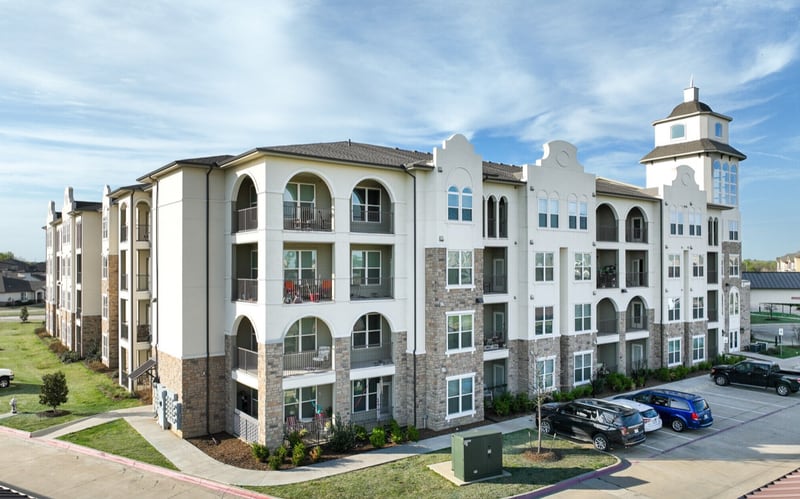
The subject of this study is a composite engagement profile - anonymized, and assembled from the fact pattern MMCG encounters repeatedly in current assisted living mandates. A regional owner-operator, nine years in seniors housing with six communities under management and a clean state survey history, has contracted to acquire a purpose-built, 72-unit licensed community: 54 assisted living suites and an 18-suite secured memory care wing, located in a high-barrier metropolitan submarket where no competing project has broken ground since 2022.
The economics are what make the file interesting. The contract basis sits just under $190,000 per unit - against a replacement-cost benchmark that now runs to roughly $450,000 per unit in core markets (6). The seller is a founding owner approaching retirement; the asset is stabilized in the high-80s occupancy range with a rate card that has quietly lagged the market for three years. The financing is structured as an SBA 504 project, a bank first mortgage paired with a CDC debenture carrying a long-term fixed rate, with agency and HUD Section 232 executions preserved as refinancing options once the community seasons under new ownership (9)(11). The hold thesis runs seven to ten years, spanning what the supply data below suggest will be the deepest years of the coming shortage.
The lender’s question is not whether demand for assisted living exists. Nobody on a credit committee in 2026 disputes the demographics. The questions are narrower and harder: whether this trade area contains enough income- and asset-qualified households to sustain rate growth; whether this operator can hold labor costs inside a defensible envelope; whether the memory care wing has been underwritten to memory care margins rather than assisted living margins; and whether the deal survives a stress case built on the sector’s actual failure modes rather than its averages. Those are feasibility questions, and the balance of this study answers them with the data a credit file requires.
2. Performance: nineteen quarters and counting
Begin with the fact that no other commercial property type can currently claim. Senior housing occupancy across the 31 primary markets tracked by the national data series has increased for nineteen consecutive quarters, reaching 89.5% in the first quarter of 2026, the highest level recorded since the series began in 2006 (1). Assisted living stands at 87.9% ; independent living has crossed 91%. The sector did not merely recover from the pandemic. It recovered past every previous peak and kept going.
The shape of that recovery matters as much as its length. Occupancy entered the pandemic at 87.1% in early 2020 and collapsed roughly 930 basis points to a trough of 77.8% by mid-2021, the deepest demand shock in the sector’s recorded history (1). Assisted living, the more clinically intensive setting, fell harder than independent living. It then recovered faster: 8.7 percentage points off the trough, nearly double independent living’s gain, with all 31 primary markets back above pre-pandemic occupancy by the end of 2024 (1). Occupied units now stand at an all-time high of roughly 637,000, of which some 20,000 were absorbed in 2025 alone (1).
The mechanism is arithmetic, not sentiment. Net absorption has exceeded inventory growth for nineteen straight quarters; in 2025 the ratio ran 4.8 to 1 (4). When demand outruns supply for nearly five years without interruption, pricing power follows. Asking-rent growth peaked at 6.1% in mid-2023 and has settled into a 4.5 to 4.7% band, still comfortably above the 3.0 to 3.5% pre-pandemic norm, with the national average asking rate now above $5,800 per month (1). The consensus projection has occupancy crossing 90% before the end of 2026 and approaching 93% by 2028 (1)(4).
One caution belongs in every credit file: the national average is not a market. First-quarter 2026 occupancy ranged from 93.6% in Boston to 86.0% in Atlanta, with high-barrier coastal metros consistently outperforming lower-barrier Sun Belt markets (1). A feasibility study earns its place in the file precisely here, by replacing the national curve with a census of the specific competing communities inside the subject’s trade area: their unit counts, their care mix, their waitlists, and their actual rate cards.
EXHIBIT 1, SENIOR HOUSING OCCUPANCY RECOVERY, 31 PRIMARY MARKETS
| Period | Senior housing occupancy | Assisted living | Reading |
|---|---|---|---|
| Q1 2020 | 87.1% | Pre-pandemic peak | |
| Q2 2021 | 77.8% | Pandemic trough (−930 bps) | |
| Q3 2023 | 84.4% | 82.6% | Recovery underway |
| Q4 2024 | 87.2% | 85.7% | Surpasses pre-pandemic level |
| Q2 2025 | 88.1% | Largest quarterly gain in six quarters | |
| Q4 2025 | 89.1% | 87.7% | 18th consecutive quarterly gain |
| Q1 2026 | 89.5% | 87.9% | Series high; 19th consecutive gain |
Source: MMCG database; NIC MAP quarterly releases (1)(25).
Interactive line chart, senior housing and assisted living occupancy, Q1 2020–Q1 2026, marking the trough and the nineteen-quarter recovery
3. Supply: a pipeline frozen at 2012 levels
If the demand story is strong, the supply story is stronger, because it is physical, contractual, and already locked. Construction starts in primary markets have fallen 77% from their pre-pandemic peak (3). The first quarter of 2025 recorded just 1,076 unit starts nationally, the lowest quarterly figure since the depths of the financial crisis in 2009 (1). Units under construction, which approached 50,000 at the late-2019 peak, ended 2025 near 16,200 and slipped in early 2026 to the lowest level since 2012, about 2.3% of existing inventory (1)(4). Year-over-year inventory growth printed a record-low 0.4% in the first quarter of 2026 (1).
The freeze is not a mystery; it is a spreadsheet. Development economics stopped penciling. Hard costs for assisted living construction run $278 to $356 per square foot at mid-level finish and $363 to $452 for high-acuity and memory care product, with 2026 escalation projected at another 4 to 7% (25). The all-in benchmark has aged from roughly $317,000 per unit in 2022 to approximately $450,000 per unit in core markets (6). At that basis, a developer needs a stabilized yield-on-cost of 8 to 9.5%, implying monthly revenue per occupied room of $11,000 to $13,000, before groundbreaking makes sense (6). Feasibility rents therefore sit 15 to 20% above prevailing market rents in most metros (2). Construction lenders, for their part, retreated to 60 to 65% loan-to-cost behind full guarantee structures. Nearly 60% of tracked metros have no seniors housing project underway at all, and eight primary markets have posted negative three-year inventory growth as closures and conversions outpace openings (1).
What converts a cyclical observation into an underwriting fact is the length of the development cycle: 29 months from groundbreaking to opening, on average (1). A project that starts today opens in late 2028. The units that will compete with the subject community in 2026, 2027, and most of 2028 either already exist or are already under construction, and there are historically few of the latter. Against this stands the demand ledger: an estimated 549,000 additional units needed by 2028 and 806,000 by 2030, a shortfall representing roughly $275 billion of required investment, while 2025 deliveries totaled fewer than 6,000 units against a required pace near 70,000 per year (1)(4).
For the owner of standing, licensed stock in a supply-constrained submarket, the conclusion is unusual in commercial real estate. The principal competitive threat, new supply, is not merely improbable during the early hold period. For most of it, new supply is physically impossible.
EXHIBIT 2, THE SUPPLY FREEZE IN SIX INDICATORS
| Indicator | Reading | Context |
|---|---|---|
| Units under construction | ~16,200 (Q4 2025) | Lowest since 2012; ~2.3% of inventory |
| Quarterly construction starts | 1,076 units (Q1 2025) | Lowest since Q2 2009 |
| Year-over-year inventory growth | 0.4% (Q1 2026) | Record low in the national series |
| 2025 deliveries | <6,000 units | vs. ~70,000/yr required through 2036 |
| Absorption vs. new supply | 4.8 : 1 (2025) | 19 consecutive quarters of positive spread |
| Cumulative unit need by 2030 | ~806,000 units | ~$275B implied investment gap |
Source: MMCG database; NIC MAP; JLL; Cushman & Wakefield (1)(3)(4)(25).
Interactive combo chart, units under construction (bars) against year-over-year inventory growth (line), 2019 to 2026
4. Demand: the arithmetic of the 80-plus cohort
Seniors housing demand has a property no other real estate demand driver shares: every member of the 2036 customer base is alive today, and their number is already counted. The first members of the baby boom generation turn 80 in 2026, the age at which assisted living entry begins in earnest, ahead of a median move-in age near 85. At precisely this inflection, the net annual addition to the 80-plus population more than doubles, from roughly 303,000 to 671,000, and then runs near 750,000 per year through 2030 (13). The cohort grows from about 14.7 million in 2025 to 18.8 million by 2030 and roughly 23 million by 2035 (1)(13). Population projections for cohorts already alive are the most reliable numbers in demography; this demand cannot be modeled away, rate-adjusted, or legislated out of existence.
Memory care compounds the arithmetic. The Alzheimer’s Association counts 7.4 million Americans aged 65 and older living with Alzheimer’s dementia in 2026, a figure projected to nearly double by 2060, with dementia-related costs rising from roughly $409 billion today toward $1 trillion by mid-century (14). Memory care admission is need-based rather than lifestyle-driven, it is the least discretionary purchase in seniors housing, and it arrives on the shortest fuse, with an average length of stay near 18 months (25). Meanwhile the informal alternative erodes: the caregiver support ratio, women aged 45 to 64 per adult over 80, falls from 3.4 to 1.7 between 2020 and 2040 (5). The family capacity that once deferred a move-in decision by years is simply not there for the boomer cohort.
The feasibility discipline is to refuse to underwrite any of this at the national level, because national cohort growth pays no rent. What pays rent is the count of age- and income-qualified households inside a defined trade area: residents aged 80 and older, and the adult-child decision-makers within driving distance, screened against the income and home-equity thresholds implied by the subject’s rate card. For engagements of this profile, MMCG builds that count from census micro-geography, layers in migration and adult-child proximity patterns, and tests the result against the competitive census assembled in the market study. A submarket can sit inside a booming metro and still be saturated; the reverse is equally true, and only the local count reveals which.
5. Operating economics: labor is the underwriting question
Strip away the demographics and the supply math, and one variable decides whether an assisted living loan performs: labor. Wages, benefits, and contract staffing represent roughly 55% of total operating expenses in the asset class, the largest line by a wide margin, attached to a workforce that must be present around the clock at ratios the state regulator and the standard of care effectively set (21). Daytime staffing runs near one caregiver per eight residents in assisted living and tightens to one per five or six in memory care, which is the structural reason memory care margins run below assisted living margins even as its rates run 20 to 30% higher (25).
The 2021 to 2023 labor shock explains the sector’s margin history better than any other factor. Certified nursing assistant wage increases ran 7.6% in 2021 and 9.8% in 2022, then decelerated to 5.7% in 2023, 3.0% in 2024, and 2.8% in 2025 (20). Agency staffing, priced at 1.5 to 3 times permanent cost, spiked during the shortage and has since unwound toward pre-pandemic norms; individual operators report contract labor collapsing from millions of dollars a year to a rounding error (25). The margin record tracks the same curve: net operating margins in the high-20s before the pandemic, a trough in the low-20s through 2023, and a recovery back above 25% by mid-2025, the strongest reading since 2018 (1).
The inversion behind that recovery is the single most important operating chart in the sector. For two full years, wage growth exceeded rate growth, which is margin compression by definition. The relationship flipped in early 2023 and the gap has widened since: asking-rent growth of 4.4 to 4.6% now runs against frontline wage growth under 3% (1)(20). Every quarter the spread persists, margin rebuilds. The recovery is real, but it is not unconditional. Turnover remains structurally high, near 40% annually for CNAs and 44% for resident assistants, with up to half of new hires gone within ninety days (20). The direct-care workforce faces an estimated 9.7 million total job openings between 2024 and 2034 (19), and median frontline wages of roughly $16 to $20 per hour leave the sector competing with retail and logistics for the same labor pool (24). Liability adds a second, quieter pressure line: the average incurred senior-living claim reached $259,443 in the latest actuarial benchmarking, up 3.8%, with assisted living severity running above skilled nursing (22).
Configuration matters as much as market. Same-store medians show communities combining assisted living and memory care operating at a 20.1% margin, against 26.7% for freestanding assisted living without memory care (21), a 660-basis-point gap produced almost entirely by staffing intensity. The single most common underwriting error MMCG encounters in this asset class is a memory-care-heavy community modeled to a pure assisted living margin. The feasibility prescription follows directly: build the staffing model position by position at documented local wages, carry labor roughly 200 basis points above pre-pandemic norms, stress an agency re-escalation scenario, and treat the operator’s retention record as a credit input rather than a marketing claim.
| Community configuration | Median operating margin |
|---|---|
| Freestanding independent living | 32.5% |
| Communities with assisted living | 29.2% |
| Independent living + AL + memory care | 26.6% |
| Freestanding assisted living (no memory care) | 26.7% |
| Assisted living + memory care combined | 20.1% |
Source: State of Seniors Housing; MMCG database (21)(25). Memory care’s staffing intensity, not its rate card, drives the gap.
Interactive dual-line chart, frontline wage growth versus asking-rent growth, 2021 to 2025, showing the margin inversion of early 2023
6. Revenue quality: private pay, rate power, and the affordability ceiling
What the lender receives in exchange for underwriting labor is a revenue line of unusual quality. Roughly four in five assisted living residents nationally pay from private resources, savings, pensions, home-sale proceeds, long-term care insurance, veterans’ benefits, with the industry association placing Medicaid reliance at 17% of residents (17). At the public-operator end of the spectrum, Brookdale reported 93.9% of 2025 resident-fee revenue from private pay (23). This is the structural inverse of skilled nursing, where government payers set rates for the majority of the census, frequently below cost. Private-pay revenue carries no reimbursement cap, no rate-setting authority, and no appropriations risk, the core reason lenders price assisted living inside skilled nursing on every metric.
Operators have used that freedom, and used it with discipline. Between mid-2024 and mid-2025, assisted living asking rates rose 5.9% and memory care rates 5.1%, compounding on the substantial 2022 to 2024 increases (1). The national assisted living median now runs near $6,200 per month, roughly $74,400 per year, with memory care commanding a 20 to 30% premium (18). Length of stay, however, is short: about 25 months in assisted living and 18 in memory care (25). The durable revenue asset is therefore not any individual resident but the census-development engine, the referral, assessment, and sales machinery that backfills roughly 47% annual unit turnover. A feasibility study that has not evaluated that machinery has not evaluated the revenue.
The ceiling is real, and it has a name: the middle market. Research from NORC at the University of Chicago projects roughly 16 million middle-income Americans aged 75 and older by 2033, of whom 72% will fall below the ~$65,000 annual threshold required for private assisted living plus out-of-pocket medical costs (15). Median net worth for households 75 and older, $335,600, funds four to five years at current rates, not ten (15). Policy compounds the affordable end of the risk: the July 2025 budget act cuts federal Medicaid spending by roughly $911 billion over a decade, and the home- and community-based waivers that fund Medicaid assisted living are optional benefits that states historically cut first (16). Market-rate, private-pay communities are largely insulated; Medicaid-dependent ones are not. Either way, the underwriting consequence is identical, the depth of the income- and asset-qualified pool must be validated in the subject’s actual trade area, because national affordability averages do not travel.
7. Capital markets: valuation, the debt menu, and the below-replacement window
The capital markets have already rendered their verdict on the fundamentals above. Seniors housing cap rates, which bottomed near 5.0% in late 2020 and decompressed 150 to 200 basis points through the rate shock, turned in 2025 and are compressing again: the blended average reached 6.2% by the fourth quarter of 2025, with core assisted living near 7.0% and freestanding memory care near 9.5%, memory care’s first compression after 48 consecutive months of increases (2)(3). Eighty-five percent of surveyed investors expect further compression; none expect increases in 2026 (2)(3). Transaction volume reached $24 billion on a rolling four-quarter basis, a decade high, and the average price per unit climbed 29% in a year to $182,800 (3).
Two spreads define the entry point. The first is replacement cost: an average trade at $182,800 per unit against a build benchmark near $450,000 per unit means stabilized assets change hands at a fraction of what a competitor would pay to create them (3)(6), and because feasibility rents sit 15 to 20% above market, no rational developer can undercut the standing asset’s rate card. The second is yield: seniors housing cap rates carry a 210-basis-point spread to the ten-year Treasury, below the long-term average of 416 but still roughly double the spread available in multifamily (3). Institutional research now models unlevered buy-and-hold returns for the asset class above 10% annually, and describes the below-replacement entry window in explicitly time-limited terms (5). Windows priced this way do not stay open.
The debt menu is deep, re-opened, and priced deliberately for operating risk, which is the correct way to read its structure. The agencies finance stabilized communities to roughly 75% leverage but hold debt-service coverage floors of 1.40x for majority-assisted-living assets and 1.45x for pure memory care, against 1.25x in conventional multifamily (9)(10); the regulator lifted 2026 agency purchase caps to $176 billion (12). HUD’s Section 232 program, purpose-built for licensed residential care, offers non-recourse, fully amortizing fixed-rate debt to 35 years for acquisitions and refinancings, and posted a record $5.96 billion in FY2025 volume, up 89% (11). Bridge capital at SOFR plus roughly 300 to 450 basis points serves lease-up and operator-transition stories. And at the scale of the representative engagement, the SBA programs carry the file: a 504 structure pairing a bank first mortgage with a long-term fixed-rate CDC debenture on projects that can reach $20 million and beyond, or a 7(a) note bundling business value, real estate, and working capital (25). The common thread across every program is that sizing is coverage-first, not leverage-first, seasoned seniors lenders underwrite a five-to-eight-point occupancy stress before approving proceeds, which is exactly the stress a competent feasibility study runs in advance. The sector is servicing its share of the refinancing wall in better order than most of commercial real estate: agency seniors delinquency ended 2025 near 1.8%, against 7.3% in conduit CMBS overall (9).
| Program | Typical leverage | Coverage discipline | Structure notes | Agency (Fannie Mae / Freddie Mac) |
|---|---|---|---|---|
| Up to ~75% | 1.40x majority-AL; 1.45x all-MC | Non-recourse, ≤30-yr amortization; stabilized assets, experienced operators | HUD / FHA Section 232 | Up to 80% for-profit / 85% nonprofit |
| ~1.45x | Fixed, fully amortizing to 35 yrs (40 new construction); record FY2025 volume | SBA 504 | 10 to 20% borrower injection | Lender-sized |
| Bank first + fixed-rate CDC debenture; owner-operator acquisitions to ~$20M+ | SBA 7(a) | Up to ~90% financing | Lender-sized | Business + real estate + working capital in one note, to $5M |
| Bank / debt-fund bridge | 60 to 70% of cost | Interest-only period | SOFR + ~300 to 450 bps; lease-up and operator transitions, agency/HUD takeout | Source: Fannie Mae; Freddie Mac; HUD; MMCG database (9)(10)(11)(25). |
8. The operator: underwriting the business inside the building
Ask seniors housing lenders what they underwrite first and the answers converge with unusual candor, one specialty lender puts it in five words: “the operator is the business.” Sponsorship and operating capability outrank the real estate in every published set of institutional criteria, and the market data justify the emphasis. In the most cited transition on record, an institutional owner moved six underperforming communities from a struggling national manager to a stronger regional operator: spot occupancy rose 2,500 basis points in two years, and annualized net operating income went from $0.6 million to $14 million (6). Same buildings. Same markets. Different operator.
The industry’s own capital structure has reorganized around this truth. Ownership has migrated from triple-net leases, where the owner collects fixed rent and the operator keeps the residual, toward RIDEA and SHOP structures in which the owner participates directly in property-level performance through a third-party manager. One major healthcare REIT now derives 53% of its net operating income from operating-structure seniors housing and posted 15% same-store growth in that segment in the first quarter of 2026 (7); another has pushed its seniors operating exposure toward 60% of cash flow with a stated target in the mid-80s (6). The remaining triple-net books, meanwhile, report lease coverage near 1.6x, decade bests, against a market convention of roughly 1.3x target and 1.2x floor (8). The migration itself is evidence: the most sophisticated owners in the sector no longer want to be insulated from operations. They want to be exposed to good ones.
Credit structures hard-wire the operator into the loan for the same reason. Agency seniors documents subordinate the operating lease and management agreement to the mortgage and grant the lender step-in rights over the manager; HUD portfolios require master-lease structures and licensing opinions (9)(11). The feasibility study’s contribution is the evidence file behind those provisions: the operator’s portfolio occupancy and margin history, state survey and deficiency record, staffing systems and measured retention, and, the item most often missing, demonstrated census-development capability, since a community that must backfill nearly half its census annually lives or dies by its referral engine. For the representative engagement, the nine-year operator with six stabilized communities clears the conventional institutional bar of five years and five properties. The study’s job is to document that clearance, not assert it, because in this asset class a great building with a weak operator is a workout waiting for a date, and the inverse is a value-creation story.
9. Risk framework: tripwires and the bear case
A feasibility study that cannot articulate the bear case is an advocacy document, and lenders can tell the difference. The disciplined version names each risk, states its mitigant, and defines the observable tripwire that would signal the risk is materializing. Supply resurgence is the classic cycle-killer, but the 29-month construction cycle defers any 2026 groundbreaking wave to 2028 deliveries at the earliest, and feasibility rents 15 to 20% above market keep most projects unbuildable at current costs (1)(2) . Labor re-inflation is the risk practitioners themselves rank first, 37% of surveyed investors named it the single greatest threat to 2026 valuations (4), and the honest reading of the data is nuanced: frontline wage growth has decelerated below 3%, yet broader all-in labor measures ran near 5.2% in 2025, still fractionally ahead of assisted living rent growth on some indices (1)(20). The margin recovery is real; it is not unconditional.
The remaining exposures are financial and structural. The 210-basis-point Treasury spread sits below its long-term average, so a ten-year yield sustained above roughly 4.5 to 5.0% would stall cap-rate compression and pressure exit values (3). The 2025 budget act’s Medicaid reductions threaten waiver-funded, affordability-positioned communities far more than private-pay assets (16), while the middle-market affordability ceiling caps how far rate growth can outrun household resources (15). Absorption itself carries a quieter risk: aging-in-place technology and a frozen housing market, slower home sales delay the home-equity event that funds many move-ins, dented adjacent segments in early 2026. And above all of these sits operator execution, the largest idiosyncratic risk in the file and the one the prior section addresses head-on.
What would actually reverse the thesis is a simultaneous combination: a durable rate spike, a genuine supply revival, and renewed labor inflation together. Short of that conjunction, the occupancy and net-operating-income direction holds even under adverse scenarios, the supply side simply cannot deliver inventory fast enough to break it, and the residual risk migrates to valuation and exit timing rather than to debt service. That distinction is one a credit committee can price, and pricing it is what the stress-case section of a feasibility study is for.
EXHIBIT 5, BEAR-CASE TRIPWIRE MATRIX
| Risk | Observable tripwire | Primary mitigant |
|---|---|---|
| Supply resurgence | Starts exceed ~1.5% of inventory per quarter | 29-month build cycle; feasibility rents 15 to 20% above market |
| Labor re-inflation | Wage growth exceeds rent growth for two-plus quarters | Staffing model at local wages; ~200 bps labor cushion vs. pre-pandemic norms |
| Rates and refinancing | Ten-year Treasury sustained above ~4.5 to 5.0% | Coverage-first sizing; long-term fixed-rate takeout (504, HUD 232) |
| Reimbursement policy | State HCBS waiver reductions post-2025 budget act | Private-pay revenue concentration validated in the trade area |
| Affordability ceiling | Mid-market occupancy stalls despite cohort growth | Income- and asset-qualified household count, not raw demographics |
| Operator failure | Lease coverage below 1.2x; agency labor re-escalation | Subordination and step-in rights; documented replacement-operator bench |
Source: MMCG analysis of NIC MAP, JLL, Cushman & Wakefield, and federal program data (1)(3)(4)(25).
Outlook: what the feasibility study must prove
Four facts carry this case study, and each is measurable rather than rhetorical. Supply scarcity is locked through at least 2028 by the physics of a 29-month construction cycle and a start pace at financial-crisis lows. Demand is demographically certain, already alive, and accelerating at roughly 750,000 net additions to the 80-plus population per year. Revenue runs roughly 80% private pay with genuine, demonstrated rate power. And the risk that actually decides outcomes - labor cost and operator execution - is moderating, observable, and underwritable with the right file. Together they describe a seven-to-ten-year hold window in which stabilized, well-operated assisted living and memory care in supply-constrained markets compounds net operating income at rates the rest of commercial real estate will struggle to match.
None of that, on its own, underwrites a specific loan - averages do not sign credit memos.
The feasibility study’s mandate is to convert the sector thesis into deal-level evidence : a trade-area count of income- and asset-qualified households rather than a national demand curve; a competitive census with actual rate cards rather than survey means; a position-by-position staffing model at documented local wages, stress-tested for agency re-escalation; memory care underwritten to memory care margins; an operator evidence file that would survive a workout committee’s hindsight ; and a bear case with named tripwires rather than boilerplate risk language. MMCG Invest, LLC prepares lender-grade feasibility studies of exactly this profile, for SBA 7(a), SBA 504, USDA, and conventional credit files, across more than thirty asset classes, from its San Francisco office, as independent third-party analysis built to support the lender’s underwriting and to hold up in committee.
The operating business inside the building is not the reason to pass on assisted living and memory care. Measured properly, it is the reason the sector still pays a premium to the lenders willing to understand it.
At MMCG Invest, every trade area we draw is built on the asset's real demand behavior, triangulated across methods, and documented to withstand lender and agency review. The boundary is where the analysis begins, and where its credibility is won or lost.
July 3, 2026, by Michal Mohelsky, J.D. Principal of MMCG Invest, LLC, feasibility study company serving feasibility studies for SBA 7(a) and 504 loans and assisted living facilities.
Reach out to discuss how our methodology supports your lending decision.
Michal Mohelsky, J.D. | Principal | mmcginvest.com
Contact: michal@mmcginvest.com
Phone: (628) 225-1110
Request a Feasibility Study: mmcginvest.com/feasibility-study
Book a Meeting: calendar.app.google
Methodological note: figures reflect actual reported data through Q1 2026 where so stated; occupancy, rent, unit-need, and return figures beyond that date are projections and are identified as such in context. Aggregated market intelligence reflects the MMCG database. This article is market commentary, not an offer of financing or investment advice.
Sources
(1) NIC / NIC MAP Vision, quarterly occupancy, absorption, inventory, and unit-need releases through Q1 2026; Senior Housing Market Outlook.
(2) CBRE, U.S. Senior Housing & Care Investor Survey, H2 2025.
(3) JLL, Seniors Housing & Care Investor Survey, Spring 2026; U.S. seniors housing transaction volume release, March 2026.
(4) Cushman & Wakefield, Senior Living & Care Investor Survey, H1 2026.
(5) PGIM Real Estate, The Case for Investing in U.S. Senior Housing, July 2025.
(6) Welltower Inc., Q1 2026 earnings materials and SEC filings; October 2025 strategy release.
(7) Ventas Inc., Q1 2026 earnings materials and 2026 guidance.
(8) Omega Healthcare Investors, Q4 2025 results (portfolio lease coverage).
(9) Fannie Mae Multifamily, Seniors Housing program terms; seniors portfolio credit performance.
(10) Freddie Mac Optigo, Seniors Housing program terms and market commentary.
(11) U.S. Department of Housing and Urban Development / FHA, Section 232 LEAN program terms; FY2025 production data.
(12) Federal Housing Finance Agency, 2026 multifamily loan purchase caps.
(13) U.S. Census Bureau, 2023 National Population Projections (80+, 85+, and 65+ cohorts).
(14) Alzheimer’s Association, 2026 Alzheimer’s Disease Facts and Figures.
(15) NORC at the University of Chicago, The Forgotten Middle, 2019 and 2022 updates; Federal Reserve Survey of Consumer Finances (household net worth).
(16) KFF, Medicaid home- and community-based services analyses; 2025 federal budget act fiscal estimates.
(17) AHCA/NCAL, Assisted Living Facts and Figures; 2025 State Regulatory Review.
(18) Genworth / CareScout, Cost of Care Survey (assisted living and memory care rates).
(19) PHI, Direct Care Workers in the United States: Key Facts, 2025.
(20) Hospital & Healthcare Compensation Service, Assisted Living Salary & Benefits Reports, 2024 to 2025 (wages and turnover).
(21) State of Seniors Housing report, operating margins and expense composition, same-store medians.
(22) CNA, Aging Services claim benchmarking, 12th edition, 2025.
(23) Brookdale Senior Living, 2025 Annual Report (payor mix).
(24) U.S. Bureau of Labor Statistics, Occupational Employment and Wage Statistics, May 2024.
(25) MMCG database, 2026, proprietary aggregation of seniors housing market, cost, and program intelligence.

Michal Mohelsky, J.D., FMVA, Practicing Affiliate of the Appraisal Institute
Principal, MMCG Invest, LLC
Published July 3, 2026. How this analysis was prepared.
Cite this
Michal Mohelsky, J.D., FMVA (2026). Feasibility Case Study: Underwriting Assisted Living and Memory Care at the 80-Plus Inflection. MMCG Invest, LLC. https://www.mmcginvest.com/post/feasibility-case-study-underwriting-assisted-living-and-memory-care-at-the-80-plus-inflection
Where this goes next
- Multifamily Feasibility StudyMMCG's feasibility study page for this subject.