Summary
SOP 50 10 8 replaced lender discretion with SBA-set minimums, and the deal structures built on that discretion no longer clear underwriting. The edition took effect on June 1, 2025, imposed a 10% equity injection on startups and complete changes of ownership, capped seller standby notes at 50% of that injection, cut the 7(a) Small Loan ceiling from $500,000 to $350,000, and lowered the collateral threshold from $500,000 to $50,000.
The prompt was portfolio damage: the 7(a) program posted negative cash flow of approximately $397 million in FY2024, default rates reached 3.7%, and the SBA purchased $1.6 billion in defaulted loans, up from $1.1 billion the prior year. Industry estimates place the initial decline in the range of 40% to 50% during the June through August 2025 period, set against a record FY2025 of $37.3 billion across 77,600 loans.
Written for SBA lenders and CDCs, Buyers and sellers in business acquisitions, Lower middle-market M&A advisors, Credit and feasibility analysts. 24 minute read.
Key figures
- 7(a) net cash flow
- negative approximately $397 million
- SBA press releasesFY2024
- 7(a) default rate
- 3.7%
- SBA FY2024 Annual 7(a) Risk Analysis Report, via Tax GuardFY2024
- Defaulted loans purchased by the SBA
- $1.6 billion, up from $1.1 billion
- American BankerFY2024
- Collateral requirement threshold
- all loans over $50,000, down from $500,000
- Phillips Lytle and Starfield & SmithSOP 50 10 8, effective June 1, 2025
- 7(a) origination volume
- $37.3 billion across 77,600 loans
- SBA.gov fiscal year-end press releaseFY2025
Updated: Apr 13
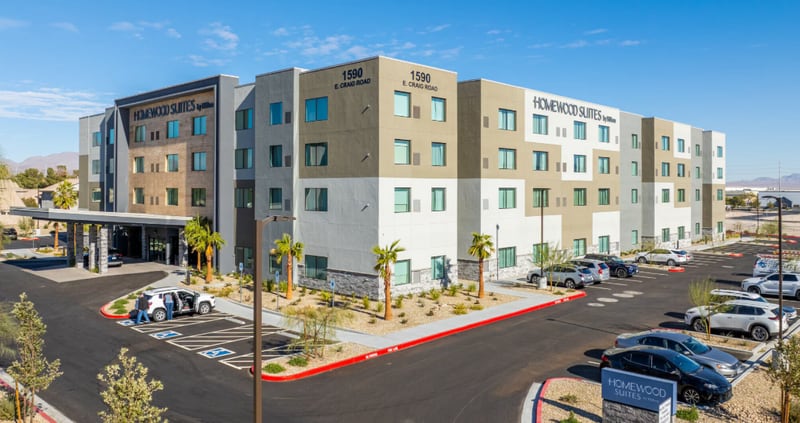
Hotels and lodging facilities represent the single largest category of SBA 504 borrowers by loan count, accounting for approximately 14% of all 504 originations in peak years.
Executive Summary
When SBA Standard Operating Procedure 50 10 8 took effect on June 1, 2025, it did not simply update a few paragraphs in a technical manual. It reversed the fundamental philosophy that had governed SBA-guaranteed lending since August 2023, when SOP 50 10 7 introduced the so-called "do what you do" approach to lender underwriting. (1) SOP 50 10 8 tells lenders exactly what to do, how much equity to require, what collateral to take, and how to document it all. The distinction is not academic. It is the difference between a lending program that originated a record $37.3 billion in FY2025 and one that, in its first months of implementation, saw origination volume drop precipitously. (2) Industry estimates place the initial decline in the range of 40% to 50% during the June through August 2025 period, though precise figures remain difficult to verify from public data. (3)
MMCG Invest has prepared feasibility studies under both regimes , and the operational contrast is stark. Deals that closed in April 2025 with minimal equity and a seller standby note would not survive first-pass screening under the new rules. The 10% mandatory equity injection, the effective elimination of seller rollover equity as a structuring tool, the reduction of the small loan threshold from $500,000 to $350,000, and the expansion of collateral requirements to virtually every loan above $50,000 are all producing measurable friction in the origination pipeline. This briefing examines each of these changes, explains why the SBA made them, assesses their real-world consequences, and identifies the deal structures that are emerging in response.
| Parameter | SOP 50 10 7.1 | SOP 50 10 8 |
|---|---|---|
| Minimum Equity Injection | No mandatory minimum | 10% of total project costs |
| Seller Standby Note Terms | Interest-only, 2-year standby | Zero payments, full loan life |
| Seller Note as Equity (max) | Up to 100% of equity | Capped at 50% of injection |
| Collateral Threshold | Required above $500,000 | Required above $50,000 |
| Small Loan Ceiling | $500,000 | $350,000 |
| SBSS Credit Score Floor | 155 | 165 (mandatory use ended Mar 2026) |
| Citizenship Requirement | 51% U.S. citizen/LPR | 100% U.S. citizen/national only* |
| Credit Elsewhere Test | Lender discretion | Written narrative required |
| Seller Rollover Equity | Permitted, no guarantee | Requires full loan guarantee |
| Franchise Directory | Eliminated (May 2023) | Reinstated (Jun 2025) |
| Guarantee Fees | Waived (FY2022 to 2024) | 2% to 3.75% (four-tier schedule) |
| DSCR Floor (Small Loans) | Not specified | 1.10:1 (loans ≤$350K, Mar 2026) |
The Financial Crisis That Forced the SBA's Hand
SOP 50 10 8 did not materialize from a policy vacuum. It was a direct response to portfolio deterioration that, by FY2024, had become impossible to ignore. The 7(a) program posted negative cash flow of approximately $397 million that year, its first deficit in 13 years, according to SBA press releases. (4) Default rates reached 3.7% , the highest since 2012, per the SBA's FY2024 Annual 7(a) Risk Analysis Report. (5) The SBA purchased $1.6 billion in defaulted loans during FY2024 alone, up from $1.1 billion the prior year and $733 million in FY2022. (6) Early defaults proved particularly alarming: loans failing within 36 months of origination hit their worst levels since March 2020, which suggested problems with initial underwriting rather than economic deterioration over time.
The Community Advantage pilot program illustrated the depth of the problem. That program, which targeted underserved markets through mission-based lenders, exhibited a default rate exceeding 7%, more than double the portfolio average. Multiple participating lenders generated early problem-loan rates above 30%. (7) Fee waivers compounded the damage. From FY2022 to FY2024, the SBA projects that approximately $460 million in upfront lender guarantee fees went uncollected. (8) Because the 7(a) program must operate at zero subsidy to taxpayers by statute, with guarantee fees covering expected losses, the combination of waived fees and loose underwriting broke the actuarial model.
Exhibit 1: 7(a) Portfolio Stress Indicators, FY2019 to FY2024
Metric
FY2019
FY2020
FY2021
FY2022
FY2023
FY2024
Default Rate
1.8%
3.1%
2.4%
2.0%
2.8%
3.7%
Loan Purchases ($B)
$0.6B
$1.4B
$0.9B
$0.7B
$1.1B
$1.6B
Net Cash Flow
Positive
Positive
Positive
Positive
Positive
-$397M
Administrator Kelly Loeffler framed the new SOP as restoration rather than innovation, describing it as the reimposition of requirements that were in place before January 2021 and that were removed during the Biden administration's expansion push. (9) Whether one agrees with that characterization or not, the financial data gave the SBA a credible basis for tightening. The agency also reinstated upfront guarantee fees through a separate Information Notice: 2% for loans up to $150,000, 3% for $150,001 to $700,000, 3.5% for $700,001 to $1 million, and 3.75% on the guaranteed portion exceeding $1 million for loans above $700,000. (10)
From Lender Discretion to Prescriptive Standards
The philosophical shift embedded in SOP 50 10 8 is its most consequential feature. Under SOP 50 10 7 (August 1, 2023) and its successor 7.1 (November 15, 2023), the SBA gave Preferred Lenders the latitude to apply their own commercial lending practices wherever agency guidance was ambiguous. (11) This approach worked as intended for experienced lenders with conservative credit cultures. It proved problematic when newer entrants, particularly nonbank lenders and FinTech platforms that entered the 7(a) program after 2020, interpreted discretion as license to originate at higher risk tolerances than the program's zero-subsidy model could absorb.
SOP 50 10 8 replaces discretion with explicit SBA-mandated minimums across every major underwriting parameter. Equity injection percentages, credit score floors, collateral thresholds, documentation checklists, and credit-elsewhere narratives are all codified. Lenders retain the freedom to be stricter than the SBA's requirements, but they can no longer be more lenient. The SBA also reinstated the credit elsewhere test , which requires lenders to produce detailed written explanations, supported by documentation, of why the borrower cannot obtain financing without SBA assistance. This includes a limited personal resources test examining whether any owner with 20% or more equity holds liquid assets sufficient to substitute for the loan, with carve-outs for retirement savings, education funds, and medical reserves. (12)
In our feasibility practice, the credit-elsewhere requirement has introduced a new dimension to every engagement. Sponsors who previously moved from term sheet to closing in 60 days now face an additional documentation burden that adds weeks to the timeline, not because the underlying credit is weaker, but because the paperwork trail must now satisfy prescriptive SBA standards rather than a lender's internal judgment.
The 10% Equity Injection Mandate
Under SOP 50 10 7.1, there was no mandatory minimum equity injection for SBA loans. Lenders routinely approved business acquisitions with zero buyer cash at closing. A seller standby note on interest-only terms for as little as two years could satisfy whatever equity the lender chose to require, and some lenders chose to require none at all. This flexibility fueled the record $37.3 billion in 7(a) originations during FY2025. (13) It also, the SBA argues, fueled the default spike.
SOP 50 10 8 imposes a hard 10% equity injection floor for two categories: all startup businesses (defined as operating one year or less) and all complete changes of ownership, with ESOPs exempt. (14) The injection is calculated against total project costs , which includes the purchase price plus fees, working capital, and closing costs. On a $1 million acquisition, that means a minimum of $100,000 in equity.
The sourcing rules are equally prescriptive. Seller standby notes may count toward equity injection only if they carry zero payments, no principal and no interest, for the entire life of the SBA loan, typically 10 years. Even under those terms, seller notes can satisfy no more than 50% of the required injection. (15) In practice, a buyer must bring at least 5% of total project costs in unborrowed cash from personal funds, with a seller note covering the remaining 5% under the harshest standby conditions available in commercial lending.
Acceptable equity sources are now exhaustively enumerated: unborrowed cash, ROBS (Rollover for Business Startups) from retirement accounts, HELOC draws with repayment sourced from non-business income, documented gift funds, grants without clawback provisions, and verified prepaid expenses. Promissory notes that rely on business cash flow for repayment, undisclosed side agreements, and funds from unverifiable sources are explicitly prohibited. (16)
Partner buyouts receive an important exception. If the remaining owner has been active in the business for at least 24 months with the same or higher ownership interest, and the business shows a debt-to-worth ratio of 9:1 or better on both the most recent fiscal year and current quarter balance sheets, the SBA allows financing of more than 90% of the buyout price. (17) Partial changes of ownership follow similar logic: less than 10% equity is permissible only when the debt-to-worth ratio sits at or below 9:1.
For a detailed analysis of how the 10% equity injection requirement affects your specific project structure, see our interactive SBA and USDA Loan Comparison Calculator, which models required equity contributions across 7(a), 504, and USDA B&I programs under current SOP 50 10 8 rules.
The Effective Death of Seller Rollover Equity
If the equity injection mandate is the change that gets the most attention, the elimination of workable rollover equity is the one causing the most deal disruption. Previously, sellers routinely retained a minority ownership stake after closing, a structure used for transition management, license retention, earnout alignment, and deal sweetening. SOP 50 10 8 makes this commercially unviable through three interlocking mechanisms.
First, any seller retaining any equity, even 1%, must personally guarantee the full SBA loan for the later of (a) at least two years after final disbursement or (b) until the loan has been current for 12 consecutive months. (18) No rational seller will guarantee a buyer's loan after transferring operational control. The guarantee requirement alone is sufficient to kill most rollover structures.
Second, partial changes of ownership must now be structured as stock or membership unit purchases. Asset purchases, the standard M&A structure that protects buyers from pre-closing liabilities, are explicitly no longer eligible for partial ownership changes. (19) This forces parties into a less favorable legal framework while simultaneously imposing the guarantee requirements described above.
Third, multi-step or phased buyouts are banned outright. All ownership must transfer in a single closing. The SBA also declared search funding explicitly ineligible, meaning investor vehicles where backers purchase less than 20% ownership to avoid personal guarantees while maintaining control through side agreements. (20) Self-funded searchers using their own capital remain eligible, but the traditional search fund structure with external backers is now barred.
Seller notes themselves are not dead, but their utility has narrowed dramatically. Three surviving use cases have emerged in practice: full standby notes counting as equity (capped at 5% of project costs), forgivable notes structured as conditional payment obligations for risk mitigation, and subordinated notes on two-year limited standby that do not count as equity but can be excluded from debt service coverage ratio calculations during underwriting. (21) A "two-note structure," one standby note counting as equity plus one standard subordinated note, has become the primary workaround for bridging gaps between buyer cash and total purchase price.
From MMCG's vantage point, the rollover equity restrictions are reshaping the advisory conversation at the earliest stages of engagement. Sellers who expected to retain 10% to 20% equity for a 12-month transition period, a structure that was standard practice six months ago, are now being told to choose between a clean exit and a personal guarantee on the buyer's debt. Most are choosing the clean exit, which means deals need to be restructured from scratch.
Small Loan Threshold and Collateral: A Tenfold Shift
Two numerical changes create outsized operational impact. The 7(a) Small Loan maximum dropped from $500,000 to $350,000 , and the minimum SBSS credit score rose from 155 to 165. (22) Loans between $350,001 and $500,000 that previously qualified for expedited, credit-scoring-based processing now require full Standard 7(a) underwriting: complete credit memoranda, personal financial statements from all guarantors, detailed credit-elsewhere narratives, and IRS tax transcript verification. Processing times for these mid-range loans have effectively doubled.
As of March 1, 2026, the SBA discontinued mandatory use of the SBSS score for 7(a) Small Loans entirely, via Procedural Notices 5000-875701 and 5000-876777. (23) The SBSS product itself remains available for voluntary lender use, but the SBA replaced the mandatory scoring gate with new underwriting procedures that include a minimum 1.10:1 debt service coverage ratio for all 7(a) Small Loans at or below $350,000. This DSCR floor does not apply to Standard 7(a) loans above that threshold.
The collateral shift is even more dramatic. Under SOP 50 10 7.1, collateral was required only for loans exceeding $500,000. SOP 50 10 8 requires collateral for all loans over $50,000 , a tenfold reduction in the threshold. (24) Lenders must take liens on all available business assets, and for loans not fully secured by those assets, they must lien all available equity in personal real estate of owners holding 20% or more. Properties with less than 25% equity are excluded. Real estate transferred to a spouse or children within six months of the application can be considered for collateral.
Exhibit 2: Underwriting Parameter Changes at a Glance
Parameter
SOP 50 10 7.1 (Nov 2023)
SOP 50 10 8 (Jun 2025)
Equity Injection Floor
No mandatory minimum
Seller Standby Terms
Seller Note as Equity Cap
Up to 100%
Collateral Required Above
$500,000
$50,000
Small Loan Ceiling
$500,000
$350,000
SBSS Credit Score
155 minimum
Citizenship
51% U.S. citizen/LPR
100% citizen/national (Mar 2026)
Credit Elsewhere
Lender discretion
Additional documentation mandates compound the burden. IRS tax transcript verification (Form 4506-C) is required for all loans regardless of size, where previously smaller loans were exempt. Hazard insurance is required on all collateralized assets above $50,000. Life insurance is required for key owners when loans exceed $350,000 and are not fully secured by hard collateral. (25) Collectively, these requirements mean that a $75,000 working capital loan now carries documentation obligations that, 12 months ago, applied only to transactions ten times that size. None of this replaces the base file, so the standing checklist of documents required for an SBA 7(a) application now sits underneath the transcript and insurance mandates rather than in place of them.
Franchise Directory Returns; Citizenship Rules Evolve Rapidly
The SBA Franchise Directory, eliminated in May 2023 under SOP 50 10 7, was reinstated effective June 1, 2025. (26) Franchise systems meeting the FTC definition must be listed on the Directory for their franchisees to obtain SBA financing. Franchisors sign a single master certification that replaces the prior system of individual addendums per loan. Brands previously listed had until July 31, 2025 to sign new certifications, though the SBA subsequently extended this deadline for some brands. The streamlining is genuine, but the reintroduction of the Directory also means that any franchise brand that fails to maintain its listing effectively locks its franchisees out of SBA capital.
The citizenship requirement is the most politically contentious provision in the entire SOP, and it has evolved through three distinct phases. Under SOP 50 10 7.1, the SBA required only that 51% of business ownership be held by U.S. citizens, nationals, or Lawful Permanent Residents. (27) SOP 50 10 8 raised that threshold to 100% of all direct and indirect owners, SBA-required guarantors, and key employees. A six-month lookback provision means no ineligible person may have been an owner or key employee within six months of the loan application.
In December 2025, the SBA issued Procedural Notice 5000-872050 (effective January 1, 2026), which eased the rule slightly by allowing up to 5% aggregate foreign ownership under defined categories while keeping LPRs eligible. (28) That relaxation was short-lived. Policy Notice 5000-876441 (effective March 1, 2026) rescinded the 5% exception and went further than the original June 2025 SOP by excluding Lawful Permanent Residents entirely . As of this writing, only U.S. citizens and U.S. nationals qualify. (29) Senate Democrats, led by Senators Patty Murray and Edward Markey, called the citizenship requirements "draconian" and cited them as a primary driver of the lending decline. (30)
Other notable eligibility changes include the explicit prohibition of shopping centers, shared office suites, salon suites, and ghost kitchens unless they meet specific conditions. Merchant Cash Advances and factoring agreements are no longer eligible for refinancing into SBA loans. Businesses with any existing SBA loan that is not current (30 or more days past due) are ineligible for new financing. On the expansion side, marijuana-adjacent businesses selling legal hemp and CBD products may now be eligible with proper documentation.
Market Impact: Volume Decline and a Split Reaction
The magnitude of the market impact is not in dispute, even if the precise numbers remain difficult to pin down from public data. Industry estimates from lender trade groups and weekly origination trackers suggest that 7(a) lending dropped in the range of 40% to 50% during the June through August 2025 period immediately following SOP 50 10 8's effective date. (31) Through the early months of FY2026 (which began October 1, 2025), volume trailed the prior year's pace, though the comparison is complicated by a 43-day government shutdown that shuttered E-Tran, the SBA's loan approval system, and prevented an estimated $5.3 billion in lending. (32) The SBA itself touted FY2025 as a record year, with $37.3 billion across 77,600 loans. (33)
The numbers behind this chart
| Category | 7(a) Volume ($B) |
|---|---|
| FY2019 | 23.2 |
| FY2020 | 22.6 |
| FY2021 | 36.5 |
| FY2022 | 25.7 |
| FY2023 | 27.5 |
| FY2024 | 29 |
| FY2025 | 37.3 |
| FY2026* | 28.3 |
Exhibit 3: 7(a) Annual Origination Volume, FY2019 to FY2025
Fiscal Year
Volume
Change
Notable Context
FY2019
$23.2B
Baseline
Pre-pandemic
FY2020
$22.6B
-2.6%
COVID onset, partial shutdown
FY2021
$36.5B
+61.5%
PPP/EIDL surge, recovery lending
FY2022
$25.7B
-29.6%
Normalization, rate hikes begin
FY2023
$27.5B
+7.0%
SOP 50 10 7 takes effect Aug 2023
FY2024
$29.0B
+5.5%
SOP 50 10 7.1 in effect, defaults rise
FY2025
$37.3B
+28.6%
Record year; SOP 50 10 8 effective Jun 2025
Industry reaction splits along institutional lines. NAGGL, the primary 7(a) trade association, has been broadly supportive of the tightening. Its advocacy positions explicitly called for reevaluating the regulatory changes that, in its view, removed prudent lending guardrails essential to protecting small business borrowers. (34) NAGGL President and CEO Tony Wilkinson described the period as one of the most pivotal in the history of the 7(a) program. NADCO, representing 504 CDCs, similarly maintained a constructive relationship with the SBA through the transition.
Congressional Democrats have been sharply critical. Representative Nydia Velázquez urged the SBA to strengthen capital access programs rather than constrict them. (35) Individual lender commentary reveals the ground-level friction. Chris Hurn, founder of Fountainhead Commercial Capital, called the policy a contradiction given the administration's simultaneous courting of foreign investment for large corporations. Alternative lenders see opportunity in the displacement: multiple nonbank CEOs have predicted that the SBA tightening will push deal flow toward conventional and alternative lending channels. (36)
Emerging Deal Structures Under the New Rules
Every regulatory tightening produces adaptive behavior, and SOP 50 10 8 is no exception. In the ten months since implementation, several deal structures have gained traction among borrowers, lenders, and advisors attempting to navigate the new framework.
ROBS rollovers and HELOC-sourced equity have become significantly more common. With seller standby notes capped at 50% of the required injection and limited to zero-payment terms for the life of the loan, buyers who lack $100,000 or more in liquid savings are turning to 401(k) rollovers and home equity lines as alternative equity sources. Both are explicitly permitted under SOP 50 10 8, though HELOC draws must be repayable from non-business income. (37)
The two-note seller financing structure has become the standard workaround for acquisitions where seller participation remains necessary. One note, on full standby (zero payments for the life of the SBA loan), counts toward equity injection. A second subordinated note, on two-year limited standby, sits outside the equity calculation but can be excluded from DSCR analysis during underwriting. (38) The combined effect preserves some seller financing flexibility while technically satisfying both the equity injection and the debt service requirements.
Expansion acquisitions offer a path around the 10% equity mandate entirely. When an existing business acquires another business operating under the same six-digit NAICS code, with identical ownership, the SBA treats it as a business expansion rather than a change of ownership. No minimum equity injection applies. A September 2025 amendment (Procedural Notice 5000-872764) removed the prior requirement that the target operate in the same geographic area, broadening this exception considerably. (39) The remaining criteria require a co-borrower structure and same-NAICS alignment.
MMCG has also observed increased interest in phantom equity and profit-sharing arrangements that provide sellers with economic upside without triggering the personal guarantee requirements associated with retained ownership. These structures require careful drafting to ensure the SBA does not recharacterize them as disguised equity interests, but when properly structured, they offer sellers transition-period alignment without the guarantee burden.
What This Means for Feasibility Analysis
For a firm like MMCG that produces third-party feasibility studies for SBA and USDA guaranteed loans, SOP 50 10 8 has changed the analytical framework in several concrete ways. The 10% equity injection raises the effective cost of entry for borrowers, which in turn raises the revenue threshold required to achieve a 1.0x debt service coverage ratio. For 7(a) Small Loans at or below $350,000, the new 1.10x DSCR floor makes the math even tighter. Deals that were feasible at 90% loan-to-cost with a 2% seller standby may not pencil at 80% loan-to-cost with a market-rate blended cost of capital. None of the new prescriptions reach the parcel itself, which is why site conditions still kill ground-up SBA construction loans through the cost stack, the interest reserve and the coverage ratio rather than through eligibility.
The collateral expansion also changes the risk calculus. Previously, sub-$500,000 loans were essentially unsecured from the SBA's perspective, which meant feasibility analysis could focus primarily on cash flow. Now, with collateral required above $50,000, lenders and their feasibility consultants must evaluate the liquidation value of business assets alongside the going-concern income projections. The analytical scope has expanded without a corresponding increase in the data typically available at the pre-commitment stage.
Perhaps most significantly, the elimination of lender discretion means that feasibility studies must now be written to SBA-specific standards rather than to the individual credit policies of the originating bank. Under SOP 50 10 7.1, a Preferred Lender could accept a feasibility study that met its own internal requirements. Under SOP 50 10 8, the SBA's prescriptive standards create a uniform floor that applies regardless of which lender originates the loan. For consultants, this is ultimately a positive development: it standardizes expectations and reduces the ambiguity that previously complicated engagements. But the transition has required recalibrating assumptions across every active project. It also means writing to the program rather than to the bank, since what an SBA credit committee needs from a feasibility study differs between a 504 debenture and a 7(a) note on the same building.
Looking Ahead
SOP 50 10 8 is not a temporary correction. It is a structural reset. The three changes with the greatest long-term impact on deal flow are the 10% equity injection mandate (which eliminates zero-down acquisitions), the effective death of rollover equity (which reshapes lower middle-market M&A), and the collateral threshold collapse from $500,000 to $50,000 (which touches virtually every loan in the portfolio). The significant initial volume decline suggests the market is still absorbing these changes, and the SOP's continued evolution, six substantive amendments in its first nine months, indicates the SBA itself is still calibrating.
For borrowers, lenders, and their advisors, the critical takeaway is that the deal structures built on seller financing flexibility and lender discretion over the past four years are gone. The new playbook demands real cash equity, clean ownership structures, full documentation, and rigorous third-party analysis. Practitioners who adapt early will find that the new framework, while more demanding, also produces more durable deal structures and more defensible credit files. Those who continue to underwrite as though the old rules still apply will find their pipelines drying up.
MMCG Invest, LLC provides independent, third-party feasibility studies for SBA 7(a), SBA 504 , and USDA guaranteed loan programs across all commercial real estate asset classes. For inquiries regarding feasibility analysis under SOP 50 10 8, contact info@mmcginvest.com or visit mmcginvest.com .
Interested in discussing a feasibility study for your SBA 7(a) or 504 project?

Michal Mohelsky, J.D. | Principal | mmcginvest.com
Contact: michal@mmcginvest.com
Phone: (628) 225-1110
Disclaimer: This report is provided for informational purposes only and does not constitute investment advice. Data presented herein is derived from proprietary MMCG databases and third-party sources believed to be reliable; however, MMCG Invest makes no representation as to the accuracy or completeness of such information. Figures from third-party industry databases have been independently verified and, where appropriate, adjusted to reflect MMCG's proprietary analytical methodology. Past performance is not indicative of future results.
Sources and Endnotes
(1) SBA Information Notice 5000-848663, October 25, 2023 (announcing SOP 50 10 7.1 effective November 15, 2023); Partner Engineering & Science, "SBA SOP 50 10 7 and 7.1 Environmental Policy Updates."
(2) SBA.gov , "Trump SBA Delivers Record Capital to Small Businesses in FY25," September 30, 2025; American Banker, "Live Oak, U.S. Bank Among Big Gainers as SBA Lending Spikes," October 10, 2025.
(3) Industry estimates from multiple lender and trade group sources. Precise quarterly breakdowns are available through Coleman Report subscription data but are not independently verifiable from public SBA data.
(4) SBA.gov , "SBA Eliminates Disastrous Biden-Era Underwriting Standards," April 22, 2025; SBA.gov , "SBA Initiates Actions to Reverse Biden-Era Mismanagement of Core 7(a) Lending Program," March 27, 2025.
(5) Tax Guard, "How a Rise in Early Loan Defaults Led to Big Changes at the SBA," August 2025, citing SBA FY2024 Annual 7(a) Risk Analysis Report.
(6) American Banker, "SBA's New Eligibility Rules Expected to Funnel Loans to Nonbanks," 2025, providing the $733M/$1.1B/$1.6B trajectory.
(7) SBA.gov , "SBA Overhauls Reckless Biden-Era Lending Program," May 19, 2025.
(8) SBA.gov , March 27, 2025 press release. Note: this is an SBA projection, not an independently audited figure.
(9) SBA Administrator Kelly Loeffler, public remarks, April-May 2025.
(10) NAGGL, "FY 2026 Loan Fees and Clarification of Fee Calculation for Multiple WCP or EWCP Loans"; SmartBiz, "SBA Reinstates Guaranty Fees for 7(a) Loans," 2025. Fee reinstatement was via separate Information Notices, not through SOP 50 10 8 itself.
(11) SBA SOP 50 10 7 (effective August 1, 2023) introduced the "do what you do" approach; SOP 50 10 7.1 (effective November 15, 2023) continued and refined it.
(12) SBA SOP 50 10 8, Chapter 3: Credit Elsewhere and Personal Resources Test.
(13) SBA.gov , September 30, 2025 press release; American Banker, October 10, 2025.
(14) Starfield & Smith, "Best Practices: A Review of Equity Injection Requirements Under SOP 50 10 8," May 2025, citing SOP at p. 131.
(15) Starfield & Smith, May 2025; Phillips Lytle, "The SBA Reverts Back to Stricter Lending Standards," 2025; Grasshopper Bank, "New SBA SOP: What You Need to Know About 50 10 8."
(16) Windsor Advantage, "Updated SBA Equity Injection Rules: What You Need to Know About SOP 50 10 8," 2025.
(17) Starfield & Smith, May 2025; Grasshopper Bank; Windsor Advantage. Debt-to-worth ratio must be 9:1 or better on most recent fiscal year and current quarter balance sheets.
(18) Windsor Advantage, "Navigating New Seller Guaranty Rules in Partial Ownership Changes," 2025; Whiteford, Taylor & Preston, "Client Alert: SBA Issues SOP 50 10 8," 2025.
(19) Whiteford, Taylor & Preston, 2025: "These transactions must now be structured as stock purchases, as asset purchase structures are explicitly no longer allowed."
(20) NAGGL Technical Updates to SOP 50 10 8; Starfield & Smith, "Key Highlights of the Technical Updates to SOP 50 10 8," June 2025.
(21) Business Brokers of Florida, "Contrary to Popular Belief, Seller Notes Within an SBA Financed Business Acquisition Are Not Dead," 2025; SBA 504 Blog, "Full Standby Seller Note: What It Means for SBA Business Loans (2026 Rules)."
(22) NAGGL, SOP 50 10 8 Information Notice; Grasshopper Bank; CRS Insight IN12549.
(23) NAGGL, "SBA Notice Revising Previously-Issued Underwriting Requirements for 7(a) Small Loans," citing Procedural Notices 5000-875701 (January 16, 2026) and 5000-876777 (February 20, 2026). Mandatory SBSS use ended; the SBSS product itself remains available for voluntary lender use.
(24) Phillips Lytle, 2025; Starfield & Smith, "Updated Collateral Rules for Standard 7(a) Loans in 50 10 8," August 2025.
(25) Live Oak Bank, "Navigating the SBA's New SOP 50 10 8: Key Updates," 2025; Byline Bank, "Key Updates in the SBA's Revised Standard Operating Procedures," 2025.
(26) Starfield & Smith, "Franchise Lending under SOP 50 10 8," June 2025; Taft Law, "SBA Franchise Directory Reintroduced Effective June 1, 2025"; Lexology, June 2025.
(27) CRS Insight IN12549; AmPac Business Capital; Windsor Advantage, "Citizenship Requirements in SOP 50 10 8."
(28) SBA Procedural Notice 5000-872050 (effective January 1, 2026); NAGGL, "SBA Issues Notice Making Major Revisions to SOP 50 10 8 Citizenship and Residency Requirements."
(29) SBA Policy Notice 5000-876441 (effective March 1, 2026); America's Credit Unions, "Small Business Administration Citizenship Requirements for Lending." This notice excluded LPRs entirely, a stricter standard than even the original June 2025 SOP.
(30) Senator Patty Murray, "Murray, Markey, Senate Democrats Request Answers from SBA on New Citizenship Verification Requirements for Lending Programs," 2025; CRS Insight IN12549.
(31) Multiple industry sources including lender trade group communications and weekly origination trackers. Coleman Report subscription data provides the most granular breakdowns but is not publicly available.
(32) SBA.gov , "Shutdown Blocks SBA from Delivering $5 Billion to Small Businesses Amid Trump Economic Comeback," November 13, 2025, estimating $5.3 billion in foregone lending.
(33) SBA.gov , September 30, 2025 press release.
(34) NAGGL Advocacy Position Statements, 2025.
(35) CRS Insight IN12549, citing Congressional floor statements.
(36) American Banker, "SBA's New Eligibility Rules Expected to Funnel Loans to Nonbanks," 2025.
(37) SBA SOP 50 10 8, Chapter 4: Acceptable Sources of Equity Injection.
(38) SBA 504 Blog, "Full Standby Seller Note: What It Means for SBA Business Loans (2026 Rules)."
(39) SBA Procedural Notice 5000-872764 (effective September 30, 2025); NAGGL, "New Technical Updates Version of SOP 50 10 8 Takes Effect June 1"; Starfield & Smith, "Key Highlights of the Technical Updates," June 2025.
SBA

Michal Mohelsky, J.D., FMVA, Practicing Affiliate of the Appraisal Institute
Principal, MMCG Invest, LLC
Published April 2, 2026. Last updated April 13, 2026. How this analysis was prepared.
Cite this
Michal Mohelsky, J.D., FMVA (2026). SOP 50 10 8: How the Biggest SBA Lending Overhaul in Five Years Is Reshaping Deal Structures. MMCG Invest, LLC. https://www.mmcginvest.com/post/sop-50-10-8-how-the-biggest-sba-lending-overhaul-in-five-years-is-reshaping-deal-structures
Work behind the citation
Where this goes next
- SBA Feasibility StudyMMCG's feasibility study page for this subject.