MMCG Feasibility Index Q2 2026
Feasibility Study Consultants
Whose Work Holds Under Underwriting
MMCG Invest is a national feasibility study consultancy preparing bankable feasibility studies for SBA 7(a) lenders, SBA 504 CDCs, USDA B&I and Community Facilities lenders, and the developers and borrowers they finance. Thirty plus asset classes. Nine to sixteen business days. Written acceptance guarantee. Independent by mandate.
MMCG Analytics
Where everyone starts guessing, we already know.
MMCG is a next-generation feasibility study consultancy built around its own nationwide analytical platform, with more than 96% of the country's land already analyzed.
And by analyzed, we mean it: from the soil under your parcel, through its LiDAR-measured terrain, zoning, traffic and demographics, up to the actual financial statements of comparable properties nearby.
See what we have on your parcel.
SELECTED REFERENCES
Selected references and lender testimonials
Reviewed and referenced by SBA and USDA program lenders. Loan officers and program specialists at chartered banks and non-bank rural lenders have reviewed sample reports, referred prospective borrowers to MMCG, and engaged the firm directly on transactions.
Lenders & CDCs



Developers & Investors



NGOs & Government


“Michal just completed 3 feasibility studies for me in the car wash industry during the holidays and really came through for us when we needed it.”
“I have sent over the Feasibility Study to the loan officer. They stated that everything looks great. (...)”
“Looks great, thank you!”
Engagement letters from MMCG are issued with a curated reference list of comparable prior assignments, selected to align with the borrower’s asset class, loan program requirements, including SBA 7(a), SBA 504, and USDA, as well as lender-specific underwriting criteria.
ASSET COVERAGE
Feasibility studies by asset class
Every property type the firm analyzes through its feasibility studies has a dedicated demand model, competitive benchmarking framework, and financial modeling discipline calibrated to the standards and expectations of the relevant loan program.
The map
Feasibility studies by state
Select a state
The United States
47 state pages and 60 metro hubs across 51 jurisdictions
Hover a state to see what it carries, or select it to open its page.
- State page, 47
- Plus metro hubs, 51 jurisdictions, 60 hubs
All states A to Z
- Alabama Birmingham
- Alaska Anchorage
- Arizona Phoenix
- Arkansas Little Rock
- California Sacramento
- Colorado Denver
- Connecticut Bridgeport
- Delaware Dover
- District of Columbia Washington, DC
- Florida Jacksonville, Miami, Orlando, Tampa
- Georgia Atlanta
- Hawaii Honolulu
- Idaho Boise
- Illinois Chicago
- Indiana Indianapolis
- Iowa Des Moines
- Kansas Wichita
- Kentucky Louisville
- Louisiana New Orleans
- Maine Portland
- Maryland Baltimore
- Massachusetts Boston
- Michigan Detroit
- Minnesota Minneapolis
- Mississippi Jackson
- Missouri Kansas City, St. Louis
- Montana Billings
- Nebraska Omaha
- Nevada Las Vegas
- New Hampshire Manchester
- New Jersey Atlantic City
- New Mexico Albuquerque
- New York New York City
- North Carolina Charlotte, Raleigh
- North Dakota Fargo
- Ohio Cleveland, Columbus
- Oklahoma Oklahoma City
- Oregon Portland
- Pennsylvania Philadelphia
- Rhode Island Providence
- South Carolina Charleston
- South Dakota Sioux Falls
- Tennessee Nashville
- Texas Austin, Dallas, Houston, San Antonio
- Utah Salt Lake City
- Vermont Burlington
- Virginia Virginia Beach
- Washington Seattle
- West Virginia Huntington
- Wisconsin Milwaukee
- Wyoming Cheyenne
The analysts who sign your study








The Feasibility Index
What lenders approved in Q2 2026, and why the underwriting math is tightening.
Analysis of 919,732 SBA 7(a) loans approved 2010 through 2026 shows adverse-resolution rates varying widely across industries. Read against SOP 50 10 methodology, the pattern shows why sensitivity bands now require tighter break-even occupancy than they did in 2024.

Principal · Practicing Affiliate, Appraisal Institute

Tightening Underwriting in a Rate-Normalized Cycle
MMCG Analytics data
Research from the practice
Research and the MMCG Feasibility Index
In-depth analysis on commercial real estate feasibility, SBA and USDA lending, and the asset classes the firm studies most. Each piece is written by the analysts who prepare MMCG's feasibility studies, drawn from active engagements and the firm's market database.
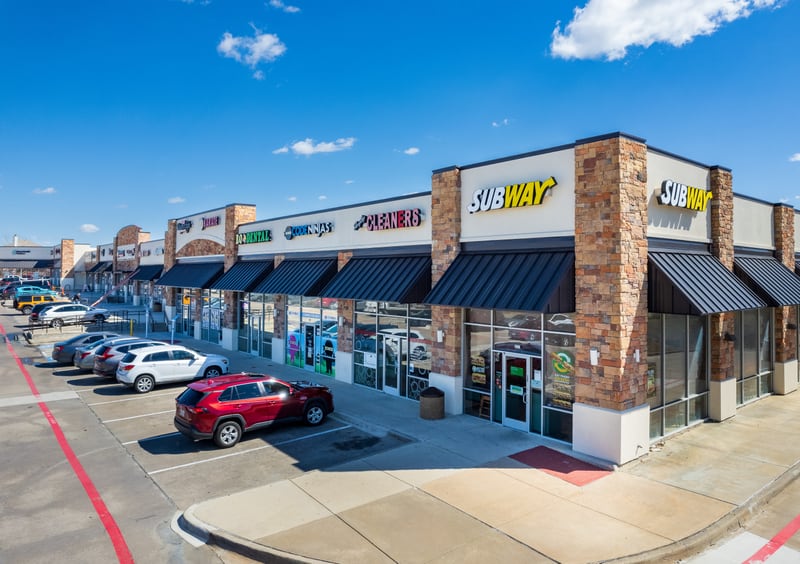
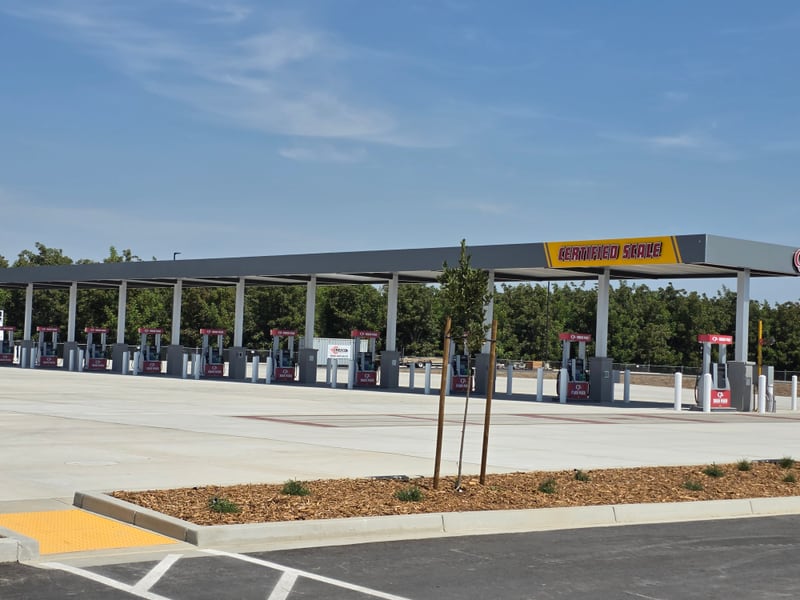
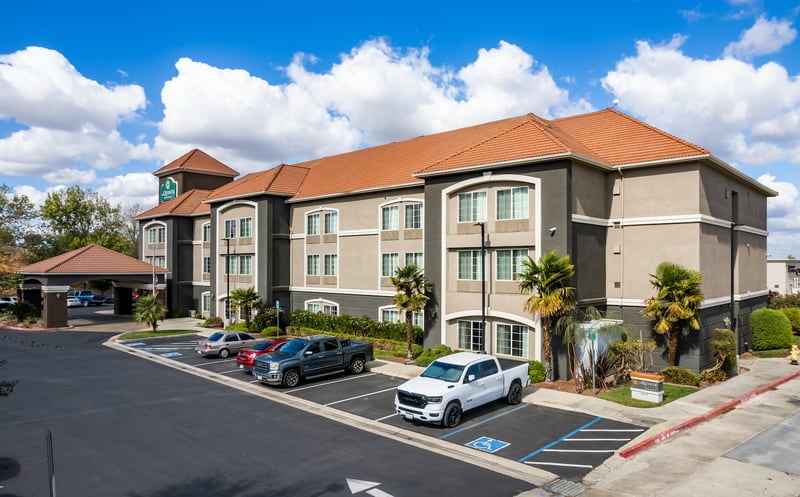
Most cited by other publishers
- U.S. Multifamily Market Outlook 2026: Current Conditions, Investment Trends, and Five-Year Forecast
- Senior Housing Market Trends 2025: Demographics Driving Assisted Living Demand
- U.S. Fitness and Gym Industry Report (2025 to 2030 Outlook)
- Bellagio Las Vegas Case Study (2022 to 2025)
- U.S. Car Wash & Auto Detailing Industry Overview (2025)
Data modules
The platform behind every study
Enter an address. Receive parcel, building, zoning, demographics, competitive supply, location risk, traffic and coverage-grade underwriting. Every output is sourced, normalised and citable in the form a credit memo expects. Where a layer is not held for a market the module says so rather than returning a confident blank.
- Parcel and siteAddress-level lookup across the parcel corpus: boundary, APN, lot dimensions, assessed value, recorded sales, and ownership of record where public records disclose it.
- DemographicsCensus ACS, decennial and BLS across every county in the country, with the trade area indexed against county, metro and state rather than reported bare.
- Location riskFEMA flood read at the parcel, an MMCG wind exposure score from public storm records, and the national wetlands inventory, each scored and labelled.
- Lending and DSCRThe SBA 7(a) and 504 loan record by county, industry, lender and status
Track record
The practice in numbers
as of September 2026
The work is measured in approved credit, funded projects, and feasibility frameworks carried forward.
The platform, MMCG Analytics
- US parcels loaded from county records
- 132 million
- An owner claim2 October 2026
- Building records held, 50 states and DC
- 135M+
- MMCG Analytics, September 2026
- Counties with demographic coverage
- 3,144
- MMCG Analytics, September 2026
- SBA 7(a) loans analysed
- 919,732
- MMCG Analytics, September 2026
The practice, MMCG Invest
- Loan amount across the projects analysed
- $1.7 billion
- MMCG Invest's own engagement recordJanuary 1 to September 1, 2026
- State pages published
- 47
- Counted from the pages published on this siteAs published
- Metro hubs published
- 60
- Counted from the pages published on this siteAs published
- Fixed fee, quoted before the engagement starts
- From $4,900
- The firm's base feeEvery engagement
- Business days from signed engagement to delivery
- 9 to 16 business days
- The firm's own site-wide turnaround commitmentEvery engagement
- First response to a new request
- 12 business hours
- The firm's own first-response commitmentFrom a Start a Study request
MMCG Invest built and operates MMCG Analytics, the data platform behind its studies. The platform holds 132 million US parcels and 135M+ building records across 3,144 counties, and has analysed 919,732 SBA 7(a) loans. MMCG Invest analysed projects carrying $1.7 billion in loan amount from January 1 to September 1, 2026. It publishes 47 state pages and 60 metro hubs.
The work
What our feasibility study consultants deliver
What an independent feasibility study answers
A feasibility study answers one question for a credit committee: can this project service its debt under realistic conditions, and what happens when those conditions move. MMCG’s studies are prepared by consultants with no lending, brokerage or development interest in the project, and they are written so the underwriter can lift the reasoning straight into the credit memorandum.
Does my loan require a feasibility study?
SBA may require a feasibility study under 13 CFR 120.160(b) but does not require one on every loan; in practice lenders expect one where repayment rests on projections rather than operating history, such as start-ups, new construction and 504 special-purpose property. USDA requires one for guaranteed B&I loans over $1,000,000 to a new business (7 CFR 5001.306(a)(3)(i)) and Community Facilities loans over $1,000,000 to a new entity or activity (5001.304(a)(4)(i)). See is a feasibility study required for your loan.
What the study contains
Market demand and trade area, competitive supply, the site and its risks, construction or acquisition cost, operating projections, and coverage tested at the program floor and below it. Every figure is sourced and dated. Where a data layer does not exist for a market, the study says so rather than filling the gap with a confident number.
How to choose a feasibility study consulting firm
Five things to check before you sign: independence in writing; fluency in the loan program you are using; a dedicated framework for your asset class; a named analyst who signs and will take the lender’s call; and a track record of studies that credit committees have accepted.
Built for lenders, CDCs and the borrowers they finance
FOR LENDERS AND CDCs
For lenders and CDCs
Studies underwriters can defend in committee. MMCG’s work is aligned to SBA SOP 50 10 and USDA 7 CFR Part 5001. Every conclusion is cross-referenced, independently sourced and stress-tested against the sensitivity bands a credit committee will ask for before approval. Fixed-fee engagements inside a published 9 to 16 business days timeline. Principals answer the lender’s questions in person. Preferred-vendor arrangements are available for national lenders and CDCs with recurring SBA and USDA volume.
FOR BORROWERS AND DEVELOPERS
For borrowers and developers
A feasibility study built to the standard your lender applies. Each is scoped to the capital decision you face, not only to what the lender requires. Fixed fee. You speak directly with the principal authoring your study. Unit count, scale, site plan and equity guidance are part of the standard scope.
ANALYTICAL INSTRUMENTS
Free tools for lenders and borrowers
MMCG's feasibility practice runs on the same commercial intelligence the institutional market relies on: CoStar, Moody's, EagleView, IBISWorld, ArcGIS Business Analyst, and mobile location and foot-traffic data, all held as standing subscriptions. Where those platforms reach their limits, the firm built its own. The eight proprietary instruments below are public on mmcginvest.com and on MMCG Analytics, our real estate feasibility data platform, and are engineered to carry an analysis past the point where licensed data stops, to a feasibility conclusion a lender can act on.
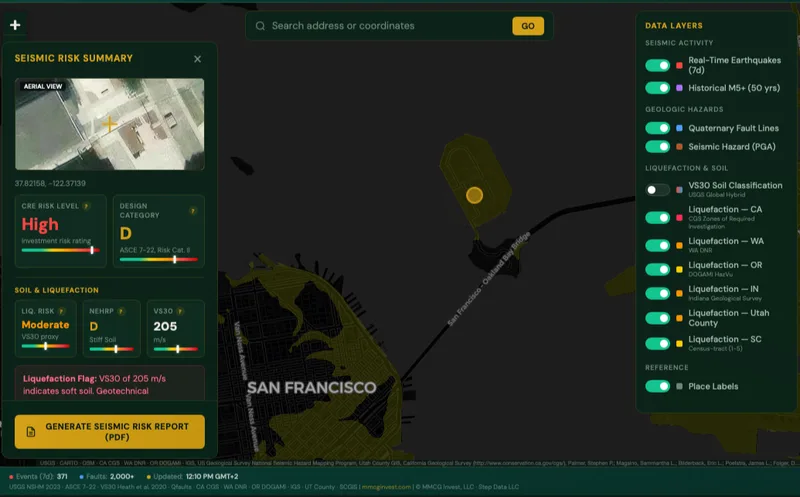
U.S. Seismic Hazard & Earthquake Risk Map · U.S. Multi-Hazard Wind Risk Map · FEMA Flood Zone & National Wetlands Inventory Map · USDA Rural Development Eligibility Map · Multi-Program SBA/USDA Loan Comparison · USDA B&I Loan Calculator · U.S. Seaports & Logistics Infrastructure Map · U.S. Oil Infrastructure Map
Feasibility study questions from lenders and borrowers
How much does a feasibility study cost?
MMCG quotes a fixed fee from $4,900 before the engagement starts. Scope drives the figure, not hours, and the quote you receive is the price you pay.
How long does a feasibility study take?
9 to 16 business days from signed engagement to a credit-committee-ready deliverable. Rush delivery is available from 5 business days. First response to a new request comes within 12 business hours.
Who prepares a feasibility study for an SBA or USDA loan?
An independent third party with no stake in the loan. The borrower prepares the business plan; the feasibility study has to come from a consultant the lender and, for USDA, the Agency will accept. At MMCG a named analyst prepares and signs every study and answers the lender directly.
Will my lender accept an MMCG feasibility study?
MMCG studies are prepared to the documentation standard SBA 7(a), SBA 504, USDA B&I and Community Facilities lenders apply.
What is the difference between a feasibility study and an appraisal?
An appraisal opines on value under USPAP. A feasibility study tests whether a proposed project can generate the cash flow to repay its debt, under the market, cost and operating assumptions the lender will underwrite. On new construction lenders commonly order both.
What does a feasibility study include?
Trade area and demand, competitive supply, site and location risk, cost build-up, operating projections, debt-service coverage at the program floor, and sensitivity bands. Every figure is sourced and dated, and maps and tables are exported for the credit file.
How do I choose a feasibility study consultant?
Check independence in writing, program fluency, an asset-class framework, a named signatory who will take the lender’s call, and accepted prior studies.
Begin an engagement
Request Feasibility Study Proposal
Contact MMCG Invest
Michal Mohelsky, J.D., FMVA
Principal in charge · MMCG Invest, LLC
Emailmichal@mmcginvest.com
Direct(628) 225-1110
Engagement Floor
From $4,900
Fixed-fee at proposal stage
Turnaround
9 to 16 business days
Rush from 5 business days available
San Francisco Office
Prefer a five-question quick start?Start a StudyFirst response within 12 business hours
Proposal Request
Tell us about the project.
12hSLA