Summary
U.S. apartment and condominium construction in 2025 is a steady but unspectacular year: industry revenue is estimated at $83 to $84 billion, up roughly 1.5% to 2.2% from 2024, while average profit margins sit slightly below 5%. About 389,000 multifamily starts are expected in 2025, rising to roughly 392,000 in 2026, and over 500,000 new apartment units are on track for delivery in 2025 against a national rental vacancy rate of about 7.0% in mid-2025.
Activity is concentrated in four states, with New York (15.7%), Florida (11.7%), California (11.0%) and Texas (9.9%) holding nearly half of 2024 industry revenue, and over 52% of new 2025 apartments located in the South. IBISWorld projects revenue growth of about 1.8% to 1.9% per year through 2029, reaching approximately $91.8 billion, with margins staying in the 4% to 6% range. For lenders, location is the main lease-up risk, and interest rate exposure, cost inflation and contractor fragmentation are the principal execution risks.
Written for Lenders underwriting multifamily construction loans, Developers planning apartment or condominium projects, CDCs and investors evaluating market-level lease-up risk, Contractors bidding in the top state markets. 45 minute read.
Key figures
- New apartments needed
- 4.3 million
- National Multifamily Housing Councilby 2035
- New multifamily housing starts
- about 389,000
- Fannie Mae housing forecast2025 (annualized)
- Rental vacancy rate
- about 7.0%
- U.S. Census Bureau, Housing Vacancies and Homeownership (Q2 2025 Press Release), per the article's sourcesmid-2025
- Industry revenue forecast
- approximately $91.8 billion
- IBISWorldby the end of 2029
- Profit margin (net)
- ~4.7%
- IBISWorld Industry Report 23611b (2025)2024
- Industry employment
- about ~70,000 people
- IBISWorld2024 (current)
Updated: Mar 23
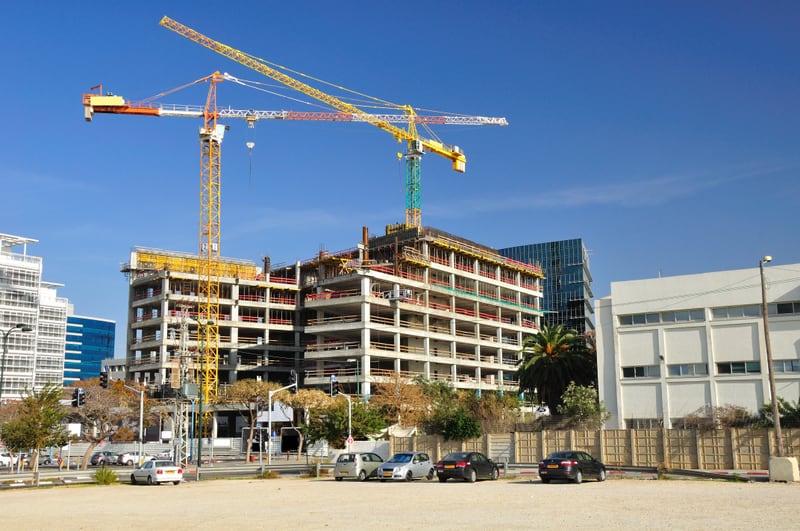
Construction site
2025 Industry Performance Overview
The U.S. apartment and condominium construction industry has experienced mixed performance in 2025 amid shifting economic conditions. After strong growth during the pandemic-era housing boom (fueled by low interest rates), rising interest rates in 2022 to 2023 caused a noticeable slowdown in multifamily construction. Many contractors delayed or canceled projects as the Federal Reserve’s rate hikes drove up financing costs and mortgage rates, which in turn dampened housing starts. Housing starts for multifamily units sank in those years as developers grew cautious. Profit margins were squeezed by price competition and escalating costs : higher wages (due to a tight labor market and skilled labor shortages) and surging prices for key materials cut into contractor earnings. In 2024 to 2025, however, economic conditions began to stabilize. The Federal Reserve signaled an end to aggressive rate increases, and interest rate cuts are anticipated in 2024 to 2025 , which is expected to reinvigorate construction activity moving forward. Indeed, Fannie Mae forecasts a slight decline in the federal funds rate (to ~4.0% by late 2025), easing borrowing costs for developers.
Meanwhile, labor market conditions remain a double-edged sword. Overall U.S. unemployment has stayed low (around 3.5 to 4% in 2023 to 2025), meaning contractors struggle to find skilled workers . An aging construction workforce and fewer young entrants have exacerbated labor shortages. To attract and retain talent, builders have had to raise wages , pushing average salaries in this industry above $89,000 per year – higher than the broader construction sector average. Even so, many contractors rely on subcontractors for manual labor, keeping their core payrolls lean. This outsourcing model means labor costs often appear under “purchases” (subcontractor fees) rather than wages on financial statements. The tight labor supply and resulting high labor costs continue to cap profit growth for many builders.
Despite these challenges, demand for multifamily housing remains fundamentally strong in 2025 . Several demographic and market forces support continued construction of apartments and condos:
Housing Shortage & Pent-Up Demand: The U.S. faces an ongoing housing shortage, especially in affordable and urban rentals. More than 4 million affordable units were lost from 2015 to 2020, and the National Multifamily Housing Council estimates the country needs to build 4.3 million new apartments by 2035 to meet demand. This backlog of need has bolstered the pipeline of projects for apartment contractors. Even as homeownership picks up slightly (with cooling home prices in 2024 to 25), renting remains the only feasible option for many households.
Demographics – Young Adults and Immigrants: Major cities continue to draw young professionals and new immigrants , who often prefer renting apartments in urban centers. New college graduates entering the job market (many burdened with student debt) struggle to qualify for mortgages, keeping rental demand high . Immigration, which slowed during the pandemic, is rebounding; as it does, it boosts demand for rental units in gateway cities and growing metro areas.
Demographics – Aging Baby Boomers: As hinted by the industry’s tagline “For rent: Aging baby boomers will bolster demand”, empty-nest baby boomers are increasingly downsizing from suburban homes into apartments or condos. This cohort’s transition into multifamily living (often in warmer climates or urban locales with amenities) adds to industry demand. For example, many retirees relocate to the Sunbelt, increasing apartment construction in states like Florida and Arizona (which cater to senior-friendly communities).
Rental Market Dynamics: Rental vacancy rates, while off historic lows, are still moderate. Nationally, the rental vacancy rate was about 7.0% in mid-2025 , up from ~6.5% in 2023. Higher vacancies signal some easing of the tight rental market; however, they remain near long-term averages and do not indicate a glut . In fact, many metro areas (especially in the Southeast and Southwest) still face undersupply of apartments relative to population growth. Rents have continued to rise (albeit at a slower pace), supporting developer revenues. That said, rising vacancies in certain cities have made developers more cautious: increased rental vacancies can deter new projects , as builders worry about filling units. Renters are also exhibiting cost-conscious behaviors – for instance, more young people are co-living or doubling up with roommates to save money, which could soften demand for new units if it becomes widespread. Overall, though, the “rentership” rate remains high , and homeownership is still out of reach for many, sustaining a solid base of renters.
Construction Backlogs: Many projects that were paused in 2022 to 2023 (due to high financing costs and supply chain issues) have restarted in 2024 to 2025. The industry is seeing an uptick in multi-family building permits and groundbreakings as interest rates stabilize. According to Fannie Mae’s housing forecast, about 389,000 new multifamily housing starts are expected in 2025 (annualized), rising slightly to ~392,000 in 2026 . While these figures are below the 2021 peak, they indicate a healthy level of new construction moving through the pipeline. In fact, 2025 is on track to see over 500,000 new apartment units delivered (completed) nationally – only slightly below 2024’s level and well above the average of the past decade. This resurgence is being led by high-growth regions (discussed more below), suggesting that the industry is adapting to demand by shifting activity to where it’s needed most.
In summary, 2025’s industry performance reflects a transition period : growth has moderated from the frenzied pace of the early 2020s, but fundamentals remain positive. Industry revenue for 2025 is estimated to reach $83 to 84 billion , up roughly 1.5 to 2.2% from 2024. This modest growth rate illustrates the headwinds of higher financing costs and vacancy concerns, yet it also underscores the resilience of demand for multi-unit housing. Profitability has not fully recovered – average profit margins are slightly below 5% – but contractors are maintaining volume by competitive bidding and cost control. The expectation is that as interest rates begin to tick down in late 2024 and 2025 , multifamily construction will further rebound . Lower borrowing costs should “bolster growth for apartment and condo builders” going forward, though they also may spur more single-family construction (creating some competition for investment dollars and labor). On balance, 2025 is a year of steady, if unspectacular, performance , setting the stage for improved outlook in the coming years as the industry navigates the new economic landscape.
Key State Markets and Regional Activity
Apartment and condominium construction activity is highly concentrated in a few key states and metropolitan areas. The industry’s geographic distribution reflects population trends, migration patterns, and local market conditions. Table 1 below summarizes revenue and employment by state for the top markets in this industry (2024 data), illustrating where multifamily construction is most active:
Table 1. Top States in Apartment/Condo Construction – Revenue and Employment (2024)
| State | Industry Revenue | Share of Industry | Employment | Share of Industry |
|---|---|---|---|---|
| New York | $13.14 billion | 15.7% | 7,802 workers | 13.4% |
| Florida | $9.80 billion | 11.7% | 6,309 workers | 10.8% |
| California | $9.20 billion | 11.0% | 8,349 workers | 14.3% |
| Texas | $8.29 billion | 9.9% | 4,398 workers | 7.5% |
| Massachusetts | $4.75 billion | 5.7% | 2,987 workers | 5.1% |
| Illinois | $3.77 billion | 4.5% | 2,911 workers | 5.0% |
| Washington | $3.61 billion | 4.3% | 3,585 workers | 6.1% |
| Georgia | $3.58 billion | 4.3% | 2,121 workers | 3.6% |
| All Other U.S. | ~$27.3 billion | ~32% | ~26,000 workers | ~34% |
Source: IBISWorld; figures are for 2024. “All Other” is the aggregated remainder of states.
As shown above, four states – New York, Florida, California, and Texas – dominate the multifamily construction landscape , together accounting for nearly half of U.S. industry activity by revenue. New York alone represents about 15 to 16% of industry revenue, the largest single-state share. This is driven by the enormous scale of New York City’s apartment construction market (from luxury high-rises in Manhattan to affordable housing projects in the boroughs). In fact, the New York City metro has led the country in new apartment construction for four years running, with over 30,000 units slated for completion in 2025. New York’s share of industry employment (~13.4%) is slightly lower than its revenue share, suggesting higher project values per worker – likely due to high construction costs and large project sizes in NYC.
Florida and California are virtually tied as the next largest markets, each with roughly 11% of industry revenues. Florida has seen a boom in multifamily development, fueled by robust population growth and in-migration (especially retirees and remote workers moving to the Sunshine State). Coastal cities like Miami, Tampa, and Fort Lauderdale have multiple large-scale condo and apartment projects. Florida’s construction employment in this sector (~6,300 workers) is a bit lower than California’s, but its revenue is slightly higher. This could reflect a greater proportion of high-value condo developments (e.g. luxury high-rises) in Florida or differences in reporting. California , home to tech hubs and massive metros (Los Angeles, San Francisco Bay Area), also generates around $9 to 10 billion in multifamily construction annually. California actually employs the most apartment construction workers of any state (over 8,300, ~14% of U.S. industry employment) – not surprising given its size – but its share of revenue is on par with Florida’s. One factor is California’s higher regulatory and cost hurdles: lengthy approval processes and expensive labor/materials can lead to more labor hours per project without a proportional increase in revenue, slightly diluting revenue per employee.
Texas is another powerhouse, with about 10% of industry revenue. Texas’s major cities (Dallas-Fort Worth, Houston, Austin, San Antonio) have been hotbeds of apartment construction in recent years, thanks to economic expansion and population inflows. In 2025, Texas and Florida together account for roughly 30% of all new apartment units coming online in the nation . Texas benefits from relatively streamlined permitting and fewer regulatory barriers , enabling faster development. However, Texas’s share of industry employment (7.5%) is lower than its revenue share, implying efficiency or heavier use of subcontractors. It may also indicate that some large Texas projects are handled by out-of-state firms (revenue credited to Texas projects, but workforce partially in other states).
Beyond the “big four,” a second tier of states contributes meaningfully: Massachusetts (5.7% of revenue), Illinois (4.5%), Washington (4.3%), and Georgia (4.3%) stand out. Massachusetts is elevated by the Boston metro’s active construction (including student housing and biotech-driven development in Cambridge). Illinois is largely about Chicago , although Chicago’s new construction has slowed recently (down ~60% year-over-year in 2025). Washington State’s strength comes from the Seattle metro , where a booming tech sector drives housing demand. Georgia’s share is mostly from Atlanta , a rapidly growing metro and a logistics/finance hub that attracts younger populations.
The regional pattern is clear: the Sunbelt and coasts dominate . The Southeast (including Florida, Georgia, the Carolinas) hosts over a quarter of all multifamily contractors. Warm-weather states with strong in-migration, like Florida and Georgia, have a constant need for new apartments – especially to accommodate retirees (in Florida) and families seeking larger, more affordable housing (throughout the Southeast). The West Coast (California, Washington, etc.) accounts for roughly another quarter of contractors, driven by tech industry growth and the persistent housing undersupply in cities like L.A. and San Francisco. Despite a lower overall population share, the West’s economic vitality means continuous demand for modern multifamily units for incoming workers. The Mid-Atlantic and Northeast (e.g. New York, New Jersey, Massachusetts) remain crucial, given their dense urban centers. Contractors cluster around cities like New York City, Philadelphia, Boston, etc., where high population density necessitates multifamily living solutions . Many of these cities also have dedicated affordable housing programs (e.g. NYC’s initiatives to build low-income apartments), sustaining construction activity even when luxury development cools.
In contrast, many Midwestern and rural states have relatively low activity. For example, large states by area like Ohio, Michigan, Iowa, or Kansas each comprise well under 2% of industry revenue. These areas tend to have slower population growth or more emphasis on single-family homebuilding. An interesting outlier is North Carolina (not top 8 by revenue, but notable) – metros like Charlotte and Raleigh are booming, pushing North Carolina’s multifamily construction (Charlotte is among the top 10 metros for new apartments in 2025). Similarly, Colorado (Denver) and Arizona (Phoenix) are high-growth states with significant apartment construction, even if their percentage of national industry revenue is modest (~1 to 2% each). Phoenix, for instance, ranks 4th among metros for 2025 deliveries.
To summarize the geography: investment and construction are heaviest in states with large urban populations, strong job growth, and net migration gains . Coastal tech hubs (California, Washington), finance/education hubs (New York, Massachusetts), and Sunbelt boom states (Texas, Florida, Georgia, Arizona, North Carolina) form the backbone of U.S. apartment construction. These are areas where housing demand is high and continuous , supporting a robust pipeline of projects. By contrast, states with stagnant populations or cheaper housing markets see less multifamily development (their residents often opt for single-family homes). For lenders and investors, this means market location is a critical risk factor – projects in high-demand states like Texas or Florida may face less lease-up risk, whereas projects in slow-growth regions could struggle with vacancies. Indeed, recent data show over 52% of new apartments in 2025 are in the South (Sunbelt), reflecting where builders see the best opportunity. Regions with favorable regulatory climates and economic growth (e.g. the Southeast) will likely continue to capture outsized shares of multifamily construction.
Outlook Through 2029 – Forecasts and Trends
Looking ahead, the apartment & condo construction industry is expected to grow steadily but at a moderate pace through 2029. IBISWorld projects industry revenue to increase at a compound annual growth rate (CAGR) of ~1.8 to 1.9% from 2024 to 2029 , reaching approximately $91.8 billion by the end of 2029 . This indicates a continuation of growth, albeit slower than the 2019 to 2024 period (which saw ~2.9 to 3.8% CAGR depending on the baseline). The tempered growth outlook reflects expectations of an evolving economic environment: interest rates are forecast to trend down gradually (not precipitously), homeownership may regain some popularity if single-family housing becomes more affordable, and rental market conditions are likely to normalize with higher supply.
Key forecast metrics through 2029 include:
Revenue Growth: Annual revenue gains are expected to average around 1 to 3% per year, with some volatility. After a modest uptick in 2024 (estimated +1.5% to +2.2%), growth may accelerate slightly if interest rate cuts spur development. However, IBISWorld notes that revenue volatility is moderate , as the industry is cyclical with the broader economy. The mid-decade years (2025 to 2026) could be relatively flat if the market digests the large number of recent completions (500k+ units delivered in 2025 alone), then picking up later in the decade as undersupply in affordable segments persists. By 2029, reaching ~$92 billion in revenue would mark a new high for the industry (in inflation-adjusted terms).
Housing Starts and Construction Volume: Multifamily housing starts, having fallen from their peak in 2021 to 22, are forecast to stabilize and then gently rise in the latter half of the 2020s. As of late 2025, forecasts anticipate ~0.38 to 0.40 million multifamily starts annually in the mid-term. The industry may not return to the record-setting pace of early 2022 (when starts briefly exceeded 470,000 units annualized), but it should maintain a healthy level around 350k–400k units per year barring a major recession. Importantly, the need for new apartments (due to the housing deficit mentioned earlier) underpins these projections – even achieving ~400k units/year, it would take many years to close the gap of several million units needed. Organizations like the National Apartment Association suggest construction will continue to be robust to meet the demand from forming households, immigrants, and aging populations. Therefore, through 2029 we expect moderate increases in housing starts , concentrated in high-demand metro areas. Some years may see slight declines if interest rates or economic dips intervene, but the overall trend is a gentle rise. By the late 2020s, if interest rates normalize to lower levels, we could even see a mini-surge as financing becomes more accessible.
Employment: Industry employment is projected to grow roughly in line with revenue, or slightly faster if labor-intensity rises. Currently about ~70,000 people are employed in this industry. IBISWorld forecasts the total number of employees to expand at ~2.1% annually (2024 to 29) , reaching on the order of 75 to 80 thousand workers by 2029 . This suggests net job creation in the sector, although much hiring will be of subcontractors and project-based staff. The number of contracting businesses is also expected to rise modestly (~2.7% CAGR in enterprises), meaning new firms will enter, keeping average firm size small. By 2029 there may be ~27,000+ businesses active (up from ~21,700 in 2024). More contractors in the field could increase competition, which in turn limits profit margin expansion . Notably, employees per business might actually decline slightly (from ~3.3 to ~3.1 on average) as the industry remains fragmented and reliant on flexible staffing.
Profitability: Industry profit margins are expected to remain slim but stable through 2029. In the near term (2024 to 2025), margins have been around 4 to 5% on average. As material price inflation abates and supply chain issues resolve, contractors should see some cost relief. Coupled with slightly less ferocious price competition (if demand strengthens), profit margins could edge up modestly over the next five years. IBISWorld’s outlook suggests only modest profit gains – for example, an uptick of perhaps 0.5 to 1 percentage point in margin by decade’s end. Even that is not guaranteed, as persisting labor shortages and high input costs may continue to cap margins. Essentially, contractors will strive to pass higher costs to developers via higher bids, but competitive pressures often force them to absorb some costs. The consensus is that profit margins will hover in the mid-single-digit range (4 to 6%) through 2029, which is slightly below the broader construction sector average profit margin. Profit pools will grow in absolute terms (total industry profit projected around $5 to 6 billion by 2029), but as a share of revenue, profitability remains constrained by the structure of the industry. One upside: interest expenses for developers should decline if rates fall, which can improve project viability and perhaps allow contractors to negotiate better terms. Nevertheless, given the low fixed-cost structure (most costs are variable per project) and intense bidding, dramatic margin improvement is unlikely.
Several trends are expected to shape the industry’s trajectory through 2029:
Shift in Project Mix: Developers may pivot to more affordable and mid-market projects as luxury urban high-rises face saturation. In recent years, the luxury rental segment saw a boom, but high vacancies in pricey units have slowed that segment. Affordable housing and “workforce housing” projects (often backed by tax credits or public funds) will likely comprise a growing share of new construction. This could slightly reduce average project revenues but keeps volume up. Also, more mixed-use developments integrating apartments with retail/offices are anticipated in urbanizing suburbs.
Interest Rate Environment: The base assumption is gradual interest rate cuts from 2024 onward , fostering a more favorable climate for construction financing. However, if inflation surprises to the upside, the Fed could keep rates higher for longer, which would dampen the forecast. By 2029, many expect rates to be back down near historical norms (e.g. a federal funds rate in the 2.5 to 3.5% range, 30-year mortgage rates ~5 to 6%). Such a scenario supports continued apartment development. Volatility in interest rates is a risk to monitor: sharp increases in rates (as in 2022) would again choke off projects, whereas faster-than-expected cuts could unleash a burst of new construction.
Homeownership vs. Renting: The homeownership rate may tick up slightly if the single-family market recovers (some forecasts show homebuilding picking up by 2026 as single-family starts rise again). If more households buy homes due to moderating prices and new supply, rental demand growth could slow. That said, high mortgage rates and stringent lending standards have pushed many to remain renters. The industry outlook assumes renters will continue to form a large portion of new households , especially as Millennials and Gen Z still face affordability issues for buying. Rental vacancy rates are expected to stabilize in the mid-high single digits (perhaps 6 to 8% nationally) as new supply is absorbed by population growth. A balance between supply and demand is more likely by 2029: not the extreme landlord’s market of 2021, but also not an oversupply – rather a healthy equilibrium where new construction closely matches incremental demand.
Housing Policy and Supply: Government actions to address housing shortages (discussed later) could accelerate construction. If, for example, zoning reforms or federal housing spending significantly expand, the industry could see a positive jolt (more projects approved). Conversely, extended permitting times or community opposition in some areas could slow the pace. Given current momentum, states that simplify approvals and incentivize development will see outsized growth (e.g. states passing pro-housing legislation may attract more investment). Technological improvements in construction (like modular building) might also contribute to faster, cheaper apartment construction toward the end of the decade, possibly improving productivity.
Overall, the 2025 to 2029 outlook is cautiously optimistic . The industry is transitioning from a high-growth phase to a more mature phase of the cycle. Growth will continue but at a moderated rate, with total output reaching new highs by 2029 in line with economic and demographic needs. Investors and lenders can expect relatively stable conditions , provided the macroeconomy avoids a severe downturn. Importantly, the fundamental demand drivers (population growth, urbanization, affordability constraints) remain intact, suggesting that even if cyclical dips occur, the long-term need for multifamily housing will support the industry. By 2029, the apartment and condo construction sector should be slightly larger in real terms, more energy-efficient (due to new building standards), and potentially more geographically diversified (as Sunbelt growth continues). Profitability will remain a challenge, but those builders who embrace cost-saving technologies and strategic partnerships may see better returns than the industry average.
Strategic Analysis: Risks and Opportunities for Investors & Lenders
From an investor or lender perspective, the apartment & condo construction industry presents a blend of steady opportunities and notable risks looking forward. Understanding these factors is key to making informed financing and development decisions. Below is an analysis of major opportunities to capitalize on and risks to manage in the multifamily construction space:
Opportunities and Growth Avenues
Surging Demand for Affordable and Niche Housing: One of the greatest opportunities lies in addressing the affordable housing shortage . Both government incentives and market need are aligning to encourage development of affordable units (e.g. units eligible for Low-Income Housing Tax Credits, or LIHTC). Developers focusing on workforce housing, subsidized affordable apartments, or mixed-income projects can tap into pent-up demand and public support. Additionally, niche segments like student housing and senior living apartments remain under-supplied in many regions. As colleges expand enrollment, private developers are often partnering with universities to build modern student housing facilities. Similarly, with baby boomers downsizing, there is strong demand for age-restricted apartments, active senior communities, and assisted-living oriented multifamily projects. These segments often come with stable occupancy (students and seniors create consistent need year after year) and sometimes public backing (e.g. municipal bonds for senior housing, or university master leases for dorm projects).
Co-Living and Innovative Housing Models: Co-living has emerged as a creative solution to housing affordability in expensive cities. Co-living developments offer micro-units (small private bedrooms) with shared common areas, allowing lower rents for tenants and higher density for developers. This model, essentially an upscale form of roommate living, is gaining traction with young professionals and single renters. Recent research by Gensler and Pew has even explored converting underutilized office buildings into co-living residential spaces as a way to address housing shortages. The findings show that office-to-apartment conversions with co-living layouts can be done 25 to 30% cheaper and faster than ground-up construction, and yield rents about 50% lower than standard studios (e.g. ~$1,000/month in Los Angeles vs $2,000+ for a normal studio). Investors who support these conversion projects could benefit from relatively quick turnaround and strong demand from cost-burdened renters. Co-living is still a small part of the market, but it addresses a key gap between luxury apartments and traditional affordable housing. As cities like LA, Houston, Chicago and others experiment with co-living conversions, this trend could scale up, offering new investment opportunities with public-private partnership potential (cities are interested in creative reuse of vacant offices). In short, “sophisticated flat-sharing” models might become a mainstream asset class in multifamily, blending elements of hospitality and housing.
Green Building and Energy Efficiency : With increasing emphasis on sustainability, LEED-certified and energy-efficient apartment buildings are becoming more valuable. Tenants (especially corporate and higher-income tenants) are starting to prefer eco-friendly buildings for cost savings and ESG alignment, and cities are pushing for greener construction. Many states offer energy efficiency programs and tax credits for multi-family properties that meet certain green standards. For example, the federal New Energy Efficient Home Credit provides up to $5,000 per unit for energy improvements from 2023 to 2032. Additionally, local regulations like New York City’s Local Law 97 require large buildings to cut emissions or face fines, effectively nudging developers toward high-efficiency designs and retrofits. Investors who incorporate solar panels, high-efficiency HVAC, better insulation, and sustainable materials in new projects can not only qualify for incentives but also enjoy lower operating costs and a marketing edge. Green building certifications (LEED, ENERGY STAR) can attract institutional investors focused on ESG criteria and potentially secure green financing (loans with better terms for sustainable projects). Thus, focusing on sustainable development is both a risk mitigator (against future regulatory penalties) and an opportunity (to access incentives and meet a growing market niche for eco-friendly housing).
Demographic Tailwinds – Urbanization & Lifestyle Shifts: Certain demographic trends will continue to favor multifamily living. Urbanization is ongoing – even if some people left big cities during the pandemic, many have returned or are moving to smaller cities, keeping demand for apartments high. Younger generations (Millennials, Gen Z) are delaying marriage and children, meaning they rent longer into adulthood, often preferring the flexibility of apartments in amenity-rich locations. Single-person households are a growing segment (including young professionals and older adults who live alone); nearly 38 to 58% of renters in some large cities are single occupants, which bolsters demand for one-bedroom and studio units. These societal shifts support a long-term need for multifamily housing that caters to smaller households and those valuing convenience over space. Additionally, remote work has enabled some migration to secondary cities, but it hasn’t eliminated the appeal of multi-family communities – in many cases, remote workers still prefer apartment complexes with shared amenities (gyms, co-working spaces, etc.) that provide social interaction and convenience. Developers can capitalize by building properties that align with these preferences (e.g. incorporating co-working lounges, high-speed internet, and communal spaces to attract work-from-home tenants).
Public Sector Support & Partnerships: Government initiatives to stimulate housing construction present an opportunity for savvy investors. Apart from tax credits, there are increasing instances of public-private partnerships (PPPs) for housing. Cities offer free or cheap land, expedited permits, or infrastructure subsidies to developers who include affordable units or community benefits in their projects. For instance, large cities (New York, Los Angeles, etc.) have RFP programs where developers compete to build on city-owned land for mixed-income housing. There are also federal funds (from HUD, etc.) being allocated for rental housing preservation and development. Investors who align projects with these programs can secure low-cost financing (such as tax-exempt bonds, HUD-insured loans) and grants. One notable development: in 2025, legislation has extended and expanded Opportunity Zones incentives for real estate investment in underserved areas. The Opportunity Zone program, now made permanent, offers significant capital gains tax benefits for investments in designated low-income areas. The new rules even add a 30% basis step-up for rural zone projects and extend zone designations every 10 years. This effectively rejuvenates Opportunity Zone funds as a vehicle for multifamily development in both urban and rural disadvantaged areas. For investors, this means tax-advantaged equity capital can be deployed to multifamily projects in OZs, improving after-tax returns. Combining OZ benefits with housing demand can be a compelling strategy (though compliance and due diligence are critical). Overall, the policy environment is increasingly recognizing the need for housing , and that spells more channels of support (financial and regulatory) for developers who aim to increase supply.
Risks and Challenges
Economic Cycles and Interest Rate Risk: The most immediate risk is macroeconomic. Apartment construction is highly sensitive to interest rates and credit availability . If inflation reignites or the economy overheats, the resulting interest rate hikes (or a credit crunch) could sharply curtail development activity, as seen in 2022 to 2023. Lenders should stress-test projects for interest rate increases, and investors might consider interest rate hedging or locking in fixed-rate financing early. Additionally, a potential economic recession in the next few years (some forecasts put odds on a mild recession by 2024 to 2025) could temporarily weaken demand for new apartments and increase vacancy, affecting project revenues. Construction loans are often floating-rate; a sudden spike in rates can make servicing debt during construction much more expensive and even jeopardize project completion. Thus, financing risk is a key concern – higher debt costs or tighter credit (banks pulling back on construction lending) would directly impact developers. Maintaining conservative leverage and having contingency funds is advisable.
Market Saturation and Vacancy Risk: In certain sub-markets, there is a risk of overbuilding . The industry delivered a very large number of new units in 2021 to 2025; some cities are already seeing record-high vacancy rates for new luxury apartments (the national multifamily vacancy is ~7.1%, the highest in years). Markets like Austin, TX or Charlotte, NC, which have built aggressively, might face a glut in the short term. If vacancies rise too much, rents stagnate or fall, hurting the viability of ongoing and future projects. For investors, this means location and segment selection is crucial . Projects in less saturated neighborhoods or in affordable price points are safer than another generic luxury high-rise in a downtown already peppered with cranes. Lenders will likely scrutinize lease-up assumptions and require higher pre-leasing or equity cushions in markets with a lot of supply coming online. High vacancy can also trigger a dangerous cycle for highly-leveraged developers (lower rental income -> inability to cover debt -> distress). Therefore, monitoring rental market trends and absorption rates in each target city is key to risk management. As IBISWorld notes, rental vacancies “continue threatening contractors” by reducing the need for new builds. This threat is uneven geographically – some cities might need a pause on new construction to allow demand to catch up.
Cost Inflation and Supply Chain: While material costs have stabilized somewhat since the peaks of 2021 to 22, the risk of construction cost inflation remains. Key materials (steel, lumber, cement) are subject to global supply and trade issues. Any resurgence in commodity prices or tariffs could raise costs. Additionally, labor costs are on a long-term uptrend due to chronic skilled labor shortages. IBISWorld data show wages and subcontractor fees comprise a very large share of project costs (combined ~82% of revenue), so even small wage inflation can erode margins. Contractors typically operate on fixed-price contracts or GMPs (guaranteed max price); unexpected cost overruns thus fall on their shoulders or the developer’s, potentially causing disputes or financial strain. For investors, construction cost overruns are a top risk – requiring robust contingencies in budgets and possibly materials price hedging for big projects. Furthermore, global events (like pandemics or geopolitical conflicts) can disrupt the supply chain for construction materials , causing delays and cost spikes. Lenders might mitigate this by demanding performance bonds or parent guarantees from contractors, but the risk cannot be fully eliminated. The industry has learned from recent years to diversify suppliers and order critical items early, but vigilance is needed. The profit declines seen recently were partly due to these cost pressures, and while some pressures eased, new ones (e.g. energy costs, insurance costs) can emerge.
Regulatory and Compliance Risks: The regulatory environment for multifamily construction is complex and can pose challenges. Zoning and land use regulations in many cities restrict density or height, complicating site acquisition and entitling. Some areas have community resistance (NIMBYism) leading to lengthy approval timelines or project downscaling. In addition, building codes are continuously updated – for example, new seismic standards in California or flood-proofing requirements in coastal zones can add costs. Energy codes are becoming stricter (as noted, NYC will fine buildings that don’t meet emission standards), requiring developers to invest more upfront in sustainable systems. While these measures often pay off long-term, they can strain project budgets initially. Another regulatory aspect is rent control/stabilization laws in certain jurisdictions. States like California and Oregon have implemented rent caps on multi-family properties, and cities like New York have long-standing rent stabilization for older units. New developments are often exempt for a period, but political pressure could extend regulations, potentially limiting rent growth assumptions for investors. Government intervention in housing (like eviction moratoriums, rent freezes in emergencies) also presents a policy risk for landlords. For lenders, a key risk is permit and construction delays – if local bureaucracy holds up a project, carrying costs accumulate. Ensuring experienced local partners and thorough due diligence on approvals is essential. In short, navigating the legal landscape is a challenge; failure to comply with licensing, building codes, or environmental regulations can result in fines or work stoppages.
Competitive and Fragmented Industry: The apartment construction industry is highly fragmented – thousands of small contractors bid for projects, especially in hot markets. IBISWorld characterizes competition as high , with little concentration. This means thin profit margins as builders undercut each other to win contracts. For investors, choosing the right contractor partner is crucial – the lowest bid might not be the most reliable. In a fragmented market, some contractors may be poorly capitalized; if they go bankrupt mid-project, it can be disastrous. We’ve seen cases where subcontractors or small GCs default due to slim margins and cash flow issues. Lenders mitigate this by thorough contractor vetting and sometimes requiring bonding. Additionally, because many contractors operate regionally, there is execution risk when a contractor enters a new state or takes on an unusually large project. The industry’s fragmentation also implies that efficiency varies – there’s opportunity for well-managed firms to outperform, but generally no pricing power. Price-based competition will likely keep margins low, which is a risk if unexpected costs hit (as noted above). Essentially, as an investor, one must accept that development margins are tight and success often relies on future property appreciation or rental income growth, not fat construction profits.
Despite these risks, it’s important to note that multifamily assets have historically been resilient . During economic downturns, rental housing tends to fare better than other real estate (people still need a place to live). For lenders, multifamily loans often have lower default rates than, say, retail or hotel projects. Thus, the risk profile, while present, is manageable with prudent practices. Diversification across markets, maintaining reasonable leverage, and aligning with experienced development teams can greatly mitigate many of the above risks.
In conclusion, the strategic outlook for investors and lenders in this industry involves balancing strong housing demand opportunities against cyclical and execution risks . Opportunities like affordable housing, co-living conversions, and green development align with societal needs and have support, making them attractive avenues for growth. At the same time, careful risk management around interest rates, cost control, and market selection will be essential. Those who navigate these waters adeptly can find the multifamily construction sector in 2025 to 2029 to be a rewarding investment domain, with steady returns and societal impact (in the form of contributing to the nation’s much-needed housing stock).
Financial Benchmarking and Developer Implications
Financially, the apartment & condo construction industry is characterized by high output volume with low margins , and a cost structure dominated by variable project expenses. Table 2 provides selected financial ratios and cost structure benchmarks for the industry (latest data around 2024), which shed light on profitability and cost distribution:
Table 2. Financial Benchmarks – Profitability and Cost Structure (2024)
| Metric / Cost Category | Industry Value |
|---|---|
| Profit Margin (Net) | ~4.7% of revenue (industry average) Note: This is below the broader construction sector average (~5.5 to 6%). |
| Revenue per Business | ~$4.2 million annually (average contractor revenue) |
| Profit per Business | ~$0.2 million (approx. $198k) (net profit per company on average) |
| Employees per Business | ~3 employees (small firms; many workers are subcontracted) |
| Average Wage per Employee | ~$89,900 per year (higher than sector average, reflecting skilled labor and high-cost locales) |
| Purchases (Materials & Subcontracted Labor) | ~82% of revenue Breakdown: – of this, roughly 62% are payments to subcontractors and 38% materials and other inputs. This huge share indicates most project value goes to variable costs. |
| Direct Wages (payroll to employees) | ~8% of revenue. This relatively low figure reflects heavy use of subcontractors; many construction workers are not on the developer’s payroll, except supervisors/engineers. |
| Other Costs (rent, utilities, admin, etc.) | ~5% of revenue (approximate). These fixed/overhead costs are minimal, underscoring a low fixed-cost structure. Firms typically rent small offices and equipment, keeping overhead lean. |
Sources: IBISWorld Industry Report 23611b (2025); cost structure is representative for 2024.
The above benchmarks convey a few important implications:
Slim Profitability: The profit margin of ~4 to 5% means developers and contractors operate on tight margins. Even a slight error in cost estimation or a project delay can wipe out profits. For comparison, the general construction sector often sees margins in the mid-single digits, so this industry is on the low end. The intense competition (many bidders for projects) keeps profits low. Contractors often accept thin margins to win contracts, hoping to make some profit through efficiency or change orders. For lenders and equity investors, this means contingencies and buffers are crucial – a project’s pro forma should not rely on rosy profit assumptions. It also means contractors have limited ability to absorb shocks; thus, financial stability of partners should be assessed. On the positive side, low fixed costs (as indicated by the small overhead percentages) allow contractors to stay afloat during downturns – they can scale down operations quickly since most costs are project-specific. This flexibility partially explains why many small firms survive low-margin environments.
High Cost of Inputs: With over 80% of revenue going to “purchases” (materials and subcontracted work), material price swings and labor subcontract rates greatly influence profitability. In recent years, spikes in steel, lumber, and fuel prices hurt margins significantly. Conversely, any bulk purchasing power or supply chain advantage can be a differentiator. Developers may negotiate materials in advance or use design-build methods to control costs. The high subcontractor cost share (62% of revenue) shows that labor is primarily outsourced – everything from excavation to electrical is often performed by specialized subcontractors. This reduces the general contractor’s payroll (wages only ~8% of revenue), but it means the GC’s role is project management and coordination. The implication is that relationship management with subs is critical – delays or cost overruns at the subcontractor level can cascade up. It also means that a tight labor market drives up those subcontract costs, which is exactly what has happened amid labor shortages. For investors, evaluating a contractor’s network and reliability of subs is as important as the contractor’s own qualifications.
Fragmentation and Small Business Size: With average revenue per business only around $4 million and ~3 employees each, most firms are small/local builders. This fragmentation can impact financial stability – small firms may have less access to capital and less cushion to handle losses. It can also impact bonding capacity (small firms have lower bonding limits, restricting project size). However, it also suggests an opportunity for consolidation: larger firms or partnerships could potentially achieve economies of scale. To lenders, the takeaway is to right-size the contractor to the project ; a $100 million project likely needs a larger GC firm (or at least a JV of smaller ones) rather than a tiny local outfit. Additionally, the average profit per company being under $200k indicates that many firms are essentially owner-operated small businesses making modest income. This could affect succession (aging owners retiring) and industry dynamics (many new entrants, many exits).
Profit Drivers: The current cost structure shows profit margin ~4.7%. If a contractor finds ways to save on purchases or labor (through prefabrication, bulk orders, better project management), every 1% cost saved can almost double their margin (e.g. saving 2 to 3% of cost could push margin from 5% to 7-8%). Hence, efficiency and cost control are paramount . Some developers turn to design-build or negotiated contracts with trusted contractors to avoid the adversarial low-bid process, allowing a bit more profit but in exchange for guaranteed performance. Another aspect is low fixed costs – while this helps survival, it also means contractors don’t have a lot of fixed assets; their value is in expertise and relationships. From an investor perspective, this means backing a contractor is more about confidence in their execution rather than any tangible collateral.
Return on Investment Considerations: For developers (equity investors in projects), the slim margins of construction might seem discouraging. However, many developers look at the overall project economics , not just the builder’s profit. The developer’s goal is often to create an asset (the apartment building) that will be worth significantly more upon stabilization than the cost to build it. In other words, they seek a development spread – for instance, build for $200k/unit and the completed property is worth $250k/unit, yielding a profit on sale or refinancing. The construction contractor’s 5% profit is just one piece; the developer’s profit (or equity yield) can be higher if the market value of the asset rises. Financial benchmarking for developers thus also involves metrics like project Internal Rate of Return (IRR) or equity multiple over the development period. In current markets, developers often target IRRs in the mid-teens (e.g. 12 to 18%) for multifamily projects, which accounts for the risk and effort of development. Achieving these returns requires controlling costs (hence why low construction cost is sought – but not so low that quality suffers) and reaching anticipated rent levels. Given rising costs, some developers have seen their IRRs compress, leading to fewer new project starts unless land prices adjust downward or rents go up.
Financing and Leverage: The financial structure of development projects typically involves construction loans that cover ~60 to 75% of project costs, with the remainder as equity. The cost structure showing a lot of expenditures going to subs and materials also means cash flow timing is important. Developers must pay out for construction draws continuously, so construction loans are drawn down steadily. Lenders monitor loan-to-cost and loan-to-value ratios. If construction costs escalate beyond budget, developers may have to inject more equity to maintain ratios. This is why financial discipline (contingency budgets, fixed-price contracts when possible) is crucial. Benchmarks like the debt service coverage ratio (DSCR) on a stabilized project (usually needs to be >1.25x for permanent loans) ultimately determine if construction financing can convert to a permanent mortgage. By project completion, developers aim for a stabilized yield (Net Operating Income / Cost) that exceeds prevailing cap rates – for instance, a project might have a 6% yield on cost when market cap rates are 5%, indicating value creation.
For developers and investors , these financial characteristics mean that success in this industry often comes from operational excellence and effective risk management rather than high margin per project. Developers must manage a complex web of costs and stakeholders to squeeze out profits that are relatively modest as a percentage of cost. Many firms adopt strategies like standardizing designs, bulk-buying materials, using trusted subcontractor pools, and embracing technology (project management software, modular construction) to shave off costs and time. Over multiple projects, small improvements can accumulate into a significant competitive edge.
From a lender’s viewpoint, the industry’s financial profile – low margins, small operators – calls for careful underwriting. Key financial ratios to examine include the contractor’s working capital , debt-to-equity, and history of profitability. Since profit margins are low, volume and cash flow management are key for contractors to meet obligations. Lenders sometimes require contractor default insurance or performance bonds to mitigate the risk of a contractor failing financially mid-project. They also often require guarantees from the developer or sponsor, ensuring that if costs overrun, the sponsor will cover them.
In summary, the financial benchmarks highlight that apartment construction is not a high-margin business , but it can be a sustainable one with proper control. Profitability is derived from turning projects efficiently and from the eventual value of the real estate asset created. Investors should thus view construction profitability hand-in-hand with real estate investment returns. For developers, maintaining discipline in budgeting and contracting is paramount, as is securing any available financial incentives (tax credits, subsidies) to enhance the slim margins. The relatively low direct labor footprint (wages 7 to 8% of revenue) also indicates that companies rely on flexibility – they can ramp up or down quickly with subcontractors. This means while fixed costs won’t sink a company in a downturn, a sudden boom can strain the supply of reliable subs, which again circles back to relationship and network as a quasi “asset” in this industry.
Government Incentives, Regulations, and Assistance Programs
Government policy plays a significant role in the apartment and condo construction industry, providing both carrots (incentives/assistance) and sticks (regulations/requirements) . Developers and lenders need to stay abreast of these programs and rules, as they can greatly affect project feasibility and returns. Here we outline key government-related factors in 2025 and beyond:
Incentives and Support Programs for Development
Low-Income Housing Tax Credit (LIHTC): The LIHTC is one of the most impactful federal incentive programs for multifamily development. It offers developers of qualified affordable housing a federal tax credit (taken over 10 years) that can amount to a substantial portion of development costs. LIHTC projects typically reserve a majority of units for low-income tenants at restricted rents. For developers, LIHTC equity (sold to investors) fills the financing gap , making otherwise infeasible projects viable. The demand for tax credits often exceeds supply, but Congress periodically adjusts allocations. LIHTC has bipartisan support and is expected to continue or even expand. Banks and investors like LIHTCs because they provide a dollar-for-dollar tax reduction and CRA (Community Reinvestment Act) benefits. In practice, LIHTC projects have lower risk of default because they usually have lower leverage (owing to the equity from tax credit investors) and stable demand for affordable units. Lenders working with LIHTC deals often get the benefit of credit enhancement or soft financing from housing agencies. Essentially, LIHTC is a cornerstone of affordable apartment construction; developers who specialize in this area can count on this program as a reliable source of project funding.
Tax Incentives for Green and Energy-Efficient Buildings : As mentioned earlier, there are tax credits available for building energy-efficient homes. The New Energy Efficient Home Credit (IRC 45L) , for instance, as updated by recent legislation, provides up to $2,500 or $5,000 per new dwelling unit that meets certain energy-saving standards (higher credit if meeting Zero Energy Ready Home criteria). This program was extended and increased through 2032 as part of the Inflation Reduction Act. For multi-family developments that meet above-code efficiency (for example, Energy Star or DOE Zero Energy Ready certifications), these credits can be sizable – potentially hundreds of thousands of dollars on a large apartment project . Additionally, developers can tap into 179D deductions for energy-efficient commercial buildings (which can apply to multifamily in some cases or their common areas), allowing a deduction per square foot for efficiency measures. Many states and utilities also offer rebates for solar panels, high-efficiency HVAC, or water-saving fixtures in multifamily buildings. There are even grant programs in some cities for green building pilot projects or for adding features like green roofs. The cumulative effect is that a developer who consciously designs an eco-friendly building can stack multiple incentives (tax credits, expedited permitting, lower permit fees, etc.) which improve the bottom line. Moreover, green bonds and ESG-focused investors might provide capital at favorable terms for such projects.
Opportunity Zones (OZ) Program: As referenced, the Opportunity Zones program was made permanent and enhanced in 2025. Originally created in 2017, OZs provide tax deferral and potential tax exclusion on capital gains for investments in designated low-income census tracts. For a multifamily developer, raising equity through an Opportunity Zone fund means they can attract investors with capital gains to defer. The new law (the OBBBA of 2025) not only extends the program indefinitely, but also improves benefits (e.g. a 10% basis step-up for investments held 5+ years after 2027, and special 30% step-up for rural zones). This will likely reinvigorate equity flows into OZ projects. In practice, developers in OZs can market the tax advantages to investors, which might allow slightly lower cost of capital. For lenders, OZ projects may come with thicker equity cushions (since investors are incentivized by tax, they might accept lower immediate returns). We may see more multifamily deals in city neighborhoods that previously struggled to get funding, now getting financed via OZ capital. It’s worth noting, though, that compliance with OZ rules (substantial improvement tests, etc.) requires diligence. But overall, Opportunity Zones remain a key incentive to spur development in underserved areas , aligning well with multifamily projects that can catalyze community revitalization.
HUD/FHA Loan Programs: The Federal Housing Administration (FHA), through HUD, provides insured loan programs for multifamily development and acquisition . Notably, HUD’s Section 221(d)(4) program offers construction-to-permanent loans for apartment projects with long amortization and relatively high leverage (up to ~85% loan-to-cost) at competitive fixed rates, since they are government-insured. These loans are attractive to developers, especially for affordable or mixed-income projects, because they have non-recourse terms and 40-year amortizations. The trade-off is a somewhat slower approval process and requirements like Davis-Bacon prevailing wages for larger loans. Similarly, Section 223(f) loans help with refinancing or acquiring stabilized properties, which indirectly supports the industry by enabling take-out of construction financing. For lenders, partnering with HUD or using GNMA (Ginnie Mae) securitization can offload risk. Additionally, government-sponsored enterprises (GSEs) Fannie Mae and Freddie Mac have programs to support multifamily finance, including forward commitments for take-out loans on affordable housing under construction, and their own green financing programs. These federal backstops and products ensure there is liquidity in the multifamily finance market, which is a critical assistance especially when private capital tightens.
State and Local Incentives: Many states offer specific incentives: for example, property tax abatements for new multifamily developments in certain zones (to encourage development in downtowns or blighted areas). Cities like New York historically had programs like 421-a (tax abatement for new apartments, contingent on some affordable units). While 421-a expired, there are talks of new versions to stimulate residential construction. Other local incentives include density bonuses (allowing developers to build more units than zoning would normally allow if they include affordable housing or community space). California has a state density bonus law that developers use frequently to add units in exchange for affordable set-asides. Some municipalities expedite permits or waive certain fees for projects that meet public goals (affordable, senior housing, etc.). Grants and low-interest loans are also provided via state housing finance agencies for specific needs like supportive housing (for homeless or special needs populations). For example, a developer might get a soft loan from a city’s housing department to cover part of a project’s cost if it includes homeless transition units. Lenders view these subordinate public loans as equity equivalents, improving project viability. Historic tax credits can apply if an apartment project involves rehabilitating a historic building. All combined, it’s often a stack of incentives that make a project pencil out. A sophisticated developer will navigate multiple programs: e.g. a project might use LIHTC equity, state affordable housing fund loans, tax abatements, and energy credits all together.
Government Housing Contracts: Another angle of assistance is that government entities themselves are clients. For instance, public housing authorities are engaging private developers to redevelop old public housing into mixed-income communities (via HUD’s Rental Assistance Demonstration and other programs). The military also contracts housing for bases (privatized military family housing, though that sector has matured). Additionally, as noted in the IBISWorld report, some government projects involve building dormitories or workforce housing for public employees/students . These contracts are generally stable and backed by public funds, representing low-risk construction opportunities for firms. Though margins might be controlled, the volume and payment certainty are attractive.
In summary, the “carrots” for multifamily development are significant – savvy developers often rely on one or more of these programs in their capital stack. For lenders, a project with government incentives can be viewed favorably (as it often indicates a policy priority and some downside protection). However, it also introduces complexity and compliance requirements that must be managed.
Regulatory Environment and Compliance
On the regulatory (“sticks”) side, developers face a range of requirements that they must adhere to, which can influence project cost and timeline:
Zoning and Land Use Regulations: Zoning dictates what can be built where – for example, whether multifamily is allowed on a site, the density (units/acre), height limits, parking requirements, etc. In many high-demand areas, restrictive zoning (e.g. single-family only neighborhoods, or low-density caps) is a barrier to apartment construction. There is a trend toward reform in some places – e.g. cities in California and elsewhere eliminating single-family zoning in certain areas or allowing duplexes (“upzoning”). But overall, navigating zoning approvals can be one of the lengthiest parts of development . Rezoning or obtaining variances adds uncertainty. Some states (like Texas) are relatively developer-friendly (cities have fewer powers to downzone), whereas others (like parts of the Northeast) require extensive community review. Delays in approvals can significantly increase carrying costs. Lenders often are reluctant to close construction loans until entitlements are secured, which is prudent given the risk. Another facet: inclusionary zoning requirements in some cities mandate that a percentage of new units be affordable, which developers must factor into financials (though often paired with incentives like those density bonuses or tax breaks mentioned).
Building Codes and Safety Regulations: All multifamily construction must adhere to state and local building codes – which cover structural integrity, fire safety, electrical, plumbing, accessibility, etc. These codes periodically update (for example, adopting the latest International Building Code version). Of particular note is seismic codes on the West Coast (making construction more expensive) and hurricane-resistant codes in coastal states like Florida (requiring impact-resistant glass, etc.). Another critical set of standards are accessibility requirements : under the Fair Housing Act and ADA, multifamily buildings must include features to accommodate disabled residents (e.g. certain number of units with wheelchair access, elevator requirements if over a certain height). Compliance with these codes is mandatory and can add costs (e.g. installing sprinklers, ramps, reinforced structures). However, they are non-negotiable since they relate to life safety and civil rights. Many jurisdictions also impose local codes like sustainability standards (CalGreen in California, for instance, or NYC’s energy code Local Law 97 as mentioned). For developers, keeping abreast of code changes is important – some are pushing buildings towards net-zero energy or requiring infrastructure for electric vehicle charging, etc., which become part of baseline costs. Non-compliance is not an option: it results in not getting a certificate of occupancy. But compliance can sometimes be aided by incentives (like utilities giving rebates for efficient systems to help meet codes).
Licensing and Labor Regulations: Construction firms and contractors must be properly licensed in the state they operate. States have varying requirements (exams, experience, bonding capacity) to obtain a general contractor’s license for large projects. For multi-state developers, ensuring each contractor partner is licensed as needed is key. Additionally, some states require registration of new construction (for warranty funds, etc.). Labor regulations also affect construction: many public-incentivized projects or certain jurisdictions require prevailing wages (similar to union wage levels) for construction workers. This is often tied to projects using public funds (e.g. if you take a city subsidy, you might have to pay union-level wages). That can raise labor costs significantly. Some projects may also fall under project labor agreements or union requirements. Furthermore, workforce compliance like OSHA regulations for safety, and new mandates (for example, some states are talking about requiring more apprenticeship labor in public projects to foster workforce development) all add layers of oversight. None of these are deal-breakers, but they influence how a project is budgeted and scheduled (compliance can sometimes slow things down if paperwork or inspections are involved).
Environmental and Energy Regulations: Beyond building codes, environmental regs can come into play. NEPA/CEQA reviews – in states like California (CEQA) – can be lengthy, requiring environmental impact studies for larger developments. Issues like wetlands, endangered species, or historical preservation can require mitigation measures or design changes. Energy regulations we discussed in incentives (carrots), but there are also sticks: e.g. Local Law 97 in NYC will impose fines starting 2024 on buildings that exceed carbon emission caps. New buildings likely will be built to comply, but older ones might need retrofits. Some cities are even considering banning natural gas in new buildings (to reduce carbon), which affects mechanical system choices for developers. As we move towards 2029, compliance with climate goals may tighten – developers might be required to include things like solar panels or all-electric appliances by code.
Housing Regulations: As a semi-regulatory factor, consider rent control and tenant protection laws . While new construction is often exempt from rent control (for a number of years), political shifts could change those rules. For instance, some advocates push to end rent control exemptions or to establish universal rent control. If something like that were to pass in a major market, it would severely impact revenue potential for new projects. Currently, risk of that seems low in most states, but it’s a point to watch (e.g. St. Paul, MN briefly had a stringent rent control that even applied to new buildings, until it was amended due to outcry that it halted development). Additionally, strong tenant protection laws (like eviction restrictions or mandatory lease renewals) might indirectly affect how an investor values a property’s cash flow. While these are more operational-phase issues, they feed back into construction decisions (developers may be wary of building in a jurisdiction perceived as unfriendly to landlords).
Government Oversight and Reporting: With increased government involvement (through incentives), often comes oversight. Developers using federal funds or tax credits undergo audits and reporting (e.g. LIHTC projects must certify tenant incomes annually, OZ funds have reporting duties under updated rules with penalties for noncompliance). The new OZ rules specifically add more reporting requirements and penalties (fines up to $50k for large fund noncompliance). Lenders and investors should ensure compliance capacity – hiring experienced accountants, attorneys for these programs. Noncompliance can mean loss of credits or recapture, which is financially disastrous. However, these are manageable with the right systems in place.
In conclusion, the government environment for apartment construction in 2025 to 2029 is dynamic. On one hand, support and incentives are at all-time highs – reflecting recognition of the housing shortage and the climate imperative. On the other hand, regulations are also becoming more intricate – particularly on the environmental and labor fronts – reflecting broader social priorities. Successful developers will be those who can marry the two : leverage the incentives fully while adeptly navigating the regulatory hurdles. For lenders and investors, aligning with developers who have a strong track record in compliance (with zoning, codes, program rules) is critical. The plethora of government programs can significantly de-risk a project’s financials (through grants, credits, etc.), but only if managed correctly.
Ultimately, the partnership between the construction industry and government will likely deepen over the next several years. Policymakers at federal, state, and local levels are actively seeking solutions to the housing crisis – be it through funding or loosening restrictive rules – which means developers who stay informed and engaged with policy developments can find new opportunities (like the recent OZ enhancements or any new housing bills). Conversely, failing to anticipate regulatory changes (like new energy codes or rent laws) can catch one off guard. Therefore, staying agile and advocacy through industry groups (NAHB, NMHC, etc.) is part of the strategic toolkit for industry participants.
October 03, 2025, by the collective authors of MMCG Invest, LLC (retail/hospitality/multi family/sba) feasibility study consultant.
Sources:
U.S. Census Bureau, Housing Vacancies and Homeownership (Q2 2025 Press Release).
Fannie Mae Housing Forecast (August 2025), via YieldPro News.
RentCafe/Yardi Matrix Report on 2025 Apartment Deliveries, via Multifamily Dive (Aug. 22, 2025).
Building Design + Construction, “How co-living conversions can help solve the housing shortage” (May 7, 2025).
RSM US, “The OBBBA rekindles opportunity zones: What it means for real estate” (Aug 8, 2025).
IBISWorld Business Environment profile, Rental Vacancy Rates .
Additional industry data and news as cited throughout, etc.
Multi Family

Michal Mohelsky, J.D., FMVA, Practicing Affiliate of the Appraisal Institute
Principal, MMCG Invest, LLC
Published October 3, 2025. Last updated March 23, 2026. How this analysis was prepared.
Cite this
Michal Mohelsky, J.D., FMVA (2025). Apartment & Condominium Construction in the U.S. – 2025 Industry Analysis. MMCG Invest, LLC. https://www.mmcginvest.com/post/apartment-condominium-construction-in-the-u-s-2025-industry-analysis
Where this goes next
- Multifamily Feasibility StudyMMCG's feasibility study page for this subject.