Summary
Home Depot's roughly 52% share of U.S. home improvement retail revenue is not under near-term threat from Lowe's, Menards, Tractor Supply or Amazon, because the company has turned its store base into a fulfillment network and shifted its mix toward professional contractors. Home Depot reported $152.7 billion in 2024 revenue, a dip of about 3%, with a 13.1% operating margin and a 9.9% net profit margin; Lowe's holds roughly 30% of the market and the two chains together exceed 80%.
Online revenue now tops $25 billion, about 16% of sales, over 50% of online orders reach customers same-day or next-day, and Home Depot holds 10.9% of online hardware and tools sales against Amazon's 15.3%. Pro customers account for about half of revenue, and the $18.3 billion SRS Distribution acquisition in mid-2024 targets a professional construction market estimated at $450 billion annually. Menards, with roughly 340 stores and 4 to 5% of the market, and Tractor Supply, with about $15.5 billion in 2025 revenue, remain regional or niche competitors.
Written for Lenders financing retail centers anchored by home improvement tenants, CDCs underwriting hardware or building supply borrowers, Developers siting retail pads near big-box home improvement stores, Analysts benchmarking home improvement market share and margins. 32 minute read.
Key figures
- Home Depot revenue
- $152.7 billion
- Company 10-Ks and annual reports (listed in the article's sources)fiscal year ending 2024
- Home Depot net income
- approximately $15 billion (9.9% net profit margin)
- Company 10-Ks and annual reports (listed in the article's sources)2024
- Home Depot online revenue
- tops $25 billion annually (roughly 16% of total sales)
- Home Depot disclosure at the company's Investor Day (Jordan Broggi, executive vice president for online)current annual figure at publication (February 2026)
- Real estate occupied by Home Depot and its subsidiaries
- roughly 355 million square feet
- company filings and real estate datacurrent, per latest filings
- Home Depot return on invested capital
- consistently over 30%
- MMCG analysisrecent years
- U.S. professional construction market
- an estimated $450 billion annually
- Home Depot executives, August 2025 (reported by PYMNTS per the article's sources)annual, as stated in August 2025
Updated: Mar 26
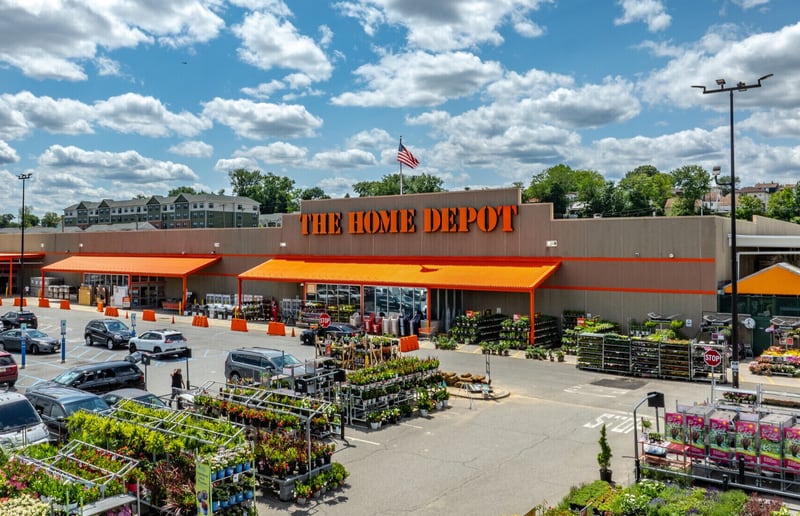
The Home Depot at 75 McLean Blvd, Paterson, NJ 07514
Home Depot’s familiar orange sign looms over nearly every American suburb, a beacon for do-it-yourself homeowners and professional builders alike. After decades of expansion, the Atlanta-based retailer has cemented its position as the colossus of U.S. home improvement retail. It sells everything from lumber and lawn mowers to kitchen sinks, literally – and in doing so, it now accounts for roughly half of all home improvement spending in American stores. Yet even a company of this scale is not immune to the forces reshaping retail. A surge in e-commerce, emerging niche competitors, and shifting consumer habits are testing Home Depot’s dominance. How is this retail giant defending its turf? A close look at market data and strategy reveals a company leveraging its size while racing to stay ahead of the curve.
Dominating the Home Improvement Landscape
Home Depot’s grip on the home improvement market is astonishing in its scope. The company commands about 52% of the U.S. home improvement retail sector by revenue . In practical terms, that means one company is ringing up more than half of all sales in an industry that includes thousands of stores selling hardware, lumber, appliances and more. Its nearest rival, Lowe’s, holds roughly 30% of the market – a formidable share in its own right, but still barely half of Home Depot’s sales . In 2025, Home Depot’s U.S. revenue was estimated at about $149 to 153 billion versus Lowe’s $84 to 90 billion, underscoring how the two big-box chains function as a virtual duopoly in this space. Together they account for over 80% of home improvement store sales nationally, a level of concentration virtually unseen in most other retail categories.
Such scale gives Home Depot enormous advantages. It uses high-volume purchasing to secure competitive pricing from suppliers and stocks a product breadth that smaller rivals can’t match. A typical Home Depot superstore spans ~105,000 square feet and carries tens of thousands of items, from power tools to patio furniture. The company operates over 2,300 stores across North America and employs approximately 500,000 workers – an army of orange-aproned associates larger than the population of Kansas City. This vast footprint helps drive annual revenues north of $150 billion (for context, that’s about as much as Nike, Starbucks, and Coca-Cola combined ). Even during the pandemic boom, Home Depot managed to grow sales by nearly 40% between 2019 and 2022, as stuck-at-home Americans spent heavily on renovation projects (lifting annual revenue from about $110 billion in 2019 to $151 billion in 2022). Growth has leveled off since that extraordinary surge – 2023 sales were roughly flat, and 2024 saw a slight dip to $152.7 billion – but the overall trend of the past decade has been steadily upward. By comparison, Lowe’s recorded about $83 to 90 billion in sales in 2024 and operates just over 1,700 stores (with ~300,000 employees), making it sizable but still clearly second fiddle to the Home Depot empire.
Critically, both giants are not only large but highly profitable. Home Depot earned approximately $15 billion in net income in 2024 , equating to a healthy 9.9% net profit margin . Lowe’s likewise generates billions in profit each year (on the order of $6 to 7 billion in recent years), with margins that rival Home Depot’s. These double-digit operating margins are well above the retail industry average and reflect the pricing power and efficiency inherent in the home improvement model. Simply put, selling a $40,000 kitchen remodel or pallets of hardwood flooring tends to be more lucrative than selling $5 t-shirts or groceries. Home Depot leverages its scale in logistics and purchasing to keep costs low – its gross margin has held around 33 to 34% in recent years – while using data-driven inventory management to minimize out-of-stocks and markdowns. The result is a business that not only dominates on volume but also throws off significant cash. And that cash, in turn, funds investments to reinforce Home Depot’s competitive moat even further.
Beyond the Big Two: Menards and Tractor Supply
Beneath Home Depot and Lowe’s in the home improvement hierarchy is a long tail of regional and specialized players – none of which individually approaches the scale of the two leaders, but some of which carve out loyal followings in their niches. The largest of these is Menards , a private, family-owned chain based in the Midwest. With roughly 340 stores across 15 states and an estimated $13 to 14 billion in annual sales , Menards is often cited as the nation’s third-largest home improvement retailer. It commands about 4 to 5% of the U.S. market by sales (MMCG database) – dwarfed by Home Depot’s share, yet still a significant presence in the regions it serves. Menards is known for its no-frills warehouses (even larger than a typical Home Depot) and aggressive rebates that effectively give loyal customers a discount on every purchase. In its stronghold states like Wisconsin and Illinois, Menards competes head-to-head with Home Depot and Lowe’s, often colocating in the same retail corridors. Its pricing tends to be very sharp, forcing the bigger chains to stay competitive locally. However, Menards remains geographically limited and has shown little interest in expanding nationwide, focusing instead on dominating its Midwestern turf. This regional focus means that while Menards is a thorn in Home Depot’s side in certain markets, it poses no threat to Home Depot’s national hegemony.
Another important player – in a different segment of the market – is Tractor Supply Company . Where Home Depot and Lowe’s focus on suburban home improvement, Tractor Supply aims at the rural and farm audience. Its approximately 2,400 stores (and counting) specialize in lawn care equipment, farm supplies, livestock feed, and outdoor lifestyle products , serving small towns and exurban areas that often lack a Home Depot nearby. In 2025, Tractor Supply’s revenue was around $15.5 billion – only about one-tenth of Home Depot’s – but it’s the largest retailer in the niche of farm and outdoor equipment stores (apart from mass merchants). According to MMCG data, Tractor Supply holds roughly 20 to 21% of the U.S. lawn care and farm supply retail market, making it the clear leader in that fragmented arena. (By comparison, Home Depot and Lowe’s don’t even register in that specialty segment – their extensive lawn and garden departments are counted as part of the broader home improvement industry, not as standalone outdoor power equipment dealers.) Tractor Supply’s strategy has been to excel where the big boxes might falter: it locates stores in areas off the interstate, carries merchandise like animal feed and tractor parts that urban Home Depots don’t stock, and cultivates a personal rapport with rural customers. As Chase Binnie, a retail analyst, noted, Tractor Supply is “building a last-mile delivery operation designed around a problem nobody else wants to solve” – how to get a 500-pound farm item to a customer who lives way out in the country.
To solve that, Tractor Supply has invested in its own delivery hubs and even has employees personally deliver bulky goods to customers’ properties, providing the kind of knowledgeable hand-off a farmer or rancher would appreciate. “When a Tractor Supply team member shows up with a zero-turn mower, they know the product… They can walk the customer through the controls… That’s a fundamentally different experience than a third-party driver dropping a crate at the end of a gravel driveway,” Binnie observed. This high-touch service ethos – essentially hiring employees who are experts in the rural lifestyle and letting them be brand ambassadors – has helped Tractor Supply thrive outside the shadow of the giants. The company’s Neighbor’s Club loyalty program now boasts over 41 million members, suggesting that even as Home Depot expands, there is a huge audience in America’s heartland that prefers a retailer who speaks their language.
For Home Depot, neither Menards nor Tractor Supply threatens its crown on a national scale, but both demonstrate that niches in the market can be lucrative. Menards shows that a regional player can fend off the giants through local focus and low prices. Tractor Supply illustrates how a retailer can succeed by tailoring operations to a specific customer base (rural homeowners) and solving logistical challenges that others avoid. Indeed, Home Depot itself acknowledges the strength of niche competitors . In the lawn equipment arena, for example, industry analysts note that large-format chains will remain an “expanding threat” to independent lawn/garden stores, but those smaller outfits can survive by offering personalized service or unique products. It’s a dynamic where Home Depot’s broad reach coexists with specialists’ deep focus. And increasingly, the biggest battleground where these strengths collide is not in the physical aisles at all – it’s online.
The E-Commerce Effect: Home Depot vs. Amazon and the Digital Shift
Not long ago, buying a load of lumber or a new washer/dryer was the epitome of an in-person shopping experience – customers would roam cavernous stores, consult with sales staff, and rent a truck if necessary to haul everything home. Today, that paradigm is being upended by e-commerce , as even the home improvement sector – traditionally slow to go digital – experiences an online shopping boom. Consumers now routinely research products online, compare prices on their phones, and order heavy goods with a few clicks , expecting the retailer to handle the tricky logistics. This shift was accelerated by the pandemic, which pushed hardware chains to expand curbside pickup and delivery options. The result: online sales have become a critical growth driver for the sector. In fact, about 16% of all U.S. retail sales now occur online (as of 2025, up from roughly 11% in 2019), and home improvement is part of that trend. “Home improvement retailers [are] ramp[ing] up e-commerce and omnichannel tech as online sales climb,” an IBIS industry report noted, adding that customers increasingly expect seamless integration of physical and digital channels. Many shoppers will browse for power tools or patio sets on their smartphones, check if it’s in stock at a nearby store, then buy online for pickup or delivery – blurring the line between online and offline commerce. According to the MMCG database, Home Depot and Lowe’s have each invested heavily to enable this hybrid model, rolling out efficient online storefronts, mobile apps, and in-store pickup services to meet consumers’ rising expectations.
The influence of Amazon looms large in this digital transformation. The tech giant has taught shoppers to expect vast selection and fast shipping in every retail category – including home improvement basics. In the online market for hardware and tools, Amazon is now the single biggest player , with an estimated 15.3% share of U.S. online sales in that category. Home Depot, however, is not far behind: it holds about 10.9% of the online hardware/tools segment , making it the second-largest e-commerce seller of tools and building materials nationally. (Lowe’s ranks third with roughly 6.9% share, and specialized distributors like Ferguson Enterprises also claim a few percent.) In other words, Home Depot has managed to replicate its brick-and-mortar strength in the digital realm to a surprising degree – a notable achievement given Amazon’s e-commerce might. Online, Home Depot competes by leveraging its store network for fulfillment and by emphasizing product expertise and service that pure e-commerce players can’t easily match. For instance, many customers buying a high-end power drill or a chandelier still want advice or professional installation, which Home Depot can bundle in ways Amazon cannot. Moreover, Home Depot’s omnichannel infrastructure allows it to do things like buy online, pick up in store (BOPIS) or curbside pickup within hours , tapping inventory from a local store. This has been immensely popular – by 2025, over half of Home Depot’s online orders are fulfilled through its stores (either via pickup by the customer or local delivery out of the store). The stores essentially double as distribution centers in Home Depot’s model, a key advantage over Amazon’s fulfillment centers for bulky, job-specific goods.
Even in categories where Amazon historically dominates, Home Depot and its peers are carving out leadership. Take large kitchen appliances – refrigerators, ovens, washing machines. These big-ticket items are expensive to ship and often require installation, making them less suited to Amazon’s typical parcel delivery approach. Here, Home Depot actually leads in online sales . It is the #1 online retailer of large appliances in the U.S. , with about 9.1% of the market , slightly ahead of Lowe’s ~8.3% share. Together the two home improvement chains capture roughly 17% of U.S. online appliance sales, according to MMCG data, while all other competitors – from Best Buy to manufacturer direct-sales to Amazon – make up the remaining 83%. This fragmented share among “other” sellers indicates that no single e-commerce player has run away with the appliance category . Home Depot’s edge comes from its robust delivery and installation services: a customer can order a refrigerator online from Home Depot on a Monday and have it delivered and hooked up in their kitchen by Wednesday, with the old unit hauled away. That end-to-end service is something Amazon (which does sell appliances online) has struggled to match at scale. As a result, Home Depot has successfully translated its in-store appliance dominance into the online arena.
To be sure, e-commerce remains a relatively small slice of Home Depot’s overall business – but a rapidly growing one . Home Depot disclosed that its online revenue now tops $25 billion annually , which amounts to roughly 16% of total sales. “Our online business makes us one of the largest e-commerce players across any segment of retail,” said Jordan Broggi, Home Depot’s executive vice president for online, at the company’s Investor Day late last year. If Home Depot’s e-commerce operation were spun off as an independent company, it would rank among the top digital retailers in North America. And the company is plowing resources into further integrating these channels. Broggi noted that Home Depot’s competitive advantage lies in “having the best products, store locations, associates, delivery assets and digital capabilities that come together” in an “interconnected experience” for customers. Practically speaking, that means investing in supply chain speed and reliability – Home Depot spent the last several years building out a next-day delivery network for both parcel packages and big bulky orders. Since 2017, it has added about 200 new logistics facilities , including 20 regional e-commerce fulfillment centers and 160 local delivery hubs, plus specialized centers for lumber and construction materials. Thanks to these additions, over 50% of Home Depot’s online orders (across both small and large items) now reach customers via same-day or next-day delivery , triple the rate just a couple of years ago. Delivered purchases – items shipped to homes or job sites – now account for roughly 30% of the company’s revenue . These metrics underscore how central e-commerce and fast fulfillment have become to Home Depot’s strategy. The company even introduced a “Magic Apron” AI shopping assistant on its website in late 2024 – an homage to its iconic orange aprons – allowing customers to get guided, chat-based help in finding products and project advice online. Early results show this kind of digital concierge can boost conversion rates, suggesting that blending human expertise with AI might further bridge the gap between the store aisle and the website.
Meanwhile, Lowe’s is also racing forward digitally , after lagging behind Home Depot online for years. Lowe’s reported its online sales grew about 9% in 2024, and it has been modernizing its e-commerce platform and supply chain under CEO Marvin Ellison. Both Home Depot and Lowe’s are experimenting with augmented reality apps (to let customers visualize how a new backsplash or appliance will look in their kitchen) and expanding their buy-online, pick-up or deliver options , knowing that convenience is a key weapon against Amazon. At the same time, the physical store experience remains critical: many shoppers still want to feel the heft of a drill or see the true color of a paint in person before buying. The retailers understand this and aim to offer a “phygital” hybrid – leveraging the strengths of both formats. Industry observers note that younger homeowners increasingly use social media and online tutorials for DIY inspiration , then head to stores to execute those ideas. A viral TikTok video about garden pergolas or shiplap accent walls can send a wave of twenty-somethings to Home Depot for lumber and tools. This dynamic has introduced a new feedback loop in which online content drives in-store traffic . Home Depot has responded by beefing up its content and how-to resources online , and by making sure popular items featured in Pinterest-worthy projects are in stock and easy to find.
The bottom line: E-commerce has become an indispensable part of the home improvement business , not a sideshow. And Home Depot – while dominant in the old brick-and-mortar paradigm – has proven surprisingly adept at the digital game so far. By embracing an omnichannel model and investing massively in fulfillment infrastructure, it has kept Amazon at bay and taught customers that there’s more than one way to get a bathtub delivered. “Customers move fluidly across our touchpoints; there’s not a single linear journey,” Broggi explained. In other words, Home Depot doesn’t care if you walk into a store or order on your phone from the couch – as long as you come to them and not a competitor. That philosophy will only grow more important as the next generation of homeowners – digital natives – demands ever more convenience, speed, and integration between online and offline shopping.
By the Numbers: Revenue, Profits and Scale
Home Depot’s financial results reflect its market supremacy – and also hint at the challenges ahead. In the fiscal year ending 2024, the company tallied $152.7 billion in revenue , essentially flat from the prior year’s $157.4 billion. This plateau follows two years of explosive growth: in 2020 and 2021, Home Depot’s sales surged as pandemic-era consumers poured money into home upgrades. Revenue jumped 20% in 2020 and another 15% in 2021, an almost unprecedented spurt for a mature retail business. By 2022, sales had reached $151 billion – about 37% higher than in 2019 – and profits hit record highs. That breakneck growth has since cooled. Higher interest rates and a slowdown in housing turnover have tempered home improvement spending , and Home Depot’s 2023 sales were roughly flat (+0.7%) followed by a ~3% dip in 2024 (the first annual revenue decline in over a decade). Executives have characterized this as a return to a more “steady state” after the boom, rather than a worrying contraction. Indeed, analysts expect modest growth to resume as the housing market stabilizes. The underlying drivers – an aging U.S. housing stock in need of renovation, and a cultural fascination with home DIY projects – remain intact. Private spending on home improvement rose an estimated 8.8% in 2024 despite broader economic headwinds. This suggests that while consumers are more cost-conscious now than during the stimulus-fueled days of 2020, they are still prioritizing investing in their homes. Home Depot’s revenue is projected to inch upward in the next couple of years , keeping pace with or slightly ahead of inflation. The company has also signaled confidence by continuing to open new stores in select markets and by giving upbeat (if cautious) guidance for 2025 and 2026.
On the profitability front, Home Depot remains a standout performer. Its operating margin in 2024 was about 13.1% , and net profit margin was roughly 10% – both virtually the same as in the banner year of 2021. In other words, even as sales volume receded slightly in 2024, Home Depot managed costs to protect its margins. This was achieved through a mix of tactics: passing through some supplier price increases to consumers (the company has noted that average ticket prices are higher due to inflation), improving supply chain efficiency, and pulling back on certain expenses. Its rival Lowe’s actually saw a small uptick in gross margin in 2023 to 2024 by trimming slow-selling product lines and optimizing promotions, a playbook Home Depot is likely following as well. For 2025, Home Depot expects profit margins to be flat to slightly up , which would be an achievement given rising labor and freight costs. It helps that the company’s scale gives it bargaining power on everything from lumber prices to credit card fees. As a result, Home Depot produces a return on invested capital that is the envy of retail – consistently over 30% in recent years, far above most big-box chains (per MMCG analysis). This financial strength enables hefty shareholder dividends and share buybacks, but importantly, it also funds Home Depot’s reinvestment in its own business . In the past five years, the company has poured money into new distribution centers, technology upgrades, store remodels, and employee training to maintain its edge. Home Depot’s annual capital expenditures are now around $2.5 to 3 billion, much of it aimed at supply chain and tech – a level of investment smaller competitors simply can’t match.
Operationally, Home Depot’s scale is unparalleled in its sector. According to company filings and real estate data, Home Depot and its subsidiaries occupy roughly 355 million square feet of real estate across its stores and distribution facilities. For perspective, that’s about 60% of the land area of Manhattan. The majority of that space is of course its retail stores – typically sprawling warehouses with high ceilings, designed to handle forklifts moving pallets of material. At ~2,300 stores, Home Depot’s store count is larger than the next three competitors combined. By contrast, Lowe’s has just over 1,700 stores (after exiting its smaller Canadian division last year) and about 270,000 to 300,000 employees . Menards operates around 340 stores , as noted, while Tractor Supply has 2,400 (though many of those are a fraction of the size of a Home Depot). Home Depot’s average U.S. store reportedly generates well over $60 million in annual sales – significantly higher throughput per location than Lowe’s, thanks to Home Depot’s strength with professional contractors and with dense urban markets. In fact, contractor or “Pro” customers account for about half of Home Depot’s revenue , whereas Lowe’s derives a larger share from do-it-yourself consumer shoppers. Pros tend to spend more in each visit (Home Depot’s average transaction is about $90, versus Lowe’s ~$85) and are relatively less price-sensitive, which contributes to Home Depot’s financial performance. It has been a deliberate strategy of Home Depot to court the Pro segment (more on that shortly). The workforce of ~500,000 is another aspect of scale – it means at any given time a Home Depot store might have a few hundred associates on the floor, in orange aprons, ready to help customers or restock aisles. Managing such a large workforce is a feat in itself; retail labor shortages in recent years have tested all chains, but Home Depot has so far managed to keep staffing levels sufficient by offering competitive wages and benefits (and perhaps by virtue of being a desirable employer for tradespeople who enjoy sharing their knowledge – the company often hires former carpenters, electricians or garden enthusiasts to advise customers).
All this is to say that Home Depot’s sheer size – in sales, stores, and staff – creates a robust platform from which to drive future growth . It can spread the cost of new technology over a huge sales base, extract volume discounts, and deploy new initiatives at scale nationwide. However, size can also be a vulnerability if not managed well. Giant companies can become inflexible or disconnected from local markets. Home Depot is keenly aware of this and has tried to retain something of an entrepreneurial spirit in each store (store managers have discretion to tailor inventory to local tastes, for instance). The company’s performance metrics, from inventory turnover to sales per square foot, remain among the best in retail – a sign that bigness has not led to complacency.
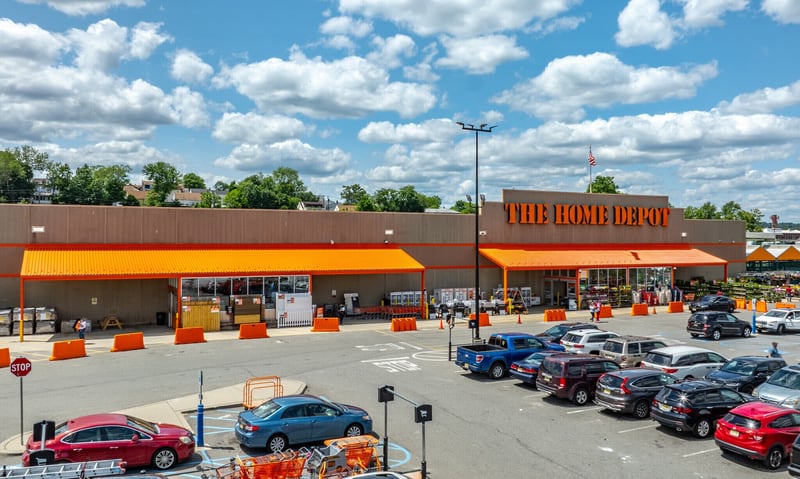
Defending the Throne: Home Depot’s Strategies for Growth
Facing intensifying competition and a fast-evolving marketplace, Home Depot isn’t resting on its laurels. The company has rolled out a multi-pronged strategy to defend its market share and keep expanding . At the core of this strategy: serve the customer anywhere and everywhere – whether that customer is a weekend DIYer ordering potting soil from their phone, or a professional builder expecting a pallet of shingles before dawn at a job site. Achieving this has meant heavy investments in fulfillment, technology, product offerings, and customer service . “Retail has fundamentally changed, and so have we,” Home Depot’s CEO Ted Decker has often emphasized in earnings calls (in so many words). Here’s how Home Depot is playing to win:
- Mastering Fulfillment and Supply Chain: Perhaps Home Depot’s biggest push in recent years is to build the fastest, most reliable delivery network in home improvement . The retailer committed around $1.2 billion in 2017 to kickstart a supply chain overhaul, and it has only accelerated spending since. The goal was bold: guarantee two-day or next-day delivery for virtually any product in its catalog, nationwide . To do that, Home Depot constructed a web of new facilities. It opened giant Direct Fulfillment Centers (some over a million square feet each) to handle small-to-midsize parcels for e-commerce. It added “Market Delivery Operations” hubs (MDOs) – smaller facilities in urban areas that stage large items like appliances and bulky orders for final-mile delivery. By 2023, Home Depot had roughly 160 MDO sites scattered across the country, enabling it to reach 90% of the U.S. population with next-day delivery service for big and bulky orders. It also built out a fleet of flatbed distribution centers dedicated to lumber, drywall, and other building materials, catering especially to pro contractors. These specialized centers, now numbering around 17, supply heavy construction goods directly to stores or work sites, relieving the regular stores of the need to stock massive piles of bulk building supplies. “These assets are unique in our industry,” Broggi, the Home Depot executive, said of the integrated network, “But it’s the power of [using] these assets together with our stores that leads to a supply chain… unmatched” . The payoff is evident in metrics like speed (as noted, more than half of items are available for same-day/next-day fulfillment now) and customer satisfaction (Home Depot’s delivery service scores reached all-time highs in 2025, even as volumes increased, according to the company). Reliable delivery is especially crucial for professional contractors – if materials don’t arrive on time, a crew might sit idle and incur cost . Knowing this, Home Depot has made on-time performance a key KPI, obsessing over any missed deliveries rather than patting itself on the back for the majority that go smoothly. The company even brought some delivery functions in-house (akin to Amazon’s approach), including box trucks branded with the Home Depot logo now being a common sight in neighborhoods. In essence, Home Depot is turning its logistics into a competitive weapon – one aimed squarely at defending against Amazon’s convenience, and at locking in pro customers who demand dependable supply.
- Doubling Down on Pro Contractors: The professional contractor segment (“Pros”) has long been Home Depot’s not-so-secret weapon, and it is doubling down on serving these high-value customers. Pros typically spend more per trip and shop more frequently than DIY customers – a local remodeler might drop $10,000 in a single Home Depot run to stock a kitchen renovation. To capture more of this business, Home Depot has introduced a suite of Pro-focused offerings . There’s the Pro Xtra loyalty program , which rewards frequent buyers with volume pricing, tool rental perks, and exclusive deals. The company provides dedicated Pro checkout areas in stores and assigns account representatives to big accounts. In August 2025, Home Depot executives highlighted that the U.S. professional construction market is worth an estimated $450 billion annually , much larger than the DIY market. Home Depot’s internal data shows it currently only captures a fraction of that potential – so it sees enormous room to grow by gaining share from local lumber yards, specialty distributors, and even competitors like Lowe’s in the Pro segment. A centerpiece of this Pro strategy was Home Depot’s $18.3 billion acquisition of SRS Distribution in mid-2024 . SRS is one of the nation’s largest wholesale distributors of roofing, siding and other building materials, operating over 400 branch locations under various regional brand names. By purchasing SRS, Home Depot instantly gained a massive foothold in categories that historically were outside its big-box aisles (think specialized roofing supplies or materials that contractors usually buy from dedicated suppliers). The deal also brought hundreds of local distribution branches and a fleet of trucks into Home Depot’s fold. Now, a contractor can order shingles or concrete through Home Depot and have it delivered directly from an SRS (now Home Depot) distribution center to their job site , rather than having to pick it up at a store. This move effectively positions Home Depot not just as a retail store, but as a full-service construction supply partner . It’s edging into territory once dominated by specialty wholesalers – and it’s doing so by layering the SRS network on top of its own. The company says this brings three big benefits: breadth (a much wider assortment of pro-grade materials), speed (more points of distribution mean faster drop-offs to sites), and relationships (SRS staff are industry veterans with existing contractor clients, adding a human touch that pure retail can lack). Home Depot had earlier acquired HD Supply in late 2020 – a distributor of maintenance, repair and operations products – for $8 billion, re-entering the plumbing/HVAC wholesale business it had actually spun off years prior. With HD Supply and SRS, Home Depot has made it plain: if there’s money a professional builder or property manager is spending on a project, they want to capture it . These acquisitions, combined with organic initiatives, have started to show up in results: Home Depot’s average ticket size has been ticking upward (in Q2 2025 it rose ~1.2% even as customer transactions declined, implying more dollars per visit, likely from Pros). The company is also seeing Pro customers increase their “share of wallet” – meaning a contractor who used to split purchases between Home Depot and, say, a specialty drywall supplier might now consolidate more with Home Depot because of convenience and incentives.
Additionally, Home Depot is expanding services and partnerships that appeal to Pros. It has trade credit programs to extend financing for large orders, rental centers where contractors can rent expensive equipment by the day, and is exploring tie-ups with software providers that contractors use (e.g., integrating job costing or estimating software with Home Depot’s ordering system). The retailer recognizes that Pros value not just product availability, but also anything that saves them time and hassle – so it’s introducing features like organized curbside pickup for large orders and priority parking for Pro vans at stores. Looking ahead, industry experts predict Home Depot could further bundle installation services (it already offers installation on everything from flooring to HVAC systems via subcontractors) as part of Pro contracts, or even provide training workshops and certification programs to support the skilled labor pipeline. The overarching intent is clear: tie the Pro customers into Home Depot’s ecosystem so deeply that it becomes their one-stop shop . As one PYMNTS.com analysis put it, Home Depot is layering on so many services and digital tools that it aims to “lock in contractors and expand share of wallet” for the long haul.
- Expanding and Curating Product Assortment: Another pillar of Home Depot’s strategy is ensuring it has the widest and most relevant product mix in the industry. This not only means adding new categories when opportunities arise, but also curating products to differentiate from competitors. One approach has been developing private-label (store brand) lines and exclusive brand partnerships . Home Depot’s private brands – such as Husky for tools and tool storage, HDX for household supplies, Glacier Bay for kitchen and bath fixtures, and Vigoro for lawn care – have grown significantly in recent years. These in-house labels typically offer consumers lower prices while yielding higher margins for Home Depot (since the middleman is cut out). The company has reported a deliberate shift toward more private-brand sales to “defend price/value and drive loyalty” . At the same time, Home Depot secures exclusive distribution deals with top national brands . For example, it is the exclusive home of Ryobi and RIDGID power tools (popular with DIYers and some pros), forcing customers who want those brands to shop at Home Depot. It also exclusively carries certain lines of Milwaukee Tool accessories and John Deere lawn tractors in select markets, among others. These product exclusives prevent direct price comparisons and give Home Depot a way to differentiate vs. Lowe’s, which has its own set of exclusives (like Craftsman tools or John Deere’s rival Cub Cadet mowers). In emerging categories like smart home technology, Home Depot has been quick to broaden offerings – from WiFi-connected thermostats to LED lighting and solar panels – sensing that consumers will increasingly look to home improvement retailers for tech solutions. The chain has also expanded its home décor and furniture selections (partly through its acquisition of The Company Store brand), recognizing that shoppers may want to furnish the spaces they just renovated without going elsewhere. Seasonal merchandising is another focus: Home Depot’s spring garden collections and holiday decor assortments have grown each year, designed to make the orange store a destination beyond just construction needs. By timing product resets to seasons – grilling and patio items in summer, heaters and snow blowers in winter – Home Depot captures incremental sales and keeps foot traffic high year-round. All of these assortment moves serve a strategic aim: to be the first (and ideally only) place customers turn for anything home-related . If there’s a product you need for your house or yard, Home Depot wants to ensure it’s either in stock on the shelf, available through its website, or something they can special-order for you. This comprehensive assortment is a bulwark against competitors – after all, Amazon might have infinite SKUs, but it doesn’t have physical outdoor garden centers or rental tool cages, and specialty retailers have narrower catalogs by nature.
- Investing in Technology and Store Experience: To bind all these initiatives together, Home Depot continues to invest in cutting-edge technology both online and in-store. The company’s annual tech spending (combined with supply chain capex) runs about $2 to 3 billion per year. Some of that goes to the e-commerce platforms and data analytics mentioned earlier, but a significant portion is also aimed at improving the in-store shopping experience and operational efficiency . Home Depot has equipped its store associates with mobile apps that can scan inventory in real time, check other store locations for stock, and even direct employees to find products faster in the aisles . Shoppers, too, benefit from tech upgrades: the Home Depot mobile app allows customers to search for a product and get a map of exactly which aisle and bay it’s located in at their local store. The company has been testing scan-and-go checkout and enhanced self-checkout systems to speed up transactions, as well as utilizing computer vision and RFID technology to better track inventory and reduce theft. In the back end, Home Depot is deploying machine learning (ML) forecasting algorithms to fine-tune stock levels down to each SKU by store by day – crucial for a business with such a broad assortment. Its supply chain is getting smarter with automated warehouses featuring robotics and sortation systems that boost throughput for online orders. All these tech efforts share a common goal: make Home Depot faster, more convenient, and more efficient than competitors . If a contractor can get what he needs reliably in one trip because Home Depot’s systems ensured it was in stock, he’s less likely to try a rival next time. If a novice DIY shopper can easily navigate the cavernous store using an app and even get project guidance from an AI assistant, she’ll feel confident choosing Home Depot over an online-only alternative.
There’s also a subtle cultural element: Home Depot’s embrace of technology and innovation helps shake off any image of being a staid 45-year-old retailer. It sends a message that the company is forward-looking and adapting with the times – which can bolster investor confidence and employee morale as well. Notably, Home Depot has been recognized in retail industry rankings for its omnichannel prowess and supply chain improvements. These are not just vanity awards; they signal to the market that Home Depot is executing on its transformation. The retailer’s leadership likes to say they are building the “Home Depot of the future” while leveraging the timeless competitive advantages they already have (like knowledgeable associates and strong vendor relationships).
- Embracing Sustainability and Community Initiatives: Although not always highlighted in financial analyses, Home Depot’s strategy also encompasses corporate responsibility that can indirectly support its market position. The company has expanded its lineup of eco-friendly products – for instance, promoting energy-efficient LED lighting, Energy Star appliances, and battery-powered outdoor equipment over gas-powered tools. This aligns with a consumer trend toward green choices and in some cases is spurred by regulations (like states phasing out gas lawn mowers). By being ahead on these offerings, Home Depot caters to environmentally conscious shoppers and contractors looking to comply with new codes. The retailer also engages with local communities through workshops (in-person and online) to teach DIY skills, and through initiatives like backyard garden programs and trades training . These efforts create goodwill and, pragmatically, help cultivate the next generation of home improvers – i.e., future customers. During the pandemic, Home Depot gained positive visibility by prioritizing employee safety, offering bonuses, and donating PPE and materials to communities in need. All of this shores up the brand’s reputation, which is an intangible but important asset when competition is fierce. Customers tend to stick with brands they trust.
In sum, Home Depot’s response to today’s competitive pressures is to get even better at what it’s long been good at – breadth of products, customer service, and logistical prowess – while aggressively innovating in areas it needed to catch up (like e-commerce and advanced analytics). The company’s recent moves, from acquiring distribution firms to launching AI chatbots, illustrate a willingness to invest heavily to maintain leadership. It is leveraging the physical strengths of its legacy (stores everywhere, half a million face-to-face problem solvers on staff) and fusing them with digital tools that extend its reach and responsiveness. This hybrid model is something pure online players can’t easily replicate, and it’s a differentiator against smaller brick competitors who lack the tech budget.
Whether these strategies will be enough to fend off all challengers remains to be seen. Retail history is littered with giants that faltered when they failed to adapt. Home Depot, however, is showing few signs of faltering. If anything, the competitive shake-ups in its industry – the rise of Amazon, the niche upstarts, the post-COVID consumer reset – have prodded Home Depot to reinvent itself faster. The company’s latest Investor Day theme was telling: “Interconnected retail” was the buzzword, with leadership painting a picture of Home Depot as both the local hardware store on your corner and a cutting-edge online marketplace – both the place where a helpful associate will teach you how to tile a backsplash and the place that will drone-deliver tools to your door someday. It’s an ambitious vision, but Home Depot has the resources and resolve to pursue it.
As of now, Home Depot sits securely atop the U.S. retail home improvement throne , with a market share rivals can only envy. But it is not resting on that throne. It’s reinforcing it – with data and warehouses, with alliances and acquisitions – effectively building a bigger moat around its kingdom. In the coming years, success for Home Depot will be measured by its ability to hold (or even expand) its share in each segment: keeping Lowe’s a distant second in core home improvement, out-innovating Amazon online, and out-serving everyone from Menards to Tractor Supply in the niches. The task is complex, but Home Depot’s track record inspires confidence. If you’re repairing, remodeling or reinventing a home in America, odds are good that Home Depot will be a part of that story. And that’s unlikely to change anytime soon, so long as this orange-aproned giant continues to marry its deep retail roots with a digital, delivery-driven future – all in service of keeping your business.
February 19, 2026, by a collective of authors at MMCG Invest, LLC, SBA feasibility study consultant
Sources:
Company 10-Ks & Annual Reports: Home Depot 10-K FY2022 and Investor Factsheet; Lowe’s FY2023 Annual Report; Tractor Supply FY2023 10-K/press release; Menards info via Forbes/NRF (as Menards is private). These provide revenue, net income, store counts, and margin data.
Home Depot Investor Presentations: e.g. HD 2023 Investor & Analyst Conference and earnings calls (cited in PYMNTS, Aug 2025 for $90 average ticket and Pro strategy). Also HD Q1 2024 earnings release for store counts. Lowe’s Q4 2024 press release for store count and outlook.
Digital Commerce 360 (industry analyst publication) – for e-commerce metrics and rankings. Provided category online penetration (~10% in 2023) and noted HD, Lowe’s online growth. Also used for insight on online consumer behavior shifts in home improvement.
RetailWire / RetailDive / PYMNTS (Industry Media): Supply Chain Dive (Feb 2019) on HD’s $1.2B supply chain investment and BOPIS usage. PYMNTS.com (Aug 19, 2025) on HD’s Pro market focus and SRS acquisition, including the $450B Pro market size and $90 avg. ticket. Retail Dive (2024) on HD’s partnership with DoorDash for same-day delivery. MoneyTalks News (Jan 2026) on Market Force survey showing HD/Lowe’s market shares and Menards/Ace high customer experience ratings.
Government & Nonprofit Data: U.S. Census Bureau Quarterly Retail E-commerce report (Q3 2025) for overall e-commerce ~16% of retail. Census NAICS retail data for Building Material & Garden dealers (444) to compare category trends. NAICS Association/UST Census data used for industry sizing (e.g. total home improvement market ~$440B in 2022). Also referenced National Retail Federation (NRF) Top 100 Retailers list for Menards sales.
Industry Publications: HBS Dealer and Hardware Retailing for context on store counts and competitive moves. For example, HBSDealer’s 2023 map of HD vs Lowe’s store locations, and NRF STORES magazine ranking (2025) listing Menards with $13.1B US sales. Distribution Strategy (Nov 2025) on HD’s post-SRS pro distribution footprint. These trade sources corroborate strategic initiatives and competitive positions.

Michal Mohelsky, J.D., FMVA, Practicing Affiliate of the Appraisal Institute
Principal, MMCG Invest, LLC
Published February 19, 2026. Last updated March 26, 2026. How this analysis was prepared.
Cite this
Michal Mohelsky, J.D., FMVA (2026). Home Depot’s Retail Rule: A Giant Defends Its Turf in a Changing Market. MMCG Invest, LLC. https://www.mmcginvest.com/post/home-depot-s-retail-rule-a-giant-defends-its-turf-in-a-changing-market
Where this goes next
- Retail Feasibility StudyMMCG's feasibility study page for this subject.