
America's Loudest Sport Is Just Getting Started
Updated: Mar 26

A plastic ball with holes punched through it, struck by a solid paddle across a court roughly the size of a badminton setup, has become the most consequential disruption in American recreational sports in half a century. Pickleball now claims nearly 20 million players in the United States, a figure that has grown more than fivefold since 2019, attracted billions of dollars in investment, reshaped municipal budgets, and triggered real estate litigation from coast to coast. What began as an improvised afternoon game on a sleepy island in Washington State has evolved into a full-blown cultural and economic phenomenon — one that is rewriting the rules of how Americans play, socialize, and spend.
The significance extends well beyond recreation. Pickleball has become a lens through which we can observe broader American trends: the post-pandemic hunger for outdoor community, the financialization of leisure, the aging of the baby boom generation, and the relentless appetite of private equity for anything that grows. This is the story of how a sport named after a rowing term conquered the country — and where it goes from here.
Three dads, a wiffle ball, and a lowered net
The origin story reads like the kind of charming American invention myth that gets printed on the back of cereal boxes. In the summer of 1965, U.S. Congressman Joel Pritchard and businessman Bill Bell returned from a round of golf to Pritchard's summer home on Bainbridge Island, Washington, to find their families restless and bored. The property had a badminton court, but no one could locate a full set of rackets. They improvised with ping-pong paddles and a perforated plastic ball, and when they discovered the ball bounced surprisingly well on asphalt, they lowered the net from badminton height to 36 inches. The following weekend, neighbor Barney McCallum joined, and the three men drafted formal rules — deliberately engineering a game that would be accessible to every age, with no height advantage for adults.
Pritchard's wife, Joan, coined the name, saying the hodgepodge of borrowed equipment reminded her of a "pickle boat" in crew racing — the vessel crewed by oarsmen left over from other boats. A persistent myth attributes the name to the family dog, Pickles, but USA Pickleball's own investigation confirmed the dog wasn't born until 1968, three years after the game already had its name.
For decades, pickleball remained a regional curiosity. The sport incorporated as Pickle Ball, Inc. in 1968. The first known tournament was held at a Tukwila, Washington athletic club in 1976, the same year Tennis Magazine called it "America's newest racquet sport." The United States Amateur Pickleball Association (now USA Pickleball) was founded in 1984, publishing the first official rulebook. By 1990, the game was played in all 50 states — but just barely. It lived primarily in community recreation centers, church gymnasiums, and the driveways of the Pacific Northwest. It was, in the kindest possible reading, a niche pastime for retirees.
Then a pandemic arrived, and everything changed.
From 3.5 million to nearly 20 million in five years
The numbers are almost disorienting. According to the Sports & Fitness Industry Association, the industry's most authoritative tracker, 3.46 million Americans played pickleball in 2019. By 2024, that figure had surged to 19.81 million — a 473% increase in five years. The SFIA named pickleball the fastest-growing sport in America for four consecutive years through its 2025 report, and mid-year 2025 projections place the player count at roughly 22.7 million, suggesting growth is moderating but far from stalling.The Association of Pickleball Professionals, using a broader "played at least once" methodology through YouGov surveys, estimated 48.3 million adult Americans picked up a paddle in 2023 alone.
COVID-19 was the accelerant, but the fuel was already there. When gyms shuttered and indoor gatherings became dangerous, Americans looked for activities that were outdoors, socially distanced by design (players stand across a net), inexpensive to start (a decent paddle costs $50), and easy to learn in an afternoon. Pickleball checked every box. Participation surged 21.4% in 2020, then an astonishing 85.7% in 2022 as post-pandemic socialization collided with the sport's inherent accessibility.
The demographic profile has shifted dramatically. The stereotype of pickleball as a retirees-only affair is now flatly wrong. The largest age cohort is 25-to-34-year-olds, comprising 3.175 million players in 2024, followed closely by the 65-plus bracket at 3 million. The average player age has dropped from 41 in 2020 to 34.8 in 2023. Youth participation is booming — nearly 2 million players aged 13 to 17 were counted in 2024, more than double the figure from two years prior. The gender split sits at roughly 59% male and 41% female, with women's participation growing faster. The sport does skew affluent: 45% of players report household incomes above $100,000, and core players (those who play eight or more times per year) average a household income of approximately $85,600.
The celebrity land grab and professional pickleball's big bet
If the participation explosion created the audience, celebrity capital created the spectacle. Major League Pickleball, founded in 2021 by entrepreneur Steve Kuhn with just eight teams, became the vehicle through which professional athletes, entertainers, and venture capitalists poured into the sport. LeBron James, Draymond Green, and Kevin Love purchased an expansion team through LRMR Ventures. Tom Brady partnered with tennis Hall of Famer Kim Clijsters and Knighthead Capital for another. Kevin Durant, Patrick Mahomes (alongside Naomi Osaka), Drew Brees, Gary Vaynerchuk, and even chess world champion Magnus Carlsen all bought in. Anheuser-Busch became the first Fortune 250 company to own an MLP team outright.
Team valuations skyrocketed from under $1 million at MLP's launch to an estimated $10–$15 million by 2024. In February 2024, the PPA Tour and MLP completed a landmark merger backed by a $75 million investment from SC Holdings and others, creating a unified professional pickleball entity. More than 150 players signed multi-year contracts; collective player payouts reached $30 million in 2024, with top player Ben Johns disclosing $2.5 million in personal earnings. The merged organization drew over 320,000 fans to live events and broadcast more than 350 hours of national television across Fox, CBS, ESPN, and Amazon Prime Video. A February 2024 event on Fox drew 501,000 viewers, outdrawing the MLS Cup final on the same network.
Sponsorship revenue hit $25 million in 2024, a 50% increase over the prior year. DoorDash signed a multimillion-dollar, three-year title sponsorship with MLP in April 2025, described as the biggest deal in league history. Skechers holds multi-year footwear sponsorships across virtually every major pickleball organization. The professional apparatus, while still young and not without growing pains — players were asked to accept a 40% pay cut in late 2024, prompting a collective pushback — now operates at a scale that demands to be taken seriously.
68,000 courts and counting: the infrastructure scramble
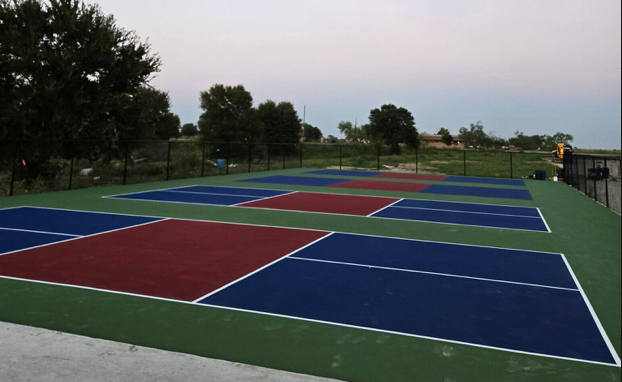
The supply of places to play has struggled to keep pace with demand, but the buildout is proceeding at a remarkable clip. USA Pickleball's Pickleheads database, the sport's official court finder, now tracks over 68,458 courts across more than 16,210 locations nationwide. In 2024 alone, 18,455 new courts were added — an average of roughly 14 per day. The Trust for Public Land found that outdoor public park pickleball courts in America's 100 largest cities grew from just 420 in 2017 to 3,182 in 2024, a 650% increase. "There's nothing that comes anywhere close to that growth among major park trends," noted the organization's Associate Director of Parks Research.
The facility landscape breaks down across several distinct categories. Municipal parks and recreation departments remain the backbone, offering free or low-cost courts that serve as most recreational players' first point of entry. Fitness clubs have invested aggressively: Life Time Fitness now operates over 750 permanent pickleball courts across its 170-plus U.S. locations, with plans to reach 1,000 by the end of 2025 — an investment the company pegs at $50–$100 million. Pickleball accounts for 6–7% of Life Time's membership dues, a figure CEO Bahram Akradi calls "a big number." Invited Clubs, the largest private golf club operator, maintains nearly 500 courts after barely hearing of the sport three years ago.
The dedicated pickleball facility is perhaps the most striking new entrant. Franchise chains are scaling at venture-capital velocity. Pickleball Kingdom, founded in 2022, has awarded nearly 400 franchise locations and expects 50-plus open by year's end. The Picklr, backed by Drew Brees, raised $9 million at a $59 million valuation and has signed 355-plus franchises. Chicken N Pickle pioneered the pickleball-plus-dining entertainment model, operating 13-plus locations that each attract 650,000 customers annually and employ approximately 180 people. Dill Dinkers has over 200 locations in development. The total investment required to meet national court demand is staggering: the SFIA estimates roughly $855 million to $900 million in construction spending is needed over the next five to seven years to build approximately 25,000 additional courts.
A significant portion of this expansion has come at the expense of tennis. A New York Times analysis of nearly 100,000 aerial photographs identified approximately 8,000 tennis courts that have been converted for pickleball, alongside 26,000 entirely new outdoor pickleball courts built over the past seven years. One standard tennis court can accommodate four pickleball courts. However, a notable shift emerged in the data: tennis court conversions declined for the first time in 2024, even as standalone pickleball court construction continued to rise — suggesting the tennis-pickleball turf war may be cooling as dedicated infrastructure matures.
The unlikely alliance of RV parks and pickleball
One of the sport's most distinctive growth corridors runs through an unexpected landscape: the American campground. According to The Dyrt's 2025 Camping Report, 17% of private campgrounds that added amenities in 2024 chose to install pickleball courts, making it the single most popular new amenity — nearly doubling the second-place finisher, Wi-Fi, at 9.8%. Properties were 29% more likely to add pickleball than any other amenity, including pools, dog parks, and kayak launches.
The demographic alignment is intuitive. The 55-plus population that fuels RV resort occupancy overlaps substantially with pickleball's most devoted player base. Snowbirds who discover the game during winters in Florida or Arizona carry it home to their communities, creating a virtuous cycle of adoption. "Pickleball has become a mandatory, expected amenity to be considered a five-star property that caters to active adults," said Greg Sidoroff, VP of Operations at SunLand RV Resorts. Todd Burbage, CEO of Blue Water Development Corp., put it more bluntly: "It's gone crazy. We are installing pickleball courts at just about every resort that can accommodate them."
The most dramatic example remains The Villages, the sprawling 55-plus community in central Florida often called a "pickleball paradise." With over 200 courts spread across 30 locations, a pickleball club exceeding 1,000 members, and courts available to residents through a $189 monthly amenity fee, The Villages has become both a pilgrimage site and an incubator for the sport's culture. Major RV operators including Sun Communities, Equity LifeStyle Properties (operating under the Encore and Thousand Trails brands), and Camp Margaritaville have all invested heavily. Palm Creek Golf & RV Resort in Arizona alone features 32 pickleball courts, 24 of them lighted for night play.
From free public courts to $150-a-month memberships
The access model for pickleball has evolved from a nearly entirely free public good into a layered ecosystem spanning the full economic spectrum. At the entry level, municipal courts remain free and first-come-first-served in most cities. YMCAs include pickleball with standard memberships of $30–$80 per month. Moving upmarket, dedicated facilities like The Picklr charge $109–$139 per month for unlimited play, while premium clubs such as The HUB Pickleball in Silicon Valley command $149 monthly plus a $249 initiation fee. Life Time Fitness requires its Signature or Premier membership — $150–$300 per month depending on market — for court access. Pay-per-play rates at commercial facilities typically range from $20 to $60 per hour per court.
Court booking technology has become essential infrastructure. CourtReserve, launched in 2016, is the leading reservation platform, offering club management features for $99–$549 per month. PodPlay, born from autonomous ping-pong startup PingPod, integrates video recording, digital scoreboards, and DUPR rating systems starting at $30 per court monthly. Pickleheads functions as both a court finder (10,000-plus locations) and a free scheduling tool. The shift from casual drop-in play to app-mediated, time-slotted reservations mirrors the broader premiumization of the sport — a transformation that has generated significant revenue but also raised questions about accessibility as the game moves further from its improvised, egalitarian origins.
The equipment arms race and the cost of building courts
The equipment market reflects pickleball's dual identity as both a casual backyard game and a serious competitive sport. A beginning player can get started for $100–$200: a budget composite paddle runs $30–$50, a three-pack of outdoor balls costs $10, and existing athletic shoes will suffice. A serious competitive player, however, might spend $400–$700 or more on a premium carbon-fiber paddle ($200–$280 from brands like CRBN or Selkirk), performance court shoes ($120–$160 from Skechers or K-Swiss), a tour-quality bag ($100–$140), and a backup paddle.
The manufacturer landscape has grown fiercely competitive. JOOLA, originally a German table tennis brand, has leveraged its sponsorship of world number-one Ben Johns into market dominance. Selkirk Sport, based in Coeur d'Alene, Idaho, has expanded from paddles into shoes and balls. Franklin Sports produces the X-40 outdoor ball, the official ball of USA Pickleball. Legacy racquet brands HEAD, Wilson, and Prince have all entered the market, while newer players like CRBN, Vatic Pro, and Six Zero compete on innovation and price. USA Pickleball approved 1,225 new paddles and 81 new balls in 2024, registering 476 new manufacturers and brands — a measure of just how frenzied the competitive landscape has become.
Market sizing estimates vary widely depending on scope. Core equipment revenue (paddles, balls, nets) is estimated at roughly $450–$460 million for 2024 by Straits Research and Global Market Insights. Broader estimates that include apparel, footwear, court infrastructure, and technology push the figure to $1.5–$2.2 billion, with projections ranging from $3.1 billion to $9.1 billion by the early 2030s depending on the research firm and methodology. Global paddle sales alone surpassed 7.2 million units in 2024, up 19% year-over-year.
For facility operators, the economics of court construction are compelling but capital-intensive. Building a new pickleball court from scratch costs $28,000–$80,000 depending on amenities, with site development, concrete surfacing, fencing, lighting, and permanent net systems comprising the major cost categories. Converting an existing tennis court — adding lines and portable nets — can be done for as little as $200–$500, while a full conversion with resurfacing runs $5,000–$20,000. The math is attractive: one tennis court yields four pickleball courts, and the Santa Monica Pickleball Center reported revenue growing sevenfold within a year of converting a single tennis court to four pickleball courts.
A $2 billion economic footprint with sharp edges
The broader economic impact of pickleball is substantial and multidimensional. Tournament hosting generates measurable local economic activity — the 2022 USA Pickleball National Championships produced approximately $9 million for its host city, while the 2024 edition in Mesa, Arizona contributed an estimated $3.6 million. Even mid-tier PPA Challenger Series events generate roughly $800,000 for local economies through lodging, dining, and retail. Over 60% of tournament players travel out of state to compete, creating a growing pickleball tourism economy.
Real estate markets have felt the impact in both directions. Property listings mentioning proximity to pickleball courts increased 100% year-over-year on Zillow and StreetEasy.
Real estate agents report homes in communities with pickleball amenities can command premiums of up to 10%, particularly in retirement-heavy markets in Florida and Arizona. Properties situated a comfortable four to six blocks from courts may see a 1–5% value lift from convenient access without noise exposure. But homes directly adjacent to courts face a starkly different reality: values can decline 10–20% due to the sport's distinctive acoustic signature — the sharp crack of paddle on polymer ball generating 70-plus decibels that have prompted lawsuits, municipal noise ordinances, and at least one Massachusetts couple's inability to sell a million-dollar home.
The injury question adds another wrinkle to the economic calculus. A widely cited UBS analysis estimated pickleball injuries cost Americans $377 million in medical expenses in 2023, driven by an estimated 67,000 emergency room visits, 366,000 outpatient visits, and 8,800 surgeries. Eighty-six percent of ER visits for pickleball injuries occur in people over 60, with falls accounting for two-thirds of cases. ER visits surged from roughly 1,300 in 2014 to over 24,000 in 2023. Yet proponents note this figure is dwarfed by the healthcare costs of the sedentary lifestyles pickleball helps combat — obesity alone costs the U.S. $173 billion annually, and pickleball burns approximately 350 calories per hour while building cardiovascular fitness and community bonds that combat isolation.

Conclusion: the sport that rewrote the playbook
Pickleball's trajectory from a 1965 backyard improvisation to a multi-billion-dollar industry challenges easy categorization. It is simultaneously a grassroots community sport accessible on any free municipal court and a premium club experience commanding $150 monthly memberships. It is a retiree's social lifeline at an Arizona RV resort and a 28-year-old's post-work workout at a Brooklyn entertainment venue. It is a vehicle for LeBron James's investment portfolio and a $30 paddle from Walmart.
What makes pickleball's rise genuinely novel is not just its speed — though fivefold growth in five years is extraordinary by any measure — but the breadth of the economic ecosystem it has generated. The sport has created a new category of commercial real estate (dedicated indoor pickleball franchises), a new amenity arms race (campgrounds and country clubs alike), a new professional sports league backed by $75 million in institutional capital, and a new source of municipal conflict over noise and court allocation. The growth rate is decelerating, from 85% in 2022 to a projected 15% in 2025, but at nearly 23 million players, even moderate percentage gains translate to millions of new participants.
The deeper question is whether pickleball can sustain its institutional momentum as the novelty fades. The professional tour faces player compensation disputes. Franchise operators must fill courts profitably at scale. Municipal governments must balance the demands of pickleball converts against those of tennis holdouts and noise-sensitive residents. The sport's next chapter will be defined not by whether Americans want to play — that question is settled — but by whether the infrastructure, economics, and governance can mature as fast as the game itself. On Bainbridge Island, where Joel Pritchard lowered a net sixty years ago because his family was bored on a Saturday afternoon, there is now a historical marker. The backyard court became a movement. The movement became an industry. And the industry, for better or worse, is still accelerating.
February 24, 2026 by a collective of authors at MMCG Invest, LLC, Sport and Fitness Facility Feasibility Study Consultant
Sources:
Sports & Fitness Industry Association (SFIA) — "SFIA's Topline Participation Report Shows 247.1 Million Americans Were Active in 2024"
SFIA & Pickleheads — "2024 State of Pickleball Report"
SFIA — "SFIA Releases Single Sport Reports for Pickleball and Team Sports"
Association of Pickleball Professionals (APP) — "New APP Research Reveals Nearly 50 Million Adult Americans Have Played Pickleball In The Last 12 Months; Average Age Drops To 35"
USA Pickleball — "Annual Growth Report: Key Insights"
Pickleheads — "Pickleball Statistics — The Numbers Behind America's Fastest-Growing Sport in 2025"
Washington State University Magazine — "A Concise History of Pickleball"
PlayPickleball — "The History of Pickleball Timeline from 1965 to Present"
Pickleball Portal — "Pickleball History: Timeline 1965–2025 | Early Beginnings To Today"
PlayatPAC — "Pickleball's Birth: From Bainbridge Island to Global Phenomenon"
CNBC — "Major League Pickleball and PPA Tour Complete Long-Awaited Merger"
Dallas Innovates — "Dallas-Based PPA Tour Closes Merger with Major League Pickleball, Backed by $75M"
Major League Pickleball — "PPA Tour and Major League Pickleball Close Merger"
Front Office Sports — "LeBron James, NBA Stars Buying Major League Pickleball Team"
Front Office Sports — "Major League Pickleball Team Values Skyrocket to $10 Million"
Front Office Sports — "How Pickleball Became One Massive Private-Equity Rollup"
Major League Pickleball — "Tom Brady, Kim Clijsters Headline Ownership Group of MLP Expansion Team"
PPA Tour — "Pro Pickleball Continues to Explode: PPA Tour and Major League Pickleball Have Best Year Ever in 2024"
The Conway Bulletin — "Pickleball's 25 Million Dollar Sponsorship Surge: How Brands Are Scoring Big on the Court"
Crain Currency — "Family Offices Bet Big on Pickleball, Expanding Investments in a Fast-Growing Sport"
CNBC — "It's Not Your Imagination. Pickleball Courts Are Everywhere"
ParknPool — "The Rise of Public Pickleball Courts: Insights and Statistics"
Athletech News — "Life Time Champions Pickleball, Hundreds of Courts in the Pipeline"
CNBC — "Life Time Creates Its Own Pickleball Ball as the Sport Booms"
The Dink Pickleball — "Indoor Pickleball Facility Franchise The Picklr Hits $59 Million Valuation"
The Dink Pickleball — "Pickleball Market Expected to Hit $4.4B by 2033"
The Dink Pickleball — "Study Highlights Massive Growth in Pickleball Courts in These Markets"
GV Wire — "How Pickleball Took Over Thousands of US Tennis Courts"
Rethinking65 — "How Pickleball Took Over Thousands of Tennis Courts, as Seen From the Sky"
RVBusiness — "Pickleball Courts Top Amenity Campgrounds Added in '24"
PR Newswire — "Pickleball Courts Are the Top Amenity Campgrounds Added in 2024"
Go RVing — "Visit These RV Resorts With Pickleball Courts"
Go Camping America — "RV Resorts with Pickleball Courts"
Roadtrippers — "Tennis Has Met Its Match: Play Pickleball at These 45 RV Campgrounds"
Inside the Bubble — "The Villages is Pickleball Paradise"
The Villages 101 — "Pickleball & Tennis"
CBS News — "Pickleball Injuries Could Cost Americans Up to $500 Million This Year"
CNN Business — "Pickleball Injuries May Cost Americans Nearly $400 Million This Year"
PubMed Central (NIH) — "Increasing Incidence of Pickleball Injuries Presenting to US Emergency Departments: A 10-year Epidemiologic Analysis"
Straits Research — "Pickleball Equipment Market Size, Share and Forecast to 2033
Market.us — "Pickleball Market Size, Share, Trends | CAGR of 15.3%"
FRANdata — "Pickleball Industry White Paper (July 2024)"
World Journal of Advanced Research and Reviews — "An Economic Overview of the U.S. Pickleball Boom and Tourism"
Yahoo Finance — "'A Blow to Our Local Economy': Americans Say the POP-POP of Pickleball Is Vexing Enough to Drive Down Property Values"
National Association of Realtors — "Are Nearby Pickleball Courts a Real Estate Win or Loss?"
Caliber — "Pickleball's Rapid Growth Requires Extensive Infrastructure"
Pickleball Magazine — "Gen Z is Changing the Game"
The Dink Pickleball — "Is Pickleball Still Experiencing Explosive Growth and Are Participants Skewing Younger?"
The Dink Pickleball — "Pickleball Growth Explained in Inarguable Numbers"
The Dink Pickleball — "Pickleball Equipment Market to Surpass $3 Billion by 2032"
SGB Media — "Study: Strong Pickleball Growth Nets Access Challenges"
Hawaii Pickleball — "Pickleball Growth in 2025: What's Driving the Boom (Data + Trends)"
Pickleball Nation — "The Future of Pickleball: Trends Shaping the Sport in 2025 and Beyond"
CLNS Media — "Why Pickleball Is the Fastest-Growing Sport in America"
ResearchGate — "Understanding the Fundamental Reasons for the Growth of Pickleball" (Peer-reviewed)
GameTimeHero — "Why Did Pickleball Become So Popular? A Look at Its Rapid Growth"
PB5star — "The Rise of Pickleball in America: Stats & Trends"
PB5star — "How Much Do Professional Pickleball Players Earn? A Salary Breakdown"
Pickleland — "Celebrities Investing In Pickleball: Why Are Stars Buying In"
One37PM — "Get to Know the Major League Pickleball Owners"
Sioux Falls Area Pickleball Club — "Pro Pickleball Players Are Out-Earning WNBA and NWSL Stars"
Sportcal — "Pickleball's MLP and PPA Tour Merge"
TrackitHub Blog — "Pickleball Pays: Inside the Booming World of Sponsorships & Brand Deals
Footwear News — "Skechers Deepens Pickleball Focus With New Sponsorship Deals"
The Kitchen (Pickleball) — "Nearly 20 Million People Played Pickleball in US in 2024"
The Kitchen — "These U.S. Cities Have the Most Pickleball Courts Per Capita"
The Kitchen — "Pickleball Kingdom Opens Multiple New Locations Across Several States"
The Kitchen — "Pickleball: Friend or Foe of the Real Estate Market?"
Pro-PickleballStore — "14 New Pickleball Courts Added Daily: Rapid Growth Across the U.S."
Flooring Inc. — "Tennis to Pickleball Court Conversion Guide"
Pickleball.com — "New York Times Shares Aerial Photographs of Tennis Courts Converted into Pickleball Courts"
Global Market Insights — "Pickleball Equipment Market Size, Growth Forecasts 2034"
Market Growth Reports — "Pickleball Equipment Market Size & Growth, Forecast 2035"
Market News (Market.us) — "Pickleball Statistics and Facts (2026)"
Pickletip — "Pickleball Statistics 2025"
FORWRD — "Pickleball vs Tennis: Complete Comparison Guide 2025"
Market Stadium — "The Rise of Pickleball and Its Impact on the US Residential Housing Market"
Pickleball Union — "Nearby Pickleball Courts: Real Estate Win Or Loss?"
The Pickler — "Property Listings' Desirable New Features… Proximity to Pickleball Courts!"
SportsEdTV — "Beyond the Short-Term: A Comprehensive Response to the Pickleball Injury Cost Report"
Piastawalker — "Pickleball Injury Statistics"
Smart Cities Dive — "Pickleball Is Booming. Here's How Cities Are Adapting to the Craze."
NOCO Style Magazine — "PPA Announces First-Ever PPA Challenger Series Pickleball Tournament in Fort Collins"
World Pickleball Ventures — Corporate site
The Picklr — "Join The Picklr: Start Your Indoor Pickleball Franchise Now"
Royal Pickleball — "The Villages, Florida: A Pickleball Paradise for Active Adults"
Front Office Sports — "Pickleball Injuries Could Cost U.S. Nearly $400 Million Per


Comments