Summary
Beer wholesaling grows in dollars rather than volume, and the dollars come from premium and flavored products. Industry revenue reached approximately $94.7 billion in 2025 on a 2020 to 2025 CAGR of about 1.2%, and the MMCG database forecasts roughly 1.6% CAGR to about $102.5 billion by 2030.
The mix has already shifted: flavored malt beverages are 20.7% of wholesaler revenue against 12.2% for craft, and in 2022 spirits passed beer on revenue share at 42.1% versus 41.9%. Distribution stays fragmented, with over 3,000 independent beer distributors and the largest, Reyes Beverage Group, at an estimated 3.2% of U.S. beer wholesale revenues.
Written for Beer wholesalers and distributors, Investors in beverage distribution, Lenders underwriting distribution assets, Brewers planning route to market. 24 minute read.
Key figures
- U.S. beer wholesaling industry revenue
- approximately $94.7 billion
- MMCG database, augmented by sources such as the Beer Institute and NBWA2025
- Forecast industry growth and revenue
- roughly 1.6% CAGR, about $102.5 billion by 2030
- MMCG database2025 to 2030
- Craft beer share of wholesaler revenue
- roughly 12%
- MMCG database2025
- Largest wholesaler share of U.S. beer wholesale revenues
- an estimated 3.2%, Reyes Beverage Group
- MMCG database2025
- U.S. beer shipment volume
- ~192 million barrels (6 billion gallons)
- MMCG database, augmented by the Beer Institute and NBWA2023
Updated: Oct 7, 2025
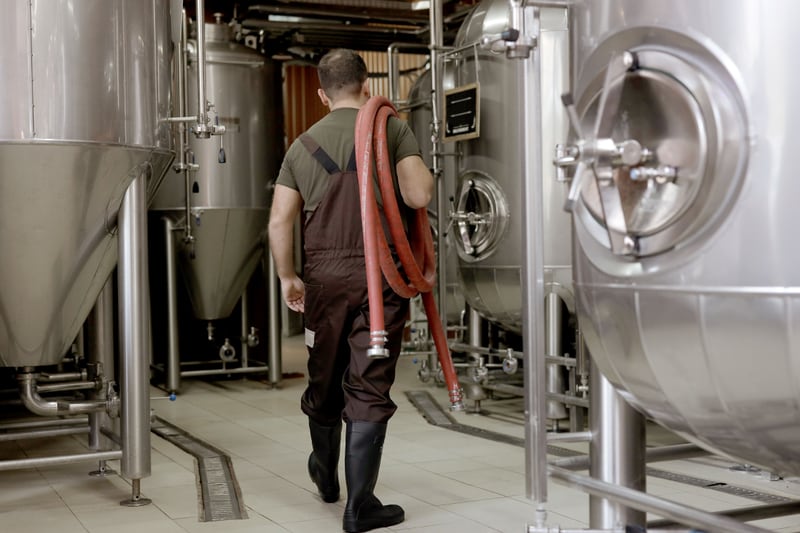
Worker navigating the brewery floor with equipment among stainless steel fermentation tanks.
Introduction
The US Beer Market Report and Outlook provides a comprehensive analysis of the American beer wholesaling industry’s recent performance and future trajectory. Between 2020 and 2025, U.S. beer distributors demonstrated resilience through the pandemic and shifting consumer tastes, maintaining modest growth of about 1.2% annually. Industry revenue reached approximately $94.7 billion in 2025 , supported by the traditional three-tier distribution system. This report examines key trends driving the market, including the evolving product mix, regional and regulatory nuances, and operational innovations. It also offers an outlook through 2030, projecting how wholesalers will navigate challenges – from digital disruption to competition from spirits and cannabis – in order to sustain growth. All data are drawn from the MMCG database (augmented by sources such as the Beer Institute and NBWA), ensuring a high-level analytical perspective for investors, industry analysts, and consultants.
Industry Structure and Regulation
Three-Tier System: U.S. beer distribution is anchored by the three-tier system, which legally separates producers (breweries), distributors (wholesalers), and retailers. This structure, in place since the repeal of Prohibition, prevents vertical integration and “tied houses,” fostering a diverse marketplace of brands. It has historically ensured market diversity and local brewer access , albeit at the cost of complexity for small breweries trying to expand beyond their home markets. In practice, the system means brewers must sell to state-licensed wholesalers, who then sell to retailers; direct brewery-to-retail sales are generally prohibited (with limited exceptions for small craft producers in some states).
State Regulations and Fragmentation: Because alcohol distribution is regulated at the state level, there are stark geographic and regulatory divergences in the beer wholesale market. For example, California’s more flexible regulatory climate encourages innovation and easier market entry for new products, whereas Pennsylvania’s restrictive laws (such as tighter franchise rules and limitations on package sales) raise barriers to change. Some states allow limited self-distribution by brewers or brewpubs, while others enforce strict franchise agreements that make it difficult for breweries to change distributors. These regional rules contribute to a highly fragmented market – there are over 3,000 independent beer distributors nationwide, typically each with exclusive territorial rights. Even the largest wholesaler holds only about 3% of national market share , underscoring that the industry remains fragmented and locally focused. Leading player Reyes Beverage Group , after years of acquisitions, accounts for an estimated 3.2% of U.S. beer wholesale revenues. The next-largest, Columbia Distributing , holds roughly 0.5% . This fragmentation persists due to state franchise protections and strong regional brand loyalties, which impede consolidation despite acquisition efforts . In other words, while major wholesalers continue to acquire smaller ones regionally, broad market consolidation remains unlikely under the current regulatory framework.
Geographic Variations: Regionally, the Southeast leads the beer wholesale industry in volume and revenue, benefiting from dense populations and generally favorable regulations that encourage robust distributor operations. The Mid-Atlantic (e.g., New York, Pennsylvania) is a major hub due to its urban centers and port access, despite varying state laws. California dominates the West with its large population and famed craft beer culture, though distributors there contend with long distances and occasional climate-related disruptions. Table 1 illustrates the geographic distribution of beer wholesaling by select states. Notably, Texas and California each contribute over 11% of U.S. beer wholesale revenue – far above their share of the U.S. population – indicating these states are key centers for beer production, import, and consumption. In contrast, some populous states like Pennsylvania have a smaller revenue share (≈3%) relative to their population (≈4%), reflecting the impact of state-specific factors (e.g. PA’s beer sales restrictions) on distribution volume.
Table 1. Top U.S. States by Beer Wholesale Activity, 2025
| State | % of U.S. Beer Wholesale Revenue | % of U.S. Population (for reference) |
|---|---|---|
| Texas | 12.1% | 9.3% |
| California | 11.2% | 11.5% |
| New York | 8.4% | 5.8% |
| Illinois | 9.6% | 3.7% |
| Florida | 6.8% | 7.0% |
| Pennsylvania | 3.1% | 3.8% |
| (Other states each <3% of revenue) |
These differences reflect not only population and demand but also regulatory environments. States like Texas and California have large markets with numerous breweries and retailers, whereas Pennsylvania’s tighter controls limit wholesale volume per capita. In all states, beer wholesalers must navigate a patchwork of laws regarding licensing, permissible distribution territories, and allowed sales channels (for instance, whether brewers can sell directly to consumers or retailers). The complex regulatory landscape reinforces the need for local expertise and compliance. Leading distributors often maintain government affairs teams to monitor and adapt to state-by-state legislative changes. Overall, the industry’s structure – a locally regulated, three-tier system – defines its competitive boundaries , ensuring that beer distribution remains a regionally fragmented business even as product trends and consumer preferences evolve nationally.
Key Trends in Beer Wholesaling (2020 to 2025)
From 2020 through 2025, U.S. beer wholesalers experienced significant shifts in demand and operations while preserving moderate growth. A rebound in consumer spending following the pandemic helped drive industry revenue recovery by mid-decade. However, growth has been measured : the industry’s 2020 to 2025 compound annual growth rate (CAGR) was only ~1.2% . Several key trends characterized this period:
Pandemic Disruptions and Recovery: The COVID-19 pandemic in 2020 sharply disrupted traditional beer sales channels. On-premise consumption (bars, restaurants, stadiums) plummeted during lockdowns, while off-premise retail sales (supermarkets, liquor stores) surged. Wholesalers had to pivot logistics and inventory from kegs for bars to packaged beer for retail. Many distributors expanded warehousing for cans and bottles and adjusted delivery routes to focus on off-premise accounts. As vaccinations and reopening progressed, on-premise sales partially recovered, but by 2023 about 85% of U.S. beer volume was still sold off-premise (for at-home consumption) versus 15% on-premise – a slightly higher at-home share than pre-pandemic. Overall beer shipment volumes have been relatively flat; in 2023 the industry shipped ~192 million barrels (6 billion gallons) of beer, roughly in line with prior years. Consumer spending recovery in 2021 to 2022 provided a tailwind: as Americans returned to social activities, beer distributors saw demand stabilize and then grow modestly.
Portfolio Diversification and New Categories: Perhaps the most striking trend was the explosion of new product segments beyond traditional lagers. Wholesalers rapidly diversified their portfolios to include hard seltzers, flavored malt beverages (FMBs), and non-alcoholic beers , alongside the usual premium, import, and craft beers. For example, hard seltzers (like White Claw and Truly) went from niche to mainstream virtually overnight in 2019 to 2020, and by 2025 the broader FMB category – which includes seltzers, hard lemonades, hard teas, etc. – made up 20.7% of wholesalers’ revenue . Similarly, non-alcoholic (NA) beer gained traction as health-conscious consumers sought alternatives; although still a small share of volume, NA beer sales grew ~27% in dollar terms in 2024 alone. Wholesalers that traditionally focused on core beer brands had to swiftly adjust, establishing distribution for these new products. Major distributors like Reyes and Columbia were quick to integrate top FMB brands and even spirits-based ready-to-drink (RTD) cocktails into their lineups. This “beyond beer” diversification helped offset declining volumes of classic light beers. However, it also introduced volatility – a booming new product (say, hard seltzer) could spike one year and then fade the next, creating inventory management challenges. By late 2022, the initial seltzer craze had cooled, illustrating how faddish consumer trends can whipsaw distributor sales. Nonetheless, the broadening of product mix is a lasting change: distributors now carry a wider array of alcoholic and even non-alcoholic beverages, positioning themselves as “total beverage” distributors in many cases.
Premiumization and Changing Beer Preferences: Traditional beer segments have been reshaped by a premiumization trend – consumers gravitating toward higher-end products. In retail data, super-premium and import beers (often higher-priced brands like Michelob Ultra, Stella Artois, and Modelo) have shown positive growth, while standard premium domestic beers and budget “sub-premium” beers have stagnated or declined. For instance, premium domestic lagers (Budweiser, Miller Lite, etc.) still form the largest segment (about 29% of wholesaler revenue in 2025) but their volume is flat, pressured by competition from craft and imports. Sub-premium beers (economy brands like Busch, Natural Light) have seen sales contract, now only ~18% of revenue and shrinking as some value drinkers trade up or shift to other beverage types. Meanwhile, craft beer , after a decade of double-digit growth in the 2010s, has matured and plateaued. Craft products comprise roughly 12% of 2025 wholesaler revenue , but growth has slowed to a crawl (even slipping slightly in share) as the market reaches saturation with over 9,000 craft breweries operating. Wholesalers note that only the most distinctive craft brands with strong local followings continue to grow, while many weaker craft brands struggle to maintain sales. Table 2 summarizes the product segment breakdown by 2025 and underscores these trends – high-end segments (super-premium, FMBs, craft) collectively have grown to about half of the market, while sub-premium’s share has ebbed.
Table 2. U.S. Beer Wholesaling Revenue by Product Segment, 2025
| Product Segment | 2025 Revenue (est.) | Share of Industry Revenue (%) |
|---|---|---|
| Premium Domestic Beer | $27.5 billion | 29.0% |
| Flavored Malt Beverages (FMBs) | $19.6 billion | 20.7% |
| Super-Premium Beer (High-End Domestic & Import) | $19.1 billion | 20.2% |
| Sub-Premium Beer (Value Segment) | $16.9 billion | 17.9% |
| Craft Beer | $11.5 billion | 12.2% |
| Total 2025 Industry Revenue | $94.6 billion | 100% (approx.) |
Note: Non-alcoholic beer is a fast-growing sub-category but still represents a small fraction of revenue and is not broken out in the above segmentation. It is generally included within the super-premium or craft segments when distributed by beer wholesalers.
The data above (sourced from the MMCG database) highlights how “above-premium” tiers now drive growth . Super-premium brands rode a wave of health and lifestyle marketing – e.g. Michelob Ultra’s low-carb appeal – to gain market share. Craft’s share, while significant, is no longer rapidly expanding; instead, innovation has shifted towards flavored and specialty beverages that appeal to younger, experimental consumers. Wholesalers in 2020 to 2025 had to constantly recalibrate their SKU mix and marketing focus in response to these preference shifts. As one industry summary noted, “premiumization and innovation are shaking up the beer aisle,” with consumers leaning into super-premium, craft, and flavored options, forcing wholesalers to keep their portfolios fresh.
Digital Transformation of Sales: Another trend accelerated by the pandemic was the digitization of the sales process . With limited in-person interactions in 2020, beer distributors and retailers increasingly turned to B2B e-commerce platforms and online ordering systems. Distributors that invested in user-friendly retailer portals or mobile apps for order placement gained efficiency. For example, Reyes Beverage Group launched a digital platform (“RBG Connect”) integrating real-time inventory and order tracking for its customers. This gave Reyes an early tech edge, though smaller distributors quickly adopted off-the-shelf cloud solutions to level the playing field . By 2025, digital ordering and inventory management tools had become standard across much of the industry, improving order accuracy and transparency for retailers. Additionally, wholesalers have enhanced their use of data analytics – analyzing sales data to predict demand and optimize stock – and digital marketing. Many now collaborate with breweries on targeted digital advertising and leverage social media to promote new product launches in their territories.
E-Commerce and Direct-to-Consumer (DTC) Pressure: The rise of alcohol e-commerce in the consumer market (on-demand delivery services like Drizly, and brewery DTC sales in some states) has started to challenge the traditional wholesale model . During the pandemic, many states temporarily relaxed rules to allow delivery or takeout of alcohol, conditioning consumers to expect convenience. While the three-tier system remains largely intact, breweries and importers are exploring DTC channels where legal – for instance, winery-style subscription clubs for beer, or online marketplaces that ship beer to consumers. Beer wholesalers in 2020 to 2025 lobbied to maintain their role in any emerging channels, often handling the logistics for “legal” DTC programs. Nonetheless, the trend is evident: distributors face competition not just from each other, but potentially from producers selling around the middle tier . The MMCG database notes that the pandemic’s lasting impact on DTC distribution has forced wholesalers to rethink logistics and speed of service to ensure they add value in a world of near-instant consumer delivery. Wholesalers have responded by improving direct store delivery frequency, investing in e-commerce partnerships, and emphasizing their ability to ensure rapid, local fulfillment – an edge most breweries lack on their own.
In summary, 2020 to 2025 was a period of adaptation and incremental growth for beer wholesalers. They contended with unprecedented disruptions yet capitalized on new opportunities (like hard seltzers). The net result was an industry that grew in dollar terms, even as total beer consumption was roughly flat to slightly declining in volume. Consumers’ tastes shifted toward higher-end and novel beverages , requiring wholesalers to be agile. Those that diversified their product range and embraced technology emerged stronger, while those clinging solely to old staples risked losing relevance. These trends set the stage for the outlook through 2030, as discussed later in this report.
Major Players and Competitive Dynamics
The U.S. beer wholesaling sector is highly competitive but not dominated by any single national player . The competitive landscape is defined by thousands of distributors operating in defined territories, often family-owned businesses that have been local fixtures for decades. Nonetheless, a few large firms have grown through acquisitions to achieve multi-state scale:
Reyes Beverage Group: A privately-held distributor headquartered in Illinois, Reyes is the largest beer wholesaler in the U.S. with operations spanning dozens of markets (including California, Florida, Texas, and more). Reyes’ estimated industry-specific revenue was $3.0 billion in 2025 , giving it just over 3% market share. Over 2020 to 2025, Reyes aggressively expanded by acquiring smaller distributors in key regions such as Texas, Tennessee, Hawaii, and Florida. These acquisitions helped Reyes build a coast-to-coast network and fueled double-digit revenue growth in new territories. Despite this expansion, Reyes’ national share remained around 9 to 10% of total beer volumes (including its distributed brands) due to concurrent consolidation moves by others and the limits imposed by franchise laws. Reyes has been a leader in operational innovation – for instance, it piloted electric delivery trucks in 2024, gaining an early sustainability reputation (since emulated by others), and rolled out advanced analytics for route optimization (though those advantages proved short-lived as competitors adopted similar tech). Reyes’ strategy illustrates the “growth but not dominance” paradigm of this industry: even the largest player cannot easily exceed a low-single-digit market share because of the entrenched nature of local distribution.
Columbia Distributing: Based in the Pacific Northwest, Columbia is another major wholesaler (approximately $509 million revenue in 2025 , ~0.5% share). Columbia operates primarily in Washington, Oregon, and California, distributing a wide portfolio of beer, wine, and non-alcoholic beverages. Like Reyes, Columbia has focused on expanding its portfolio to include popular FMBs and imports. Both Columbia and Reyes have integrated top-selling brands like White Claw (hard seltzer) and High Noon (vodka-based RTD) into their offerings. These large distributors set industry standards in terms of logistics efficiency and breadth of selection , but they still compete with mid-sized and smaller wholesalers that maintain strong local brewery relationships.
Other Notable Distributors: Beyond Reyes and Columbia, the market includes firms like Southern Glazer’s (a major wine & spirits distributor that in some states also handles beer, particularly imports and craft brands), Breakthru Beverage , HEB’s Favor (in Texas), Manhattan Beer Distributors (dominant in New York City), Rebel One (Midwest), JJ Taylor , Brown Distributing , and many regional players. A few breweries also own distribution operations in select markets (e.g., Anheuser-Busch affiliates), but these “captive” distributors are limited by franchise laws and public scrutiny. Overall, the top 50 distributors account for only a minor fraction of industry revenue, indicating a long tail of local competitors .
Competition among wholesalers is intense but somewhat unusual: distributors typically do not compete head-to-head in the same territory for the same brands (since each has exclusive rights to certain brands in a given area). Instead, competition occurs in portfolio acquisition and service quality . Wholesalers vie to sign distribution agreements with coveted breweries – for example, a craft brewery looking for a distributor in a new state might field offers from multiple distributors, each touting their market reach and retailer relationships. Once brands are in hand, a distributor’s success depends on quality of service (reliable deliveries, retailer support, merchandising, etc.). In recent years, competitors have also emerged in the form of alternative models : some large retailers (like warehouse clubs) explored bypassing traditional wholesalers via direct purchases, and tech startups attempted to facilitate brewery-to-retailer sales. Thus far, legal barriers largely prevented such end-runs, but they contribute to competitive pressure, pushing wholesalers to demonstrate their value.
Another dynamic is consolidation vs. independence . While giants like Reyes continue to acquire smaller houses, many regions still have fiercely independent family-run distributors. These independent firms often leverage deep community ties and personalized service to fend off acquisition or loss of supplier contracts. For instance, a regional distributor might emphasize its decades-long relationship selling a local craft beer as a reason that brewery should stay with them rather than switch to a conglomerate. The NBWA (National Beer Wholesalers Association) supports independents by highlighting their local economic contributions (the beer distribution sector directly employs around 140,000 Americans and generates significant local tax revenue) and by lobbying against regulatory changes that could favor large players. Given these forces, the competitive landscape through 2025 has been characterized by gradual consolidation at the margins but enduring fragmentation at the core : a few big fish growing bigger, yet plenty of smaller fish remaining in the pond due to the safeguards of the three-tier system and state laws.
Logistics, Technology, and Operational Insights
To thrive in a low-margin, high-volume business, beer wholesalers have increasingly turned to logistics optimization and technology adoption . In the past five years, there have been notable strides in how distributors manage warehousing, delivery, and workforce challenges:
Logistics Optimization: Beer distribution is a complex logistical endeavor – product is heavy, perishable (for draft and certain crafts), and demand fluctuates with seasonality and events. Wholesalers in the 2020s have embraced sophisticated routing software and GPS tracking to streamline deliveries. By using AI-driven route planning and real-time vehicle tracking , distributors can ensure trucks are fully loaded and taking optimal paths, reducing fuel costs and improving delivery times. Many large operations now use telematics to monitor driver performance and vehicle conditions, aiming to prevent breakdowns and ensure timely service. Moreover, to service the burgeoning variety of products (SKU proliferation from new brands and packages), inventory management systems have been upgraded. RFID tagging and warehouse management systems (WMS) allow precise tracking of inventory, helping avoid out-of-stock situations or overstocks. These tools ensure that as the portfolio expands, operational efficiency keeps pace – a critical factor since carrying costs and spoilage risk increase with more SKUs.
Digital Ordering and Customer Service: As mentioned, digital integration has transformed how orders are taken and processed. Instead of faxing orders or calling sales reps, many retailers (bars, grocery stores, liquor stores) now submit orders through online portals. Distributors report that digital order platforms improve accuracy and free up sales reps to focus on business development rather than clerical tasks. Some distributors also offer retailer-facing analytics – for example, showing a bar owner their purchase history and suggesting an optimized order mix based on seasonal trends. This kind of value-added service deepens the distributor–retailer partnership.
Warehouse Automation: To handle high volume with fewer errors and less labor, wholesalers are investing in warehouse automation . Recent reports highlight use of automated guided vehicles (AGVs) and autonomous mobile robots to move pallets within warehouses. Robotic palletizers can build mixed pallets for individual retail orders, and conveyor systems tie together picking areas. These technologies accelerate workflows with less labor, improving consistency and safety in distribution centers. For instance, voice-picking systems (where workers wear headsets guiding them to picks) reduce mistakes and speed up order assembly. Advanced automated storage and retrieval systems (AS/RS) maximize warehouse space and enable faster access to fast-moving SKUs. As a result, large distributors can process orders more quickly and with fewer staff – a vital edge when delivery windows (like early morning for retailers) are tight. Workplace safety has also improved with automation: robots handle the heaviest lifting and repetitive motions, reducing injuries among warehouse workers. While smaller distributors may not yet afford full automation, many are incrementally adding pieces (such as semi-automated stretch-wrappers or improved forklifts) to boost efficiency. The consensus is that automation offers long-term cost savings (through labor reduction and error minimization) that increasingly justify the up-front investment.
Labor Constraints and Workforce: A significant challenge in recent years has been a tight labor market , especially for commercial drivers and warehouse personnel. Beer distributors have found it difficult to hire and retain qualified CDL-licensed drivers amid a nationwide truck driver shortage of roughly 80,000 drivers as of 2021 , projected to grow to 160,000 by 2030. This shortage has forced distributors to raise wages, offer signing bonuses, and improve working conditions to attract talent. Many are also working on recruitment initiatives in partnership with trade associations (the NBWA has promoted driver recruitment campaigns and even advocated for lowering the minimum CDL age in interstate commerce to 18 to enlarge the candidate pool). In the warehouse, competition from Amazon and other distribution jobs has compelled beer wholesalers to focus on company culture and career development to retain workers. Some firms increased automation partly because of labor scarcity – if you cannot find enough order pickers, a robot might fill the gap.
To alleviate drivers’ workload, distributors are leveraging tech solutions like electronic proof-of-delivery and automated payment processing. For example, using Fintech’s EFT system, drivers no longer need to collect physical checks at deliveries – invoices are settled electronically, saving drivers time at each stop. Such tools help make the driver’s route more efficient and less stressful, thereby improving job satisfaction. Additionally, many distributors have invested in fleet upgrades (newer trucks with better ergonomics, or even experimentation with electric trucks as Reyes did) to appeal to environmentally-conscious and younger drivers. Cross-training of employees is another tactic: with slightly leaner staffs post-pandemic, companies train workers to handle multiple roles (e.g., a sales rep who can drive a truck in emergencies, or a warehouse worker with a CDL).
Sustainability Initiatives: Sustainability has become a notable operational focus. Distributors are reducing their carbon footprint and responding to retailer/consumer expectations for greener practices. Efforts include transitioning to fuel-efficient or electric delivery trucks , optimizing routes to cut fuel usage, and investing in warehouse energy efficiency (like LED lighting, solar panels on roofs, and improved refrigeration for beer storage). As mentioned, Reyes started deploying electric trucks in 2024, setting a precedent. Within a year or two, many peers followed suit or ran trials with alternative fuel vehicles, indicating the competitive importance of environmental leadership. Furthermore, distributors are working with suppliers to promote recycling (e.g., retrieving and recycling bottles, kegs, and packaging) and sometimes coordinating on sustainable packaging initiatives (lighter weight cans, biodegradable six-pack rings, etc.). These sustainability measures not only reduce costs in the long run (e.g., less fuel consumed) but also align with the values of younger consumers and the expectations of corporate retail clients who increasingly prioritize ESG (Environmental, Social, Governance) compliance in their supply chains.
In summary, the modern beer wholesaler is as much a logistics and tech company as it is a sales company. The past five years have seen the industry integrate advanced tools to keep distribution reliable and cost-effective despite a tightening labor market and exploding product variety. Wholesalers that invest in these areas – warehouse automation, route optimization, digital systems – are generally better positioned to serve their customers profitably. Those that lag in technology may struggle with higher costs and service issues, especially as retailer expectations for speed and transparency continue to rise.
Outlook Through 2030
Looking ahead, the U.S. beer wholesale industry is projected to achieve moderate growth through 2030 , driven by economic and demographic trends but tempered by competition from other beverages and potential regulatory changes. The MMCG database forecasts industry revenue will grow at roughly 1.6% CAGR from 2025 to 2030 , reaching about $102.5 billion by 2030 . This outlook is slightly stronger than the previous five years’ growth rate, suggesting a cautiously optimistic future. Key factors influencing the outlook include:
Consumer Demand and Spending: Macroeconomic conditions will play a crucial role. As of 2025, consumer spending on beverages has been buoyed by a growing economy and low unemployment. If these conditions persist (barring a major recession), total alcohol expenditures should continue rising modestly, even if volume consumption is flat. Per capita beer consumption in the U.S. has been gradually declining or flattening in recent decades (around 23 to 24 gallons per adult per year), so volume gains are not expected. Instead, dollar growth is likely to come from higher unit prices and premiumization – consumers buying slightly more expensive products, as well as innovation in new categories. The industry is also keeping an eye on demographic shifts: as younger Gen Z consumers come of age, they show different preferences (often favoring spirits or cannabis over beer). Wholesalers will need to “win” a share of this new generation’s wallet to maintain growth. On balance, moderate GDP growth and population increases (especially in higher-beer-consuming age brackets like 21 to 34) are supportive for beer sales, but the pace will be modest , in line with overall population and income growth.
Premiumization Continues: All signs point to the premiumization trend persisting. By 2030, a greater proportion of beer (and beer alternatives) sold will likely fall into higher-priced tiers. Super-premium beers and FMBs are poised for the most significant growth in the beer category, according to industry projections. These segments align with consumer interests in variety, flavor, and “quality over quantity.” Health-conscious and affluent consumers will gravitate towards light-but-premium options (like upscale light lagers, hard kombuchas, etc.), while flavor-seekers will sustain FMB innovation. The MMCG outlook suggests FMBs will be a key growth driver through the late 2020s , fueled by ongoing flavor innovation and marketing that positions these drinks as fun and lower-calorie alternatives. In response, smaller distributors have an opportunity to partner with local craft soda, hard seltzer, or RTD cocktail producers to carve out niches in their regions. Craft beer is expected to remain roughly stable – a mature segment where growth of standout breweries is offset by closures of slower-selling ones. For wholesalers, this means the revenue mix will keep shifting: by 2030, traditional domestic beer might form an even smaller slice of the pie, whereas products like hard teas, canned cocktails, and non-alcoholic brews could command significantly more attention.
Competition from Substitutes: A critical factor in the outlook is competition from substitute products like spirits and cannabis . In 2022, U.S. spirits (liquor) actually surpassed beer in total market share by revenue – spirits reached a 42.1% share versus beer’s 41.9%. This was a historic crossover fueled by booming sales of tequila, whiskey, and ready-to-drink cocktails. The trend reflects consumer shifts towards cocktails and spirits as alternatives to beer, a shift that may continue if younger cohorts prefer spirits-based drinks. Beer wholesalers will attempt to reclaim share by distributing spirits-based RTDs and emphasizing beer’s value and lower alcohol content (for moderation), but spirits are expected to remain formidable competitors . Meanwhile, cannabis legalization is advancing in many states, and early evidence suggests legal cannabis is a moderate substitute for beer . In Canada, for example, beer sales have seen a measurable decline since cannabis was legalized. In U.S. states like Michigan, Illinois, Colorado, and others, cannabis sales are already matching or exceeding alcohol sales growth. Analysts forecast nearly 20 million more Americans will regularly consume cannabis by 2027, while a few million may reduce or stop drinking alcohol in that time. This represents a long-term headwind for beer demand – particularly for the under-30 demographic that is most inclined to substitute cannabis for alcohol. The beer industry’s response has included developing cannabis-infused non-alcoholic beverages (in legal markets) and heavily marketing beer’s social and cultural appeal to stay relevant. For wholesalers, any significant inroads by legal cannabis into the “relaxation beverage” space could constrain beer volume growth. Thus, the outlook accounts for slightly softer demand growth due to these substitutes . Beer is still forecast to be the largest U.S. beverage alcohol category by volume, but the fight for market share with spirits and cannabis will shape marketing and lobbying efforts through 2030.
Taxation and Policy Environment: The tax landscape will influence profitability and perhaps consumption. Beer is already one of the most taxed consumer goods – taxes (excise, sales, etc.) comprise roughly 40% of the retail price of beer on average. While federal excise taxes on beer were slightly lowered for small brewers in recent years (and made permanent in 2020), any future tax increases (federal or state) could dampen beer sales or push more consumers to illicit/untaxed alternatives. Additionally, states with very high excise taxes (e.g., Tennessee, Kentucky) effectively raise prices to consumers, which can curb consumption at the margins. The outlook assumes a stable tax regime , but if governments seek higher “sin taxes” for revenue or public health reasons, it could pose a downside risk to beer volume. On the other hand, brewers and distributors will advocate for policies to keep beer affordable and accessible. The continuation of post-pandemic regulatory flexibilities (like allowing home delivery or direct shipments in some form) could actually open new channels for distributors to exploit, potentially boosting revenues if they can partake in those sales. Tax treatment moves faster than the legal map in adjacent regulated categories, and the rescheduling of marijuana and its effect on Section 280E is the clearest recent example.
Continued Adaptation by Distributors: To maintain growth and margin in this evolving environment, beer wholesalers will need to emphasize flexibility and innovation . The successful distributor in 2030 is one that pivots with consumer tastes – meaning their portfolio might include craft beers, imported seltzers, canned cocktails, and even non-alcoholic energy drinks or hop-infused sparkling waters. Wholesalers are expected to deepen partnerships with local and regional producers , helping bring unique products to market (thus differentiating themselves and filling gaps left by national brands). Investment in technology will also be a linchpin for success: predictive analytics for demand, more automation in warehouses, and perhaps using AI to optimize sales and marketing efforts. The MMCG outlook emphasizes that flexibility and technological investment will be the linchpin for sustainable growth . This includes sustainability tech – by 2030, environmental considerations could translate into cost savings (electric fleets, efficient cooling systems) and new business (as retailers favor “green” distributors). Labor-wise, distributors will continue to face pressure to find qualified workers, so expect increased automation and possibly industry efforts to attract talent (scholarships for truck driving schools, etc.). Mergers and acquisitions will also continue at a measured pace: some mid-sized distributors will likely sell to larger ones for economies of scale, but as discussed, regulatory and local factors will prevent any rapid consolidation into a few national firms. We may see the rise of a few more multi-state players, but the core dynamic of each state or metro area having 2 to 3 primary competing distributors will remain.
In conclusion, the outlook through 2030 for the US beer wholesale industry is one of cautious optimism and relentless adaptation . Modest revenue growth (on the order of 1 to 2% annually) is anticipated, underpinned by a recovering economy and the industry’s ability to capture value through premium products. However, wholesalers must navigate a minefield of challenges: keeping consumers interested in beer amid a plethora of alternatives, leveraging technology to stay efficient, and working within a regulatory patchwork that both protects and limits them. The three-tier system will continue to provide a stable backbone – preserving the role of distributors – but those distributors will not look the same as years past. They are becoming more high-tech, more broad in product scope, and more attuned to external competitive forces. By consistently innovating in both product portfolio and operations, U.S. beer distributors are expected to maintain their crucial place in the alcohol supply chain and deliver value to brewers, retailers, and consumers alike over the coming decade. The US Beer Market Report and Outlook thus forecasts a steady if unspectacular climb for the industry, with 2030 marking a beer wholesale sector that is leaner, smarter, and highly tuned to the marketplace – truly a case of an old industry finding fresh ways to keep the beer flowing.
September 26, 2025, by the authors of MMCG Invest, LLC, (retail/hospitality/multi family/sba) feasibility study consultants.
Sources:
MMCG industry database;
Beer Institute & NBWA reports ;
Reuters;
NBWA & Fintech industry insights
USDA

Michal Mohelsky, J.D., FMVA, Practicing Affiliate of the Appraisal Institute
Principal, MMCG Invest, LLC
Published September 29, 2025. Last updated October 7, 2025. How this analysis was prepared.
Cite this
Michal Mohelsky, J.D., FMVA (2025). US Beer Market Report and Outlook. MMCG Invest, LLC. https://www.mmcginvest.com/post/us-beer-market-report-and-outlook
Where this goes next
- Feasibility Study Company for Commercial Real Estate LendingMMCG's feasibility study page for this subject.