Summary
Caterpillar remains the heavyweight of heavy equipment, with record sales and mid-teens margins, but its next decade turns on electrification, trade policy and skilled labor rather than on scale alone. Sales fell to $41.7 billion in 2020, leapt 22% to $51.0 billion in 2021, and reached a record $67.1 billion in 2023 with a 19.3% operating profit margin, before a new record of $67.6 billion in 2025.
In the U.S. the company holds about 21% of construction machinery, about 16% of heavy-duty diesel engines and about 24% of asphalt pavers and road equipment, ahead of Komatsu, Cummins and Deere. It operates over 270 facilities worldwide, 173 of them in the United States, and its dealers operate in 190 countries.
Written for Investors in industrial machinery makers, Lenders and analysts tracking heavy equipment demand, Contractors and developers who depend on construction equipment. 36 minute read.
Key figures
- Sales & Revenues (record year)
- $67.1 billion
- Caterpillar annual reports and earnings releases2023
- Sales & Revenues (rebound year)
- $51.0 billion, up 22%
- Caterpillar annual reports and earnings releases2021
- Operating profit margin
- 16.5%
- Caterpillar annual reports and earnings releases2025
- Share of the U.S. asphalt paver and road equipment market
- 24%
- Industry reports; company filings2025
- Bucyrus International acquisition
- $8.8 billion
- Bucyrus acquisition completion record (2011; ~$8.8B incl. net debt), per the article's sources list2011
- Infrastructure Investment and Jobs Act (IIJA) funding
- $1.2 trillion
- Congress.gov, Infrastructure Investment and Jobs Act (Public Law 117-58) summary2021, over five years
Updated: Mar 23
Origins and Rise of an American Industrial Icon
Caterpillar Inc. traces its roots back to the early 20th century, born from a 1925 merger of two California-based innovators in tractor technology: the Holt Manufacturing Company and C.L. Best Tractor Co. Holt had developed the “caterpillar” track-type tractor – a name inspired by the machine’s undulating movement – and built a worldwide reputation, while Best brought a broad domestic dealer network and advanced tractor designs. By combining forces, the new Caterpillar Tractor Company was better equipped both financially and technologically to expand into emerging fields like diesel engines, which promised more efficient power for heavy machinery. The merger also established a robust independent dealer network – a strategic move that gave Caterpillar a lasting distribution advantage by ensuring customers could get not just the machine, but ongoing support and service (“buy the iron, get the company,” as the saying went).
In its early decades, Caterpillar’s track-type tractors and heavy equipment played pivotal roles in infrastructure projects and warfare alike. The company’s tractors helped build American highways and were exported globally; during World War II, they served as crucial artillery-haulers and inspired the development of military tanks. After the war, as global development boomed, Caterpillar rapidly expanded overseas. By the mid-20th century, it had established manufacturing hubs beyond its Illinois base, including plants in the UK and elsewhere to serve growing demand in Europe and Asia. The company’s East Peoria, Illinois facility – originally Holt’s plant – became its largest manufacturing center, anchoring Caterpillar’s presence in the U.S. industrial heartland.
Through the 1970s and 1980s, Caterpillar faced stiff competition, particularly from Japan’s Komatsu , which launched an aggressive campaign (internally dubbed “encircle Caterpillar”) to challenge Cat’s dominance. During this era, Caterpillar endured economic recessions and even a prolonged labor strike, but emerged with a modernized production system and renewed competitive drive. By the 1990s, the company had diversified and globalized further, acquiring UK-based Perkins Engines in 1998 to broaden its diesel engine portfolio and expanding into new product lines like road construction equipment (through Italy’s Bitelli in 2000). The 21st century saw Caterpillar cement its leadership in mining machinery with the landmark $8.8 billion acquisition of Bucyrus International in 2011, extending Cat’s range of giant mining shovels and haul trucks. It also pushed into rail and energy equipment – for instance, acquiring Progress Rail (and with it, Electro-Motive Diesel locomotives) to tap into railroad and transit markets.
Today, after more than 100 years of evolution, Caterpillar stands as the world’s largest construction and mining equipment manufacturer , a Fortune 100 industrial powerhouse with an iconic yellow-and-black brand known on every continent. In 2022, the company relocated its headquarters from Illinois to Irving, Texas, reflecting a new chapter in its history. Yet even as its corporate base and product mix have evolved, Caterpillar’s core identity – providing the machines that help build the world’s infrastructure – remains unchanged.
Business Segments and Product Portfolio
From bulldozers carving out highways to generators powering hospitals, Caterpillar’s equipment spans a broad spectrum of heavy industries. The company’s primary business segments include Construction Industries , Resource Industries , and Energy & Transportation , each housing a suite of products:
Construction Machinery: Caterpillar is best known for its construction equipment – notably bulldozers, hydraulic excavators, wheel loaders, motor graders, and backhoe loaders – which are ubiquitous on job sites from urban building projects to rural roadwork. These machines fall under Construction Industries, which serves both the general construction and heavy civil engineering markets. Over the past five years, Caterpillar has maintained roughly one-fifth of the U.S. construction machinery manufacturing market, comfortably leading this segment. Cat’s flagship models, like the D-series track-type tractors (bulldozers) and 320-series excavators, have become industry standards, prized for their durability and supported by that extensive dealer network for parts and service.
Mining and Resource Equipment: Under its Resource Industries unit, Caterpillar produces some of the largest land vehicles on earth – hulking 400-ton haul trucks, giant electric rope shovels, hydraulic mining excavators, and underground mining loaders – as well as drilling equipment and longwall miners for coal extraction. This lineup was significantly bolstered by the Bucyrus acquisition, which positioned Caterpillar as a one-stop-shop for surface and underground mining operations. The company’s mining trucks and excavators are staples in mines globally, from the iron ore pits of Australia to the coal fields of Wyoming. Caterpillar also offers rock crushers, conveyor systems, and rotary drills, making it a key player in the heavy mining and quarrying segment. In the oil and gas sector (also part of Resource Industries), Caterpillar provides pumps, pressure pumping (fracking) equipment, and well service rigs, though it faces competition from specialized oilfield equipment firms.
Engines and Power Systems: Caterpillar’s Energy & Transportation segment produces heavy-duty diesel and natural gas engines, industrial gas turbines (through its Solar Turbines subsidiary), and locomotive engines (via Progress Rail ). These engines power a variety of machinery and vehicles: from electric power generators and marine vessels to oilfield drilling rigs and locomotives hauling freight. Through UK-based Perkins , Caterpillar also makes small and mid-sized diesel engines used in construction equipment and generators worldwide. In the U.S. heavy-duty industrial diesel engine manufacturing industry, Caterpillar holds roughly a 15 to 16% market share – the largest of any player – edging out engine-specialist Cummins in that arena. This engine dominance extends to large backup power generators and turbine systems; in fact, Caterpillar’s single biggest market share is in the engine and turbine manufacturing sector (around 27% in the U.S. as of 2025), reflecting its strong position in providing power solutions.
Paving, Road and Concrete Equipment: Caterpillar’s construction lineup also includes road-building machinery like asphalt pavers and soil compactors , which were augmented by the acquisition of Italian firm Bitelli. In asphalt pavers, Caterpillar is a top manufacturer – it produces both tracked and wheeled pavers used to lay down road surfaces. The company does not manufacture concrete mixers itself, focusing instead on paving machines; nonetheless, in the U.S. mixer and paver equipment industry , Cat has become the single biggest player, with about 24% of the market by 2025. No other competitor has even a 5% share in that niche, thanks to Caterpillar’s scale and broad reach in construction machinery. Its road equipment is often sold in tandem with its loaders and dozers for highway contractors, leveraging the dealer network for comprehensive project solutions.
Other Machinery and Services: Rounding out Caterpillar’s portfolio are products like forestry equipment, industrial OEM engines, and aftermarket parts and services . The latter is a critical but often overlooked part of Caterpillar’s business model: selling replacement parts, maintenance contracts, and digital fleet management services. During times of economic slowdown, when customers delay buying new machines, Caterpillar’s parts and service revenue often provides a stable cushion. In recent years, high machinery prices and interest rates have actually boosted parts sales, as contractors extend the life of existing equipment rather than purchasing new. The company has also been investing in technology – from GPS machine controls to IoT-driven predictive maintenance platforms – that it can offer as services to improve customers’ operational efficiency.
This diversified product mix across construction, mining, engines, and paving machinery means Caterpillar’s fortunes are tied to multiple end markets. It can benefit from an upswing in mining or oil & gas even if construction is soft, and vice versa. That diversity has been a strategic goal for leading manufacturers: it “allows them to offset losses in one sector by tapping growth in others” , as industry analysts note. Caterpillar’s broad lineup, backed by nearly 200 dealers worldwide, gives it unmatched breadth in serving the world’s infrastructure needs.
Competitive Landscape: Caterpillar vs. The Field
Caterpillar operates in a highly competitive global arena, squaring off against long-established rivals in different segments and regions. In its home U.S. market, Caterpillar has long been the clear leader in construction and mining machinery manufacturing. It holds roughly one-fifth of the U.S. market in construction equipment, more than its next two competitors (Komatsu and Deere) combined. Table 1 highlights Caterpillar’s market share in key segments compared to major peers:
Table 1. Market Share by Segment (U.S. Market, 2025)
| Segment | Caterpillar Share | Key Competitor Share (Top Rival) |
|---|---|---|
| Construction Machinery | ≈21% | Komatsu ≈13% (Deere ~6%) |
| Heavy-Duty Diesel Engines | ≈16% | Cummins ≈9% (Navistar ~4%) |
| Asphalt Pavers & Road Equipment | ≈24% | No other single competitor >5% |
(Sources: Industry reports; company filings)
In North America, Caterpillar’s most direct construction equipment competitor is Deere & Company (through its John Deere Construction & Forestry division). Deere, an iconic name in farm equipment, has steadily expanded in earthmoving machinery and now produces excavators, bulldozers, and loaders as well – often competing head-to-head with Caterpillar on mid-size equipment for building contractors. However, Deere’s market share in U.S. construction machinery manufacturing is only about 5 to 6%, reflecting its still smaller presence in that sector. Deere remains far more dominant in agricultural tractors and combines, a sector where Caterpillar (via its short-lived Challenger farm tractors in the 2000s) is not a major player. Thus, while the two companies are of comparable size in overall revenue, their direct competition is focused on the construction and forestry segments.
On the global stage, Komatsu Ltd. of Japan is often cited as Caterpillar’s primary rival. Komatsu is the world’s second-largest construction equipment maker by revenue and has a broad lineup similar to Caterpillar’s, including large mining trucks, bulldozers, and excavators. The Japanese firm aggressively expanded in the 1980s (famously attempting to “encircle” Caterpillar) and continues to challenge Cat in Asia, Latin America, and Africa, where price-sensitive customers may opt for Komatsu’s machines. Komatsu’s strength is partly due to strong footholds in emerging Asian markets and a reputation for reliable, simpler machines. Even so, Komatsu’s scale remains roughly half that of Caterpillar. In recent years, Komatsu’s annual revenue has been around $26 to 27 billion – about one-third of Caterpillar’s – and its net profit margins (around 10%) are lower than Caterpillar’s, indicating the gap in pricing power and efficiency.
Other global competitors include Volvo Construction Equipment (Sweden), Hitachi Construction Machinery (Japan), and Liebherr (Germany), each strong in particular niches such as articulated dump trucks (Volvo) or excavators (Hitachi). Additionally, Chinese manufacturers like Sany and XCMG have risen rapidly by serving China’s massive domestic market; Sany in fact briefly claimed the title of world’s largest excavator maker by volume in 2020 to 21. These Chinese OEMs are increasingly exporting and aiming to move upmarket. Caterpillar has responded by leveraging its brand and technology – for example, its equipment tends to command a premium but is often preferred by larger Western contractors and mines, especially where productivity and after-sale support are paramount.
Meanwhile, in the engine and generator arena, Cummins Inc. remains a formidable competitor. Cummins leads in on-highway truck engines and also supplies many non-Cat construction equipment makers with diesel engines. In heavy industrial engines (off-highway and power generation), Caterpillar’s ~16% U.S. market share edges Cummins’ ~9%, but both face emerging challenges from new technologies (like electrification, discussed later). Caterpillar’s advantage is having its engines integrated into its own machines as well as sold separately (through Perkins and Olympian brands), whereas Cummins relies purely on selling to third-party OEMs.
Table 2. Competitive Comparison – Key Metrics (FY2023)
| Company | Headquarters | Annual Revenue (USD) | Net Profit Margin (FY2023) |
|---|---|---|---|
| Caterpillar Inc. | Irving, Texas (USA) | $67 billion (2023) | ~16% (record high) |
| Deere & Co. | Moline, Illinois (USA) | $60 billion (2023) | ~17% (strong ag cycle) |
| Komatsu Ltd. | Tokyo, Japan | $26 to 27 billion (2023) | ~10% (steady) |
(Sources: Company reports, Macrotrends; FY2023 figures)
As Table 2 suggests, Caterpillar and Deere are of similar scale in revenue, though Deere’s figures include its booming agriculture division. Caterpillar’s business is more concentrated in construction, mining, and energy equipment. Importantly for investors and lenders, Caterpillar has been running at healthy profit margins (mid-teens or higher in recent years), reflecting pricing power and cost discipline during a favorable cycle. Deere enjoyed even higher net margins in 2023 (nearly 17%) thanks to an agricultural equipment boom driving up farm machinery prices. Komatsu, while profitable, operates with net margins around 10% and significantly lower revenue, underscoring that Caterpillar remains the heavyweight in this industry by a wide margin.
Despite Caterpillar’s lead, competition is intensifying. In particular, regional players carve out sizable positions: e.g., Japan and Southeast Asia are Komatsu strongholds; Europe sees Volvo and Liebherr with loyal customer bases; and China’s domestic makers control their home market. The competitive landscape is also shaped by specialization – for instance, Terex and Sandvik focus on niche equipment like cranes and rock crushers, and Hitachi has a joint venture with Deere for excavators in the Americas. Caterpillar often finds itself competing not just on product features but on financing deals, rental agreements, and dealer service levels as it battles these peers around the globe.
Financial Performance (2020 to 2025): Rebounding and Reaching New Highs
The period from 2020 through 2025 was a roller coaster for Caterpillar in financial terms, mirroring broader economic swings. The company entered 2020 on a soft note as global construction was slowing, then the COVID-19 pandemic triggered a sharp downturn. But massive fiscal stimulus and infrastructure investments soon turned things around, propelling Caterpillar to record results by mid-decade. Table 3 summarizes Caterpillar’s revenue and profitability over this period:
Table 3. Caterpillar Inc. – Sales and Profitability, 2020 to 2025
| Year | Sales & Revenues (USD) | Net Profit Margin (%) | Notable Factors |
|---|---|---|---|
| 2020 | $41.7 billion | 7.2% (est.) | Global pandemic; steep drop in demand for new equipment; cost-cutting measures. |
| 2021 | $51.0 billion | 12.9% | 22% sales rebound as construction and mining recover; improved pricing and dealer restocking. |
| 2022 | $59.4 billion | ~12% (est.) | Continued growth (+16% vs 2021) on strong equipment demand; rising manufacturing costs kept margins moderate. |
| 2023 | $67.1 billion | 16.4% | Record sales (best year in company history); high equipment prices and volume; operating margin ~19.3%. |
| 2024 | $64.8 billion | 17.7% (est.) | Slight revenue dip (–3%) from peak as demand normalizes; profit margin peaks (favorable mix, pricing carryover). |
| 2025 | $67.6 billion | 14.5% (est.) | New sales record (helped by infrastructure projects); margins ease on higher costs and price competition. |
(Sources: Caterpillar annual reports and earnings releases; profit margins calculated from reported net income)
Caterpillar’s revenue plunged in 2020 to about $41.7 billion – roughly 22% below the prior year – as the pandemic brought construction sites to a halt and miners slashed capital spending. Profitability that year also fell sharply, with full-year net profit around $3 billion (just over 7% of sales), one of the weakest showings in decades. The company responded with layoffs, temporary factory closures, and other belt-tightening. By late 2020, however, equipment orders were perking up, and 2021 saw a vigorous rebound: sales leapt 22% to $51.0 billion, while operating margins and profit nearly doubled from the prior year. Pent-up demand, along with dealers refilling inventories they had run down in 2020, fueled this recovery. Caterpillar’s broad market exposure worked to its advantage – as certain economies (like China) roared back quickly and commodity prices rose, orders for both construction machines and mining equipment climbed.
The growth streak continued in 2022 and especially 2023. By 2023, Caterpillar notched $67.1 billion in sales, the highest in its 98-year history . This represented a 13% jump over 2022’s $59.4 billion. A combination of factors drove the surge: governments (notably the U.S.) unleashed infrastructure spending, global mining capital expenditures rose (with high prices for copper, iron ore, and other minerals spurring new investments), and construction activity resumed strongly in many regions. Caterpillar was able to raise equipment prices amid high demand, which, coupled with greater factory utilization, dramatically boosted margins. In 2023, the company’s operating profit margin hit 19.3% – up from just 13.3% in 2022 – and net profit margin climbed into the mid-teens. This performance impressed analysts and was attributed to Caterpillar’s cost controls and pricing power in a supply-constrained market. CEO Jim Umpleby lauded it as “the best year ever” for the company.
There were some speed bumps thereafter. In 2024, global economic growth downshifted, partly due to rising interest rates. Caterpillar’s sales actually declined slightly (by about 3%) in 2024 compared to the record 2023, settling around $64.8 billion. Softening demand in Asia and Europe and a return to more normal dealer inventory levels contributed to this dip. Interestingly, despite the lower top line, Caterpillar’s 2024 profit margins reached a cyclical high – the company benefitted from having worked through higher-cost inventory and continued selling at relatively elevated prices locked in earlier. By 2025, sales ticked up again to a new record ($67.6 billion), thanks in large part to large infrastructure projects breaking ground (helped by U.S. federal funding) and replacements of aging machinery. However, margins in 2025 slipped back a bit from their peak. Caterpillar faced “unfavorable price realization” in 2025 – essentially, it couldn’t push prices much higher and even saw some price competition or currency impacts to the tune of a ~$0.8 billion drag on sales. Operating profit margin for 2025 was 16.5%, down from 20.2% in 2024, reflecting some combination of inflation in materials and labor, as well as a more competitive landscape.
Throughout 2020 to 2025, Caterpillar also steadily improved its market share in certain product areas. In the U.S., for example, Caterpillar grew its share of the asphalt paver and road equipment market from roughly 18% in 2020 to 24% in 2025, capitalizing on a wave of highway construction (and benefiting from a rival’s exit when Volvo sold off its North American paving business in 2020). In the heavy-duty engine segment, Cat’s share edged up a few points over the five years as it prioritized profitable growth in power systems. Overall, Caterpillar has outperformed many of its peers through this cycle , gaining industry share and posting higher profit growth. One industry report noted that “Caterpillar has outperformed the broader paver and mixer equipment manufacturing industry” , thanks to its global scale, strong dealer support, and investment in new technology that appealed to customers seeking efficiency. The company’s ability to navigate the volatile environment – from the 2020 slump to the 2022 to 23 boom – underscores its resilience and the advantage of its diversified business mix.
Industry Dynamics and Economic Drivers
The heavy equipment industry is notoriously cyclical, and Caterpillar’s performance is heavily influenced by macroeconomic forces. Several key dynamics have shaped the environment in recent years:
Construction & Infrastructure Cycles: Demand for construction machinery swings with building cycles. After the pandemic crash in early 2020, governments worldwide injected stimulus, and the construction sector roared back. In the United States, the Infrastructure Investment and Jobs Act (IIJA) of 2021 earmarked $1.2 trillion for infrastructure over five years, boosting outlays for highways, bridges, and public works. This translated into stronger orders for Caterpillar’s road construction equipment and earthmovers through 2022 to 2025. For instance, increased government investment in highways clearly “drove demand for construction equipment, favoring large, diversified manufacturers like Caterpillar” . Similarly, pandemic recovery programs in Europe and strong real estate development in parts of Asia (at least until 2023) buoyed machinery sales. However, by late 2023 into 2024, higher interest rates began cooling private construction – particularly housing and commercial buildings – in the U.S. and Europe. That slowdown was somewhat offset by ongoing public infrastructure projects and megaprojects (like new semiconductor fabs and renewable energy installations) that continued to require heavy equipment. Caterpillar, with exposure to both private and public sectors, benefited from the infrastructure upswing while seeing some softness in residential construction demand.
Commodities and Mining: Caterpillar’s mining equipment business is tied to commodity price cycles for coal, copper, iron ore, oil, and gas. From 2020 to 2022, prices for many commodities rose significantly (copper and iron ore reached record highs in 2021), prompting miners to increase capital spending after years of restraint. This led to new orders for haul trucks, excavators, and drilling equipment. A major secular trend is the global energy transition – the shift to renewable energy and electric vehicles – which paradoxically increases demand for certain mined minerals (like copper, lithium, and nickel for electric cables and batteries). Industry analysts project strong demand for such critical minerals, “amplifying the need for specialized mining equipment” over the next decade. Caterpillar has cited growth in orders from copper and lithium mining customers as a positive driver. At the same time, volatile oil prices have influenced its sales of petroleum-related equipment: the oil crash of 2020 hurt demand for new drilling engines and fracking pumps, but the rebound by 2022 to 2023 revived those orders as well. By 2025, commodity markets had cooled somewhat from their peak, yet mining investment remained higher than the mid-2010s trough, providing a solid base of business for Resource Industries.
Trade Policies and Tariffs: Global trade tensions have directly impacted Caterpillar’s supply chain and costs. U.S. tariffs on steel and aluminum, first imposed in 2018, raised the cost of raw materials for construction equipment. Caterpillar, despite manufacturing many machines in the U.S., relies on a global supply network for parts and components. It was reported that tariffs could pose a “$350 million hit” to Caterpillar’s sales in one quarter due to higher costs and retaliatory impacts on exports. The company has tried to mitigate these effects by re-sourcing materials, negotiating with suppliers, and even considering relocating some supply chain activities to tariff-friendly countries. Trade policy risks also affect demand: for example, when the U.S.–China trade war cooled Chinese infrastructure investment, it indirectly dampened Chinese demand for imported machinery. Caterpillar’s sales in China did slow significantly by 2022 to 2023, due in part to local economic issues and fierce competition from Chinese brands, but also because trade frictions made Chinese buyers more cautious. Trade agreements or disagreements in other regions (like U.S.–Mexico–Canada, or EU trade relations) also influence where Caterpillar’s products flow. On balance, the company has lobbied for stable, open trade relations, which help it both export U.S.-made equipment and import certain components efficiently.
Currency Fluctuations: As a global business, Caterpillar is sensitive to exchange rates. A strong U.S. dollar, as seen in 2022 to 2023, makes Caterpillar’s U.S.-made exports more expensive abroad and reduces the dollar value of overseas sales. Conversely, a weaker dollar would boost international competitiveness. The trade-weighted dollar index rose through much of 2022, which Caterpillar noted as a headwind – it squeezes margins when overseas revenue is brought back in dollars. The company uses hedging strategies to manage some currency risk, but persistent dollar strength did weigh on its reported sales growth in certain quarters (the company explicitly cited a negative currency impact in its 2025 results). Emerging market currencies (like the Brazilian real or Australian dollar) also affect local demand – a weak local currency can make imports like Caterpillar machines prohibitively expensive in those markets.
Interest Rates and Financing: Many of Caterpillar’s customers finance big equipment purchases over several years, often through Cat Financial (the company’s captive finance arm) or other lenders. Thus, interest rate trends directly influence equipment affordability. The near-zero interest rates of 2020 to 2021 helped stimulate equipment purchases (cheap financing), but the rapid rise in rates in 2022 to 2023 made loans for new bulldozers or trucks more costly. As a result, some customers deferred buying new machines and focused on maintaining older units – a factor that, as mentioned, boosted parts sales while tempering new equipment sales. Caterpillar’s finance division saw higher rates translate into greater income from loans, but also had to remain cautious about credit quality in case higher rates led to customer defaults (which, so far, stayed low due to generally strong economic conditions in construction through 2023). Going forward, if high rates persist, it could continue to shift customer preference toward leasing or renting equipment (short-term commitments) rather than purchasing outright – a trend Caterpillar is monitoring as it affects production planning.
Government Policy & Environmental Regulations: Environmental rules and infrastructure policies also shape the industry. Emission standards for diesel engines have tightened in major markets (EPA Tier 4 Final in the U.S., Stage V in Europe, etc.), requiring Caterpillar to invest heavily in cleaner engine technology. Compliance increases manufacturing costs but also raises the barriers to entry, favoring established players. Caterpillar has managed these transitions (adding advanced exhaust treatment systems to its machines) and even turned them into selling points by marketing the efficiency of its new engines. Looking forward, government incentives for low-carbon equipment – for example, subsidies for electric vehicles or clean construction equipment – are an emerging factor. While heavy equipment electrification is still nascent (more on this below), any regulatory push could accelerate the shift and require Caterpillar to adapt its product strategy. On the flip side, infrastructure spending bills (like the IIJA) and various country-specific development programs act as tailwinds by directly funding projects that need Caterpillar equipment. In essence, Caterpillar’s fate often aligns with public policy: investments in infrastructure and energy bolster its sales, whereas trade barriers and stringent regulations can create new costs or technology mandates.
In summary, Caterpillar navigates a complex web of economic forces. The 2020 to 2025 period exemplified this, featuring extreme swings – from pandemic lockdowns to stimulus-fueled booms – that Caterpillar had to manage. The company’s size and diversification gave it some insulation: for instance, when one region or sector slumps, another may be rising. Still, macro volatility remains a constant challenge, requiring Caterpillar to stay agile in its production and financial strategies.
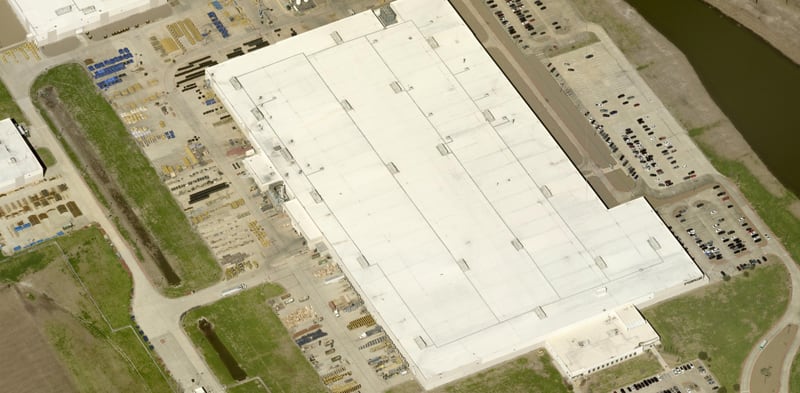
7300 Lone Tree Rd, Victoria, TX 77904
Global Footprint: Manufacturing and Markets from Illinois to India
One of Caterpillar’s greatest strengths is its global manufacturing and distribution footprint. The company operates over 270 facilities worldwide , encompassing factories, parts distribution centers, research labs, and offices. These are spread across every inhabited continent , though North America remains the heart of Caterpillar’s production. Table 4 provides a breakdown of Caterpillar’s facilities by region:
Table 4. Geographic Distribution of Caterpillar Facilities
| Region / Country | Number of Facilities (2023) | Key Details & Locations |
|---|---|---|
| United States | 173(≈63% of total) | Primary manufacturing hub. Major complexes in Illinois (Peoria/East Peoria, Decatur), Texas, North Carolina, Georgia, etc. Over 60 locations across 25+ states. |
| Mexico | ~29 (≈10% of total) | Important nearshore base. Plants in Nuevo Laredo, Monterrey (Nuevo León), Torreón (Coahuila), among others. Employs ~14,000 in Mexico, building components and some machines for North & Latin American markets. |
| Canada | 8 (≈3%) | Smaller footprint mostly for distribution and some manufacturing (e.g., rail and mining equipment in Ontario). |
| Europe(incl. UK, Italy, Belgium) | ~54 (≈20%) | Historic presence in UK (Perkins engine plants in Peterborough; large parts depot in Desford). Italy (paving equipment in Minerbio, acquired via Bitelli). Belgium (major logistics center). Also factories or R&D in France, Germany, Poland, Hungary, Russia (Tosno plant near St. Petersburg), among others. |
| Asia-Pacific | ~24 (≈9%) | China: Manufacturing in Suzhou (wheel loaders & motor graders), Xuzhou (excavators); facilities in Tianjin, Qingzhou, etc. India: Engine and backhoe loader plants (e.g. in Tamil Nadu). Japan:Design center and small factories (Caterpillar Japan, previously a JV with Mitsubishi). Also plants in Indonesia, Thailand, and Australia serving regional needs. |
| Latin America (ex-Mexico) | 4 (≈1%) | A few plants, e.g., in Brazil (Piracicaba factory making loaders and dozers for South America) and distribution in Chile. |
| Middle East & Africa | 2 (≈1%) | Minimal manufacturing (one facility in South Africa for mining equipment; regional parts centers in UAE and Johannesburg). |
Caterpillar’s U.S. operations remain the backbone of its output. Illinois, the company’s traditional home, still hosts large manufacturing campuses: in East Peoria , large track-type tractors (dozers) and components are produced (this site dates to the original Holt plant). Decatur, IL builds ultra-class mining trucks; Aurora, IL (until recently) built wheel loaders and excavators; and Joliet, IL had made hydraulic components (though some lines were moved to Mexico in recent years). Outside of Illinois, Caterpillar has significant factories in the Southeast U.S. – a region that has attracted manufacturers with its lower costs and proximity to ports. For example, Caterpillar produces small track-type tractors and mini-excavators in Athens, Georgia , manufactures building construction products in North Carolina , and has engine plants in Indiana . The Southeast also houses many Cat facilities for pavers and generators; as one report noted, states like Alabama, Georgia, Kentucky, and the Carolinas host numerous Cat plants to serve the booming Sunbelt construction markets. In total, Caterpillar boasts over 60 U.S. locations in more than 25 states, reflecting both manufacturing and logistics (like big parts distribution centers in Memphis, Tennessee and Spokane, Washington).
Mexico has become an increasingly strategic manufacturing base for Caterpillar. The company has roughly 29 facilities in Mexico, employing over 14,000 people . Key sites include Monterrey in Nuevo León (home to multiple plants, potentially including fabrication of excavator components and generators), Torreón in Coahuila (a large campus for parts and assemblies), and Nuevo Laredo in Tamaulipas (just across the Texas border, used for logistics and component manufacturing). Mexico offers lower labor costs while being next door to the U.S. market, making it ideal for producing parts-intensive subassemblies and some mid-sized machines. In the 2010s and 2020s, Caterpillar shifted certain production lines from the U.S. (e.g., hydraulic components from Joliet, IL) to Mexico to stay cost-competitive. This shift garnered attention as part of a broader trend of near-shoring production. Caterpillar’s Mexican plants supply not only Latin America but also feed into U.S. assembly lines and serve global demand for some product categories.
In Europe , Caterpillar’s presence is anchored by the UK and Belgium. The Perkins Engines subsidiary in England has its main factory in Peterborough and additional plants that produce millions of diesel engines used in Caterpillar and third-party equipment. In Belgium, Caterpillar long operated a large excavator plant in Gosselies (though it was closed in 2016), and today Belgium hosts a major European parts distribution warehouse. Italy, as mentioned, became a Caterpillar hub for paving equipment after the Bitelli acquisition; asphalt pavers and road machinery for European and some export markets are built there. Caterpillar also runs a demonstration and training center in Malaga, Spain, and smaller manufacturing or R&D units in central/eastern Europe (e.g., Poland and the Czech Republic). In Russia, Caterpillar opened a plant in Tosno (near St. Petersburg) in the 2000s to build off-highway trucks for Eurasian markets, although geopolitical tensions have complicated operations there recently.
Asia-Pacific is a mix of production for local markets and export. In China , Caterpillar made an early entry in the 1990s, and by the 2010s it had multiple facilities. One notable investment was a $125 million plant in Suzhou to produce medium wheel loaders and motor graders primarily for Asia. Caterpillar also fully acquired its joint venture in Xuzhou, China, which builds construction equipment (this JV with state-owned XCMG was formed in 1995 and later became a wholly owned Caterpillar factory). However, Chinese competitors have since grown dominant at home, so Caterpillar’s Chinese plants now focus on higher-end machines and export some output to Southeast Asia and Africa. In India , Caterpillar has factories such as the Thiruvallur plant (near Chennai) making off-highway trucks and backhoe loaders, and a plant in Hosur for engines. These serve Indian infrastructure demand and export to other emerging markets. Japan is a unique case: Caterpillar Japan (Cat’s subsidiary) was originally a joint venture with Mitsubishi Heavy Industries, making equipment for Asia. Caterpillar now fully owns that unit, which produces mini-excavators and other equipment in Japan, although Japan is not a low-cost location. In other Asia-Pacific countries: Indonesia has a facility for large mining trucks assembly (for Asia-Pacific mines), Thailand hosts a plant for medium excavators, and Australia (while mostly a sales market) has Cat dealer networks that sometimes do localized assembly or modifications for mining customers.
Latin America outside Mexico is comparatively limited in manufacturing – Brazil is the main hub, with a long-standing factory in Piracicaba (São Paulo state) where Caterpillar has made tractors and backhoe loaders since the 1970s. This plant serves Brazil and neighboring countries and occasionally exports certain models globally. The smaller scale of Latin American economies (and past volatility) has meant Cat relies more on exports from the U.S. or Mexico into those markets, rather than extensive local production.
Finally, the Middle East and Africa region has few manufacturing sites (due to smaller markets and logistic challenges). South Africa has a Caterpillar facility (in Johannesburg or Pretoria) focusing on remanufacturing and support for mining equipment – logical given the large mining sector in Southern Africa. The Middle East has no major Caterpillar factories, but Dubai in the UAE is an important logistics hub where Caterpillar runs a parts distribution center to serve Middle Eastern and African dealers.
This far-flung footprint allows Caterpillar to be closer to customers and often to mitigate currency or trade risks (by producing “in region for region”). For example, making machines in Asia helps serve Asian customers without incurring high shipping costs or import duties. Manufacturing in the U.S. and Mexico allows Cat to label many products as “Made in North America,” which is beneficial under procurement rules and trade agreements. As of the mid-2020s, Caterpillar is also optimizing its footprint: it has closed some older plants (like in Belgium and Australia) and expanded others where it sees growth (such as new capacity for excavators in Texas, and plans for electric equipment production lines in the future).
The company’s thousands of distribution and dealer facilities worldwide complement these factories. Caterpillar’s dealers – independently owned but exclusively carrying Cat – operate in 190 countries, providing local sales and service. This network requires Caterpillar to maintain a steady flow of parts and machinery across borders, something it manages through regional distribution centers in the U.S., Europe, Middle East, and Asia.
In summary, Caterpillar’s global footprint is vast and is a key competitive advantage. It enables the company to ramp up production where demand is hottest and navigate around obstacles (like tariffs or export bans) by shifting where products are made. It’s also a source of complexity: managing 275+ locations and their supply chains is no small feat, and it exposes Caterpillar to risks from political instability or labor issues in any of those locales. Nonetheless, the company’s century-long expansion from one plant in Peoria to a network spanning from Illinois to India reflects its evolution into a truly global manufacturer.
Strategic Challenges and the Road Ahead
Despite its size and recent strong performance, Caterpillar faces a range of strategic challenges as it moves further into the 2020s. These challenges will test the company’s adaptability and could shape the competitive landscape in the years ahead:
Global Supply Chain Pressures: The COVID-19 pandemic and ensuing recovery revealed vulnerabilities in global supply chains. Caterpillar at times struggled with shortages of key components – semiconductors, hydraulics, tires – causing production bottlenecks and delivery delays for dealers. Shipping snarls and higher freight rates also raised costs. While these acute pressures have eased since 2021, Caterpillar is re-evaluating its supply chain design. The company has considered increasing inventory of critical parts and diversifying suppliers. There is also a push for more localization : manufacturing closer to end markets (as seen in its investment in Mexico and India) to reduce dependence on trans-ocean shipping. Additionally, Caterpillar is incorporating more digital supply chain management tools to gain better visibility from tier-1 suppliers down to raw materials. The experience of 2020 to 2022 underscored that efficiency (lean inventories) must be balanced with resilience. A lean supply chain left little slack when disruption hit; Caterpillar’s challenge is to build resilience without significantly driving up costs. The company reportedly even slowed some inbound shipments and cut discretionary spending in 2019 when tariffs hit, as short-term mitigation. Going forward, events like natural disasters, geopolitical tensions (e.g., a hypothetical conflict over Taiwan affecting electronics supply), or new pandemics could all stress the system again. Caterpillar’s ability to flex its production across multiple plants (e.g., shifting some output from one region to another) will be an important hedge.
Trade Policy and Geopolitical Risk: Caterpillar, as a U.S.-based exporter with a global footprint, is exposed to geopolitical shifts. The U.S.-China relationship is a particular concern: China was once a high-growth market for Cat, but local competitors and U.S.-China tensions have limited its growth there. Tariffs and export controls (for instance on advanced tech) create uncertainty. Moreover, sanctions or conflicts can directly hurt Caterpillar’s business – for example, sanctions on Russia in 2022 essentially froze Caterpillar’s sales into Russia (a notable mining market) and cast doubt on its Russian manufacturing operations. Caterpillar has to ensure compliance with sanctions while trying to not cede markets entirely to others. In regions like the Middle East or Africa, political instability or sudden regime changes can also affect project timelines and payments. The company often works on government-funded projects (power plants, roads), so fiscal or debt crises in emerging markets can delay those projects or introduce credit risk. To mitigate this, Caterpillar does a significant portion of business on cash or secured terms and uses export credit agencies or multilateral development banks to support deals in higher-risk countries. Nonetheless, navigating the shifting sands of trade policy – whether that’s NAFTA’s renegotiation into USMCA (which thankfully preserved cross-border manufacturing flows) or Brexit in Europe – requires constant attention from Cat’s leadership. The company occasionally adjusts its production strategy (like moving some manufacturing from the U.K. to other EU countries) in response to such changes.
Labor Shortages and Workforce Development: A perhaps less expected challenge in recent years has been finding enough skilled labor. In the U.S. especially, manufacturers have struggled to hire and retain workers such as welders, machinists, and engineers. During the 2021 to 2022 manufacturing boom, Caterpillar and its suppliers faced labor constraints in certain factories, which limited how fast they could increase production. Competition for tech talent is also heating up as Caterpillar seeks more software and electronics expertise (for autonomous and electric machines) while tech companies simultaneously recruit those workers. Furthermore, Caterpillar’s workforce is aging – a significant number of skilled employees who joined in the 1970s–80s are retiring, taking with them decades of know-how. Caterpillar has responded by investing in automation (e.g., robotic welding lines that can alleviate some labor dependence) and by expanding training programs. The company has collaborated with community colleges near its facilities to create welding and assembly technician pipelines. It has also increased wages in certain locations to attract workers, which contributes to higher operating costs. A related aspect is union labor relations: Caterpillar’s major U.S. production sites are largely non-union today (ever since a bitter strike in the 1990s weakened the United Auto Workers’ presence at Cat). However, labor organizing is seeing a resurgence in the U.S., and any significant unionization or labor action at Cat plants could impact production or costs. Managing labor relations and ensuring a steady inflow of skilled workers remains a strategic priority.
Technological Change and Electrification: Perhaps the most profound challenge – and opportunity – is the industry’s shift toward new technologies, especially electrified and autonomous machinery. Construction and mining have traditionally been diesel-dominated due to the high power needs and remote operation of equipment. But pressures to reduce carbon emissions and advancements in battery technology are driving a push for electric heavy equipment . Smaller construction machines (compact excavators, small loaders) have begun to appear in battery-electric versions from competitors like Volvo CE and JCB. Caterpillar cannot afford to lag in this arena. The company has unveiled prototype electric models – for instance, a battery-electric 301.9 mini excavator and electric compact wheel loaders – and at CES 2024, Caterpillar showcased its “electric future” concepts including equipment with alternative powertrains. However, scaling this up to large machines is non-trivial: the energy density required for a 50-ton excavator or a 300-ton haul truck to operate through a full shift is enormous. For mining trucks, Caterpillar is exploring electrified trolley assist (overhead electric lines on haul roads) and potentially hydrogen fuel cell powertrains. The company has announced partnerships with mining customers to develop and test prototype hydrogen or battery mining trucks in the coming years.
The electrification push is partly carrot (customer demand, new market opportunity) and partly stick (regulation). California, for instance, has signaled long-term plans to phase out diesel engines where possible; European cities are demanding zero-emission construction equipment on some urban sites. While full electrification of heavy equipment may be a decade or more away for many applications, Caterpillar must navigate this transition or risk ceding technological leadership to nimble rivals or even startups. It’s worth noting Caterpillar’s strategy is not solely battery-electric – the company is also advancing low-emission engines using renewable fuels. Cat diesel engines are being adapted to run on biodiesel and renewable diesel, and the company is developing hydrogen-capable combustion engines as a bridging technology. In fact, industry observers highlight that diesel will likely remain dominant in heavy-load sectors through 2030, but with improvements like hybrid drives and alt-fuel compatibility to cut emissions . Caterpillar’s challenge is to innovate on all these fronts without undermining its current profitable diesel franchise. Balancing R&D investment between traditional and future tech is a classic innovator’s dilemma.
Autonomy and Digital Disruption: Alongside electrification, the rise of autonomous and connected machinery is transforming the industry. Caterpillar has been a pioneer in autonomous mining trucks – its Cat MineStar system has driverless haul trucks already operating in Australian iron ore mines, chalking up millions of autonomously driven miles. The productivity and safety benefits of removing drivers (who are costly and can be in harm’s way) are compelling in controlled mine environments. Competitors like Komatsu have their own autonomous offerings, and tech companies are eyeing the space too. Caterpillar needs to maintain its edge here by continuously improving sensors, AI software, and fleet management systems. The company’s Vision is for a connected jobsite where bulldozers, excavators, and trucks communicate in real time, optimizing work without human intervention. Achieving that means Caterpillar now competes for software engineers and partners with tech firms. There’s also a data angle : Cat machines generate vast data that can be analyzed for predictive maintenance and efficiency gains, services Caterpillar can monetize. However, with greater digitization comes cybersecurity risk – an area traditionally outside Caterpillar’s wheelhouse but now vital to ensure that autonomous machines are safe from hacking or malfunction.
Climate Change and ESG Pressure: As a major producer of fossil-fuel-powered equipment, Caterpillar finds itself in the crosshairs of environmental scrutiny. Investors increasingly apply ESG (Environmental, Social, Governance) criteria, and some have raised concerns about Caterpillar’s exposure to coal mining or oil & gas (via its engines and fracking pumps businesses). Caterpillar has responded by highlighting how its products contribute to building climate-resilient infrastructure and its efforts to reduce its own carbon footprint (e.g., using solar panels at facilities, improving engine efficiency). Nonetheless, the company must navigate a world that is gradually transitioning away from carbon-intensive industries. This doesn’t mean construction stops – infrastructure for renewable energy still needs bulldozers and cranes – but it may mean shifts in customer base (more renewable projects, fewer coal mines). Caterpillar has to align itself with this transition narrative, developing products like wind farm construction equipment or machines suited for recycling and waste management (both growing areas). There is also the risk of potential carbon pricing or emissions regulations that could increase operating costs for heavy equipment users, indirectly dampening demand. Caterpillar’s strategy includes positioning itself as part of the solution (e.g., machines to build wind/solar farms, gas turbines for backup power to stabilize grids) while mitigating any downturn in legacy sectors like coal.
Financial Discipline and Market Volatility: On the financial front, Caterpillar faces the ongoing challenge of managing cyclical volatility for shareholders. The company has a goal to achieve higher trough margins than in past cycles, meaning it wants to remain solidly profitable even in downturns. This requires structural cost control – e.g., flexible production that can scale down without huge losses, and a leaner corporate overhead. Caterpillar undertook significant restructuring in the mid-2010s (closing some plants, reducing headcount) which paid off in the 2020 downturn – the company stayed profitable in 2020 despite the sales drop, unlike some past recessions where it posted losses. Continuing this discipline is crucial, as is intelligent capital allocation. Caterpillar has been returning cash to shareholders (over $5 billion in buybacks and dividends in 2021, and similarly robust returns in subsequent years), which investors appreciate. But it also must invest enough in R&D and strategic acquisitions to secure future growth. The company’s balance sheet is healthy, though rising interest rates slightly increase the cost of its debt and of financing customer purchases. If another global recession hits or if commodity prices crash, Caterpillar will need to adjust quickly – likely by cutting production and controlling dealer inventories to avoid a glut of unsold machines (something it managed well in 2020 by curbing output as dealers reduced stock). Its challenge is to be agile for those downturns while not compromising its ability to ramp up in the next upturn.
In tackling these challenges, Caterpillar is leveraging its core strengths: a strong brand, extensive dealer network, and engineering prowess built over decades. The company’s sheer scale provides resilience – for example, it can invest in new technologies at a level few others can match, and its global servicing capability is a key differentiator for customers worried about lifecycle costs. Caterpillar is also increasingly partnering to address new areas: working with tech firms on autonomy, with resource companies on developing zero-emission mining sites, and even with governments on training programs to ensure skilled operators and mechanics for the future.
For a professional observer – whether an investor, industry insider, or lender – Caterpillar presents a story of a market leader at the cusp of significant change. The company’s historical cycles of boom and bust seem to be shortening, and innovation cycles are speeding up. Yet Caterpillar has shown a knack for reinvention before (surviving the Great Depression, thriving post-World War II, weathering 1980s hyper-competition, and so on), suggesting it can adapt once again. The next decade will likely see a different-looking Caterpillar: more electrified, more digitally enabled, and perhaps offering more services than just iron. But as it has for nearly a century, Caterpillar will aim to remain the flagship name in heavy equipment – helping to literally build the modern world, while digging into whatever new ground the future holds.
February 9, 2026, by a collective of authors at MMCG Invest, LLC, USDA feasibility study consultant
Sources:
Founding history (Holt + Best merger; 1925).
Headquarters relocation to Irving, Texas (announced June 14, 2022).
FY2023 sales/revenue and operating margin.
FY2021 sales/revenue and comparison vs FY2020.
FY2024 sales/revenue, margins, and cash deployment (SEC-filed earnings release).
Bucyrus acquisition completion (2011; ~$8.8B incl. net debt).
Dealer network scale (independent dealers; countries; branches).
Autonomy milestone (MineStar Command; tonnes hauled; truck count; safety framing).
CES 2024 (electrification + energy solutions positioning).
Perkins acquisition (EU merger decision), formal case document for Caterpillar/Perkins. (Supplemental reporting summary)
Bitelli acquisition (2000), road construction equipment expansion.
Progress Rail acquisition (2006; ~$1B headline), rail platform build-out.
Electro-Motive Diesel acquisition via Progress Rail (2010; $820M cash), locomotive position strengthening.
Russell Grader acquisition (1928) referenced in CAT’s grader history, early portfolio broadening.
Deere FY2023 results (net income and full-year net sales/revenues)
Deere annual report (audited statements; net income line items)
Komatsu FY2023 results presentation (net sales; operating income; net income)
Congress.gov, Infrastructure Investment and Jobs Act (Public Law 117-58) summary
FHWA IIJA overview + time horizon
DOT IIJA/BIL overview
PHMSA explainer (includes the commonly-cited $1.2T / $550B ‘new’ framing)
USDA

Michal Mohelsky, J.D., FMVA, Practicing Affiliate of the Appraisal Institute
Principal, MMCG Invest, LLC
Published February 9, 2026. Last updated March 23, 2026. How this analysis was prepared.
Cite this
Michal Mohelsky, J.D., FMVA (2026). The Evolution of Caterpillar: From Tractor Pioneer to Global Heavy Equipment Giant. MMCG Invest, LLC. https://www.mmcginvest.com/post/the-evolution-of-caterpillar-from-tractor-pioneer-to-global-heavy-equipment-giant
Where this leads
Where this goes next
- USDA Feasibility StudyMMCG's feasibility study page for this subject.