
The YMCA: America's Largest Community Nonprofit Navigates a Fractured Fitness Landscape
Updated: Mar 23
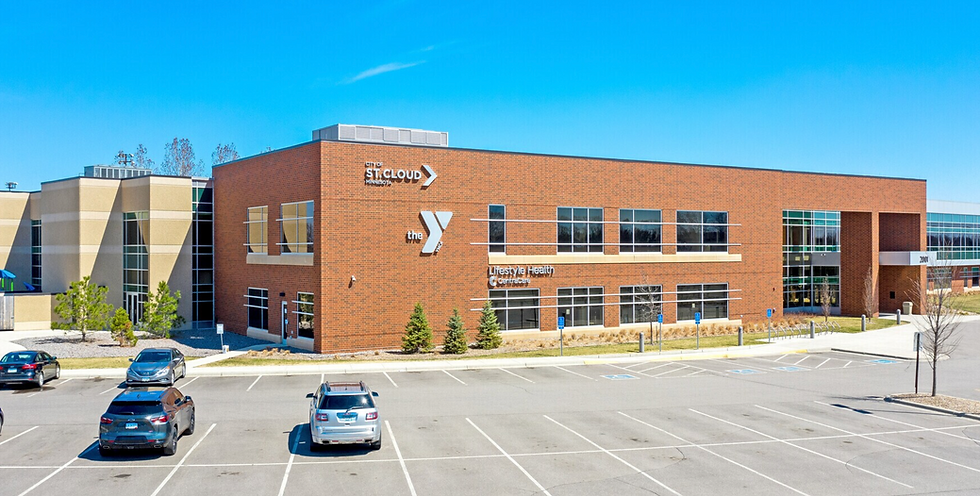
The YMCA remains one of the most consequential nonprofit institutions in American life, serving 22 million people across 2,597 locations — yet it faces an existential tension between its 181-year social mission and the brutal economics of modern fitness. The organization that invented basketball and volleyball, pioneered youth development, and defined community wellness for generations now competes against $15/month budget gyms, $40,000/year luxury clubs, and algorithmic home fitness platforms — all while shouldering aging facilities, staffing shortages, and the lingering financial scars of COVID-19. What makes the Y's position uniquely complex is that it cannot simply optimize for profit: its nonprofit DNA demands it serve precisely the communities that generate the least revenue.
From London Drapers to America's Community Backbone
George Williams, a 22-year-old farmer-turned-draper, founded the Young Men's Christian Association on June 6, 1844, in London, gathering 11 fellow workers at Hitchcock & Rogers to create an alternative to the taverns and brothels that dominated young men's leisure options in industrialized England. The original mission was explicitly evangelical — "improving the spiritual condition of young men engaged in the drapery, embroidery, and other trades" — with activities limited to Bible study, prayer, and lectures.
The organization crossed the Atlantic rapidly. Captain Thomas Valentine Sullivan established the first U.S. YMCA in Boston on December 29, 1851, just weeks after the first North American branch opened in Montreal. By 1853, Anthony Bowen — a formerly enslaved man — founded the first YMCA for African Americans in Washington, D.C. The Cincinnati YMCA offered the nation's first ESL class in 1856, serving German immigrants. These early moves established a pattern that would define the Y for nearly two centuries: responding to the social needs of the moment.
The Y's most celebrated innovations emerged from its commitment to physical culture alongside spiritual development. In December 1891, James Naismith hung peach baskets on a running track at the International YMCA Training School in Springfield, Massachusetts, creating basketball under a two-week deadline from Dr. Luther Gulick. Four years later, YMCA instructor William G. Morgan invented volleyball in Holyoke, Massachusetts, designing it as a less strenuous alternative for older businessmen. The 1865 Fourth World Conference had formally affirmed developing the "whole individual in spirit, mind, and body" — the triangle symbol of spirit-mind-body that became the Y's enduring emblem.
The transformation from religious organization to broad community institution happened in distinct waves. During World War I, the Y deployed 25,000+ staff to military bases worldwide and spent $155 million on welfare efforts, marking the first large-scale involvement of women. By the 1930s, Bible class enrollment had dropped 60%, and the Y began partnering with secular welfare agencies. Women were formally admitted to programs at some locations in the 1930s, formally incorporated into the purpose statement in 1957, and gender discrimination was banned outright in 1978. Racial discrimination was formally banned across all locations in 1967. By the 1980s, the fitness boom transformed YMCAs into the community wellness centers recognizable today, with modern pools, gymnasiums, and group fitness spaces becoming standard.
A Federated Nonprofit Empire Generating Billions
The YMCA's organizational structure is unusual and often misunderstood. YMCA of the USA (Y-USA), headquartered in Chicago, functions as the national resource office — setting strategic direction, policies, and providing support — but does not control local operations. Each of the approximately 800 independent YMCA associations is a separately incorporated 501(c)(3) with its own board of directors, budget, and corporate charter. These associations operate roughly 2,597 branch locations across all 50 states, D.C., and Puerto Rico.
This federated structure means there is no single "YMCA revenue" figure. The national office reported $198.4 million in revenue for fiscal year 2024 — a record high driven by $91.2 million in contributions and grants (nearly double the prior year) and $97.8 million in program service revenue. But the aggregate revenue across all independent YMCAs is vastly larger: the most authoritative system-wide figure, from 2014, placed total movement revenue at $6.6 billion, making the Y the second-largest U.S. charity by total revenue after Lutheran Services in America. Given recovery trends and inflation, current aggregate revenue likely falls in the $7–10 billion range, though no recent consolidated figure exists.
Revenue at the local level typically follows a target mix of 40% membership dues, 40% program fees, and 20% contributed revenue (grants, donations, fundraising). Individual YMCAs receive $1.4 billion in annual donations system-wide and leverage approximately $1.5 billion in grants ($600 million government, $930 million non-government).
Government funding flows through HUD (housing), CDC (chronic disease prevention), state childcare reimbursements, and congressional earmarks — Y-USA secured $94 million in congressional earmark funding for 77 YMCA projects in 2024 alone.
The breadth of services the Y offers dwarfs any commercial gym. Beyond standard fitness facilities — cardio equipment, weight rooms, group exercise studios — the typical YMCA provides indoor swimming pools (over 2,000 nationwide, a critical differentiator), gymnasiums, indoor tracks, and racquetball courts. But the real distinction lies beyond fitness:
Childcare and early learning: One of the nation's largest nonprofit childcare providers, serving 500,000 children at roughly 10,000 sites, with 92–98% kindergarten readiness rates
Summer and overnight camps: More than 1,400 day camp programs and 200+ overnight camps nationwide
Chronic disease prevention: The CDC-recognized Diabetes Prevention Program operates at 250+ locations and is now a Medicare-covered benefit, reducing type 2 diabetes risk by 58%
Aquatics: Teaches over 1 million children water safety annually; the free Safety Around Water program targets underserved communities where drowning disparities are starkest
Affordable housing: Multiple YMCAs operate transitional and permanent affordable housing, from 120-unit SRO residences to scattered-site family housing programs
Immigration services: New American Welcome Centers at 15+ locations provide free ESL, citizenship preparation, legal services, and refugee resettlement
Membership pricing reflects the Y's mid-market positioning: $30–$88/month for adults and $80–$139/month for families, with significant geographic variation. A joining fee of $25–$75 is typical but frequently waived during promotions. The critical differentiator is financial assistance: virtually every YMCA offers income-based sliding-scale fees, with explicit "no one turned away" policies. Senior members access the Y free through insurance-based programs including SilverSneakers, Renew Active, and Silver&Fit. The nationwide "Always Welcome At the Y" (AWAY) program grants members access to 2,500+ locations at no additional cost.
COVID Devastated the Y, and Full Recovery Remains Elusive
The pandemic's financial impact on the YMCA was catastrophic. In April 2020 alone, the movement lost $400 millionin revenue from forced closures, according to then-CEO Kevin Washington. Combined April-May losses exceeded $800 million, and had operations been suspended through summer 2020, projected losses would have reached $2.5 billion. Across the country, YMCAs furloughed 75–90% of employees; the Greater Philadelphia YMCA alone cut 4,000 workers.
The damage was uneven but deep. The YMCA of Greater Charlotte saw total revenue drop 28%, from $100 million in 2019 to $72 million in 2021, losing more than half its members. The Des Moines YMCA shed 6,100 membership units, shrinking from 18,000 to fewer than 12,000, and its budget contracted from $19 million to $14 million. The YMCA of Greater Twin Cities, with normal annual revenue of $168 million, experienced a 30% revenue decline and has reported deficits every year since 2020, laying off 69 employees as recently as September 2024.
Recovery has been real but incomplete. By 2024, 74.1% of YMCA respondents to the Recreation Management industry survey reported facility usage had increased from the prior year, and 70.1% reported higher revenues. The YMCA of Metro Detroit achieved its highest membership growth in over a decade, surpassing 10,000 memberships. The YMCA of South Florida rebuilt 85% of its pre-COVID membership base by August 2021.
Yet closures continue to mount. The Ransburg YMCA in Indianapolis is closing March 2026 after the YMCA of Greater Indianapolis saw revenue decrease $5.8 million (8%) from 2022 to 2024. The Alief Family YMCA in Houstoncloses May 2025, citing federal funding cuts — it received over 60% of its budget from government sources. The Longmont, Colorado YMCA is ending fitness operations in early 2026. Most symbolically, the Central YMCA in London — the world's original YMCA site — was sold in December 2024 and closed in February 2025 due to unsustainable maintenance costs. The pattern is clear: suburban locations tend to thrive while urban branches serving lower-income communities face the greatest financial strain, creating a painful tension with the Y's equity mission.
The Charlotte YMCA's experience illustrates the structural challenge. Still carrying $32 million in debt as of 2025, the organization has been forced to reduce membership fees, diversify revenue beyond the membership dues that once comprised 70% of operating budgets, and fundamentally rethink its financial model. This story repeats across the movement.
A $35–47 Billion Industry Splitting at the Seams
The U.S. gym, health, and fitness club industry has not only recovered from COVID but is setting records. According to MMCG database, total industry revenue reached an estimated $35–47 billion in 2024–2025 (the range depends on how broadly "fitness" is defined), with 77 million members — an all-time high representing roughly 24% penetration of the population aged six and older. The industry is projected to reach $55–60 billion by 2030, growing at a 4–6% compound annual rate.
But these aggregate numbers mask a profound structural shift. The industry is experiencing what analysts call a "K-shaped" bifurcation: the budget and premium segments are thriving simultaneously while the middle market faces pressure from both directions. This is the competitive landscape the YMCA must navigate.
Planet Fitness dominates the budget tier with 20.8 million members across 2,896 clubs, generating $1.3 billion in corporate revenue (FY2025). Its summer 2024 price increase — from $10 to $15/month for the Classic Card, the first increase in 30 years — tested member loyalty and held. Planet Fitness is adding 180–190 new clubs annually and skews heavily toward Gen Z (approximately 6 million members), making it the most formidable competitive threat to the YMCA for price-conscious individuals who want basic gym access without pools or childcare.
At the premium end, Life Time Fitness is building "athletic country clubs" generating $2.98 billion in revenue (2025) from just 189 centers, with average revenue per membership of $3,160 per year. Life Time targets affluent families with 100,000+ square-foot facilities featuring pools, spas, cafés, and co-working spaces — and recently launched Miora longevity clinics. Where Life Time opens, it directly competes with the YMCA for high-income family memberships by offering a more modern, upscale version of the same multi-amenity concept.
Equinox occupies the ultra-luxury niche with 115 clubs and a new "Optimize" program at $40,000/year (with a 1,000+ person waitlist). Anytime Fitness and Orangetheory Fitness merged parent companies in April 2024 to form Purpose Brands, combining 7,000+ locations. CrossFit maintains roughly 5,000 U.S. affiliates at $150–$250/month. Digital platforms continue evolving: Peloton has 2.88 million paid connected fitness subscribers and finally turned free-cash-flow positive at $323.7 million in FY2025, though total revenue continues declining to $2.49 billion. Apple Fitness+, bundled into the Apple ecosystem, competes silently through sheer distribution.
The YMCA sits in a uniquely awkward competitive position. At $50–$80/month for a typical adult membership, it is three to five times more expensive than Planet Fitness for basic gym access, yet lacks the modern aesthetics and technology of premium competitors. Its competitive moat rests on three pillars that no competitor replicates at scale: swimming pools at virtually every location, free childcare while parents exercise, and the breadth of community programming from infant swim lessons to senior chronic disease management. For families with children, the YMCA's value proposition remains compelling; for individuals seeking only fitness equipment, budget gyms offer a dramatically lower price.
The YMCA is typically excluded from commercial fitness industry statistics by the Health & Fitness Association (formerly IHRSA) because of its nonprofit status, making precise market share calculations difficult. However, with 2,597 locations serving 22 million people and estimated system-wide revenue of $7–10 billion, the Y would represent roughly 15–25% of total U.S. fitness industry revenue — by far the largest single "brand" in the ecosystem, albeit one fragmented across 800 independent organizations.
Strategic Recalibration Under the Y's First Female CEO
Suzanne McCormick became Y-USA's 15th president and CEO in September 2021 — the first woman to lead the organization in its 177-year history. A 31-year nonprofit veteran and former U.S. president of United Way Worldwide, McCormick inherited an organization in crisis and has pursued a strategy centered on four priorities: increasing financial resources, rebuilding learning and leadership systems, improving services to local YMCAs, and engaging leaders around a shared future vision.
The financial results at the national level have been strong. Y-USA raised $91 million through national partnerships and grants in 2024, more than doubling its $40 million goal. This included a $30 million investment from Lilly Endowmentfor the Character Development Learning Initiative and $40+ million regranted through 2,970 awards to 583 local associations — meaning 77% of all associations received at least one national grant award. The national office's advocacy team secured $700 million in increased Child Care and Development Block Grant funding and $300 million in increased Head Start funding.
The Y's digital strategy centers on YMCA360, a virtual fitness platform offering 2,000+ on-demand workouts, livestream classes, and youth content — free for all YMCA members. A recent partnership with Les Mills added premium workout content (BODYPUMP, BODYCOMBAT, BODYFLOW). While YMCA360 represents progress, the Y still trails commercial competitors in app sophistication, connected equipment integration, and personalized digital experiences.
McCormick has made the epidemic of social isolation and loneliness a signature issue, testifying before the Senate Special Committee on Aging in March 2025. The framing is strategically astute: positioning the Y not merely as a gym but as infrastructure for human connection in a loneliness crisis where 40% of adults report feeling lonely and social disconnection carries mortality risk equivalent to smoking 15 cigarettes daily. The Y also announced a partnership with the National Basketball Association as part of its 175th anniversary celebrations, and is pursuing Medicaid managed care contracts in seven states — a key strategy for financial sustainability through healthcare system integration.
The 2010 rebranding to "the Y" — a $1.3 million initiative by Siegel+Gale that crystallized three strategic pillars of Youth Development, Healthy Living, and Social Responsibility — continues to shape organizational identity. Local YMCAs are developing 2025–2028 strategic plans focused on holistic health, youth potential, mental wellness, and early learning. An Organizational Health Assessment Tool with standardized KPIs is expected to roll out across the movement.
Who Uses the Y, and What Impact Does It Deliver?
The YMCA's demographic reach is broader than any commercial gym. It engages 6.4 million children and teens and 10.8 million adults annually, with seniors representing the fastest-growing member segment. Financial assistance programs serve a distinctly more price-sensitive population than commercial gyms: research has shown that even a $10/month co-pay causes approximately 80% of at-risk participants with previously free memberships to discontinue use. Income-based eligibility for financial assistance typically extends to households earning under $50,000–$80,000, with discounts at 25%, 50%, and 75% levels.
The social impact metrics are substantial. The Y provides 12,000+ water safety scholarships annually for children most at risk of drowning — a critical equity issue given that Black children drown at 5.5 times the rate of white children and 44% of Black parents have beginner or no swimming ability. The YMCA's Diabetes Prevention Program, validated through NIH research and now Medicare-reimbursable, has enrolled over 7,600 individuals across 250+ locations, with participants achieving average weight loss of 6% — consistent with clinical trial results. The LIVESTRONG at the YMCA program provides free 12-week exercise programs for cancer survivors, validated by Yale and Dana-Farber research.
The Y mobilizes 570,000 volunteers and employs 92,000 young workers age 24 and under — making it one of the largest youth employers in the country. New American Welcome Centers at 15+ locations serve immigrants and refugees with free ESL, legal services, and resettlement support, a tradition dating to Ellis Island settlement projects in 1909.
Aging Facilities, Staffing Crises, and the Healthcare Opportunity
The YMCA's challenges are structural, not cosmetic. Aging facilities represent perhaps the most pressing operational concern — many buildings are decades old, requiring capital investments that strained nonprofit budgets cannot easily absorb. The Charlotte YMCA's $32 million debt burden, the Longmont YMCA's accumulated improvement-related debt, and the London Central YMCA's sale due to unsustainable maintenance costs all illustrate the same dynamic: the Y's real estate portfolio is simultaneously its greatest asset and its heaviest liability. With an estimated 100–180 million square feet of total real estate across the movement (based on ~2,600 locations averaging 40,000–70,000 square feet), the capital expenditure requirements are enormous.
Staffing shortages compound the facility challenge. A national lifeguard shortage that began in 2021 persists — the West Toledo YMCA operates at half the lifeguards needed, and Spokane Valley has only one-third of required seasonal staff. Childcare workers leave for better-paying school district positions. Average YMCA employee salaries of $25,000–$40,000 (for 37% of workers) and 35% first-year turnover reflect a workforce under strain. The Greensburg YMCA went from 135 employees pre-COVID to roughly 68, temporarily closing its Early Childhood Learning Center.
Federal funding cuts in 2025–2026 are creating a new threat, pulling approximately $5 million from Colorado YMCAs alone and forcing the closure of the Alief YMCA in Houston, which received 60%+ of its budget from federal sources. The expiration of COVID relief funds compounds the challenge for locations that relied on emergency government support.
Yet the opportunities ahead are as significant as the challenges. The healthcare integration pathway may represent the Y's most transformative strategic opportunity. The Diabetes Prevention Program's status as a Medicare-covered benefit creates a reimbursement model that can scale. Medicaid managed care contracts in seven states, insurance aggregator partnerships (Tivity, ASH, Optum, FitOn), and hospital referral relationships (Montefiore referred 1,249 patients to YMCA DPP in the Bronx) all point toward a future where the Y functions as community health infrastructure reimbursed by the healthcare system — not just a membership-dependent gym.
The affordable childcare crisis creates massive demand for exactly what the Y provides: licensed, curriculum-based early learning with 92–98% kindergarten readiness outcomes, often at prices subsidized by government programs. The loneliness epidemic aligns with the Y's community-building DNA in ways no commercial gym can match. The growing emphasis on social determinants of health in healthcare policy positions the Y's holistic programming — fitness, nutrition, social connection, chronic disease management, housing, youth development — as precisely the kind of community intervention that healthcare systems and governments increasingly want to fund.
Conclusion: Mission-Market Tension Defines the Y's Future
The YMCA's strategic position is paradoxical. It is simultaneously the largest fitness-adjacent brand in America by people served, the most financially vulnerable due to its nonprofit model and community obligations, and the most strategically well-positioned for the emerging convergence of fitness, wellness, healthcare, and social connection. The organizations that thrive in the next decade will likely be those that most successfully pivot from membership-dues dependence toward diversified revenue streams — healthcare reimbursements, government program funding, corporate wellness contracts, and philanthropic capital — while maintaining the community mission that justifies their tax-exempt status.
The K-shaped bifurcation of the fitness industry puts the YMCA at particular risk in its current form: it cannot match Planet Fitness on price or Life Time on luxury. But it can offer something neither provides — a genuine community institution that teaches children to swim, prevents diabetes in Medicare beneficiaries, houses formerly homeless families, welcomes refugees, and keeps seniors connected. Whether the movement can finance that mission sustainably, modernize its aging infrastructure, and articulate its value proposition to a generation raised on algorithmic fitness recommendations will determine whether the Y's third century matches the impact of its first two.
March 1, 2026 by a collective of authors at MMCG Invest, LLC, sport and gym feasibility study consultant
Sources:
YMCA of the USA — Our History: The Founding Years
YMCA of the USA — Key Facts and Figures
YMCA of the USA — Our Impact
YMCA of the USA — 2024 Year-End Highlights
CNBC — YMCA CEO Seeks $60 Billion for Nonprofits and Aid for Youth Sports
CNBC — Life Time, Planet Fitness Earnings Show K-Shaped Economy
RTI International — Evaluation of the YMCA Diabetes Prevention Program


Comments