
Idaho Continues Its Attraction Streak, Fueling Housing and Rental Markets
Updated: Apr 9
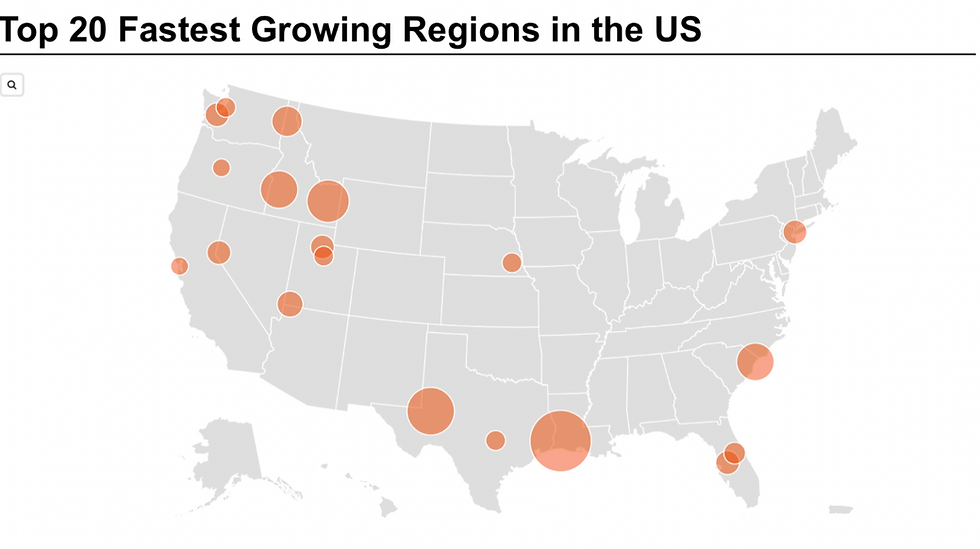
Recent data from Oxford Economics highlights that six Pacific Northwest cities have emerged among the top 20 in the United States for population growth percentages. Particularly noteworthy is Idaho's trend of drawing newcomers, a pattern that has persisted for several years now, influencing both the housing market and apartment sector demand. Remarkably, in 2023, four Pacific Northwest cities made the top 10, with Idaho cities claiming three spots. These migration patterns underscore the importance of rigorous multifamily feasibility study methodology and disciplined site selection analysis when evaluating development opportunities in high-growth corridors.
Boise, Idaho, stands out with a population increase of 2.3% in one year, significantly outpacing the national average growth rate of 0.5%. Looking ahead from 2024 to 2028, the economic outlook for Boise's Treasure Valley is promising, with an anticipated annual growth rate of 2.1%, compared to a projected national growth of 1.7%. This trajectory demands robust multifamily site selection methodology and thorough apartment development feasibility assessment to capitalize on sustained demographic momentum.
Additionally, Coeur d’Alene and Idaho Falls have demonstrated strong population increases, driven by factors similar to Boise's, including Coeur d’Alene’s appealing outdoor activities and Idaho Falls' more affordable living costs. Over the year, Coeur d’Alene experienced a 2% population rise, while Idaho Falls saw a 2.5% increase. The outdoor recreation economy driving these markets warrants careful RV park development analysis alongside comprehensive hospitality project assessment for investors targeting leisure-driven corridors.
In Oregon, Bend also ranks within the top 20, showcasing a 1.4% growth rate. While the local economy is significantly influenced by tourism, Bend attracts newcomers with its outdoor appeal and quality of life. Tourism-adjacent growth also strengthens the case for retail market viability evaluation and affordable housing feasibility study in communities where service-sector employment is expanding rapidly.
Olympia, Washington, also earned a spot in the top 10 with a 1.7% growth rate, benefiting from its closeness to Seattle. Approximately a quarter of Olympia's workforce commutes to Seattle, yet Olympia maintains a robust employment foundation in state government and education, alongside a burgeoning industrial sector in Lacey. Government-anchored markets like Olympia benefit from structured lending programs, making an SBA-compliant feasibility study essential, while the expanding Lacey corridor presents compelling industrial development analysis opportunities.
Seattle itself continues to attract residents, with a 1.5% population growth in 2023. Despite a dip in tech employment, other sectors like aerospace and retail have contributed to job growth, supporting the region's population increase. After a period of net out-migration, Seattle witnessed significant in-migration in 2023, reaching a peak comparable to 2016 figures. For investors benchmarking Pacific Northwest performance against multifamily market conditions in major metro areas, Seattle's recovery mirrors secondary market housing growth trends visible across the broader region.
However, the surge in population across these thriving areas is not entirely matched by new housing developments. With ongoing population growth and a deceleration in construction, the Pacific Northwest is likely to see an uptick in rent prices. A combination of reduced apartment construction and the delivery of new units indicates potential decreases in vacancy rates. Given that affordability drives both population growth and apartment demand in these cities, vacancy trends will be critical to monitor in the upcoming years. Disciplined rent and vacancy benchmarking across U.S. markets remains essential for underwriting in these corridors. Meanwhile, the outdoor recreation and RV park demand outlook continues to strengthen alongside demographic-driven demand for senior housing in communities with aging-in-place appeal.
Michal Mohelsky, and collective of authors at MMCG Invest, LLC
Source: MMCG, CoStar database


Comments